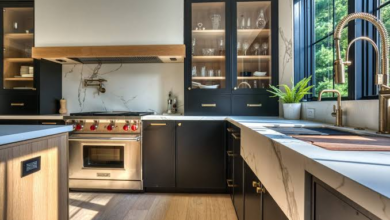
Home renovation spending in the United States has remained consistently high over the past several years, driven by a combination of aging housing stock, shifting household needs, and a sustained preference for improving existing properties rather than purchasing new ones. According to data tracked by the US Census Bureau, a significant portion of the country’s residential housing inventory was built before 1980, meaning millions of homeowners are managing properties that require meaningful structural and aesthetic updating.
What often gets underestimated in these conversations is not whether to renovate, but what it actually costs to do it properly. Cost estimates found online tend to reflect best-case scenarios or regional averages that rarely account for the full scope of a project. Labor markets vary significantly across states. Material availability shifts with supply chain conditions. And the decisions made early in a project — about scope, sequencing, and contractor selection — have compounding effects on both budget and outcome.
This breakdown is designed to give homeowners and property decision-makers a grounded, room-by-room picture of what renovation costs look like in practice across the United States, and what drives those costs up or down in each category.
What Quality Actually Means in a Home Renovation Context
When homeowners describe a renovation as high quality, they are rarely talking only about aesthetics. Quality in renovation work refers to the durability of materials used, the precision of the installation, the reliability of the systems behind the walls, and the degree to which finished work holds up over time without requiring early repair or replacement. A quality home renovation is one where the decisions made during the project reduce future cost and risk rather than simply improving the appearance of the space.
Understanding this distinction matters because it directly affects how budgets should be structured. Homeowners who allocate spending primarily toward visible finishes — tile, fixtures, cabinetry fronts — while cutting costs on substrate preparation, waterproofing, or mechanical upgrades often face expensive corrections within a few years. The relationship between quality and cost is not always linear, but it is consistent: where corners are cut on critical systems or foundational work, the likelihood of problems increases substantially.
This is why working with contractors and services focused on genuine quality home renovation outcomes — not just visual completion — tends to produce better long-term value, even when the upfront investment is higher.
The Role of Labor in Quality Outcomes
Material costs are easier to compare and quantify than labor, but labor is often the more important variable in determining whether a renovation holds up over time. Skilled tradespeople — tile setters, finish carpenters, electricians, plumbers — bring experience that directly affects how materials perform. Improper tile installation leads to cracking and moisture infiltration. Poorly fitted cabinetry creates alignment problems that worsen over time. Electrical work done outside code creates both safety risk and costly remediation when the home is eventually sold or inspected.
In high-cost metropolitan areas such as New York, San Francisco, or Boston, skilled labor commands a significant premium. In mid-sized markets, rates are more moderate but experienced tradespeople still operate within a range that reflects real expertise. Homeowners who approach labor costs primarily as a line item to minimize often end up paying twice — once for the original work and again to fix it.
Kitchen Renovation Costs and What Drives Them
The kitchen consistently represents one of the most expensive rooms to renovate in any residential property, and for good reason. It combines cabinetry, countertops, appliances, flooring, electrical work, plumbing, and ventilation into a single space with complex coordination requirements. A full kitchen renovation in the US — meaning one that involves replacing cabinets, countertops, appliances, and updating at least some mechanical systems — typically falls within a wide cost range depending on scope, materials, and location.
Entry-level kitchen renovations, where layout is unchanged and mid-grade materials are used, tend to cost significantly less than projects that involve reconfiguring plumbing, relocating a kitchen island, or installing custom cabinetry. The cost gap between stock cabinetry and semi-custom or fully custom cabinetry alone can represent a substantial portion of the total budget.
Appliance Choices and Their Budget Implications
Appliances are often treated as a separate purchasing decision from the renovation itself, but they should be integrated into the planning process from the beginning. Built-in or panel-ready appliances require cabinet configurations that must be designed in advance. High-end ranges may require upgraded ventilation infrastructure. Dishwashers and refrigerators with specific clearance requirements affect cabinetry dimensions. When appliance selection happens after cabinetry installation has begun, costly adjustments frequently follow.
Homeowners who plan appliance selections early — even if purchases are deferred — allow contractors and designers to build around the correct specifications, reducing the risk of expensive mid-project corrections.
Bathroom Renovation Costs and Complexity
Bathrooms are compact but mechanically dense spaces. Even a moderately sized bathroom renovation involves tile work, plumbing fixtures, vanity installation, lighting, ventilation, and waterproofing — all within a small footprint where precision matters considerably. A full primary bathroom renovation in the US, including a tiled shower or tub surround, new vanity, flooring, and updated fixtures, represents a meaningful investment even at mid-grade material levels.
One of the most common sources of cost overrun in bathroom renovations is the discovery of moisture damage behind existing tile or under flooring. Older bathrooms frequently have years of accumulated moisture intrusion that was never visible from the surface. Once demolition begins, contractors may find compromised substrate, damaged framing, or mold remediation requirements that were not part of the original scope.
Shower and Waterproofing Systems
Waterproofing is the single most important investment in any bathroom renovation that includes a tiled shower or wet area. It is also one of the most frequently underfunded components, because it is entirely invisible once the tile is set. A properly waterproofed shower — one that uses appropriate membrane systems and is correctly sloped and sealed — will remain functional and leak-free for decades. One that is improperly waterproofed may look identical on day one but begin showing failure within a few years through cracking grout, water intrusion into adjacent spaces, and eventually structural damage.
The cost of doing waterproofing correctly is modest relative to the total project budget. The cost of repairing a failed shower — which typically requires full demolition and reinstallation — is substantial. This is a category where quality decisions made upfront pay for themselves many times over.
Living Spaces, Flooring, and Structural Updates
Renovation work in living areas — including flooring replacement, wall reconfiguration, window replacement, and interior painting — represents a different cost structure than kitchens and bathrooms. The mechanical complexity is lower, but the scale of material costs and labor hours can still be significant, particularly in larger homes or projects involving structural modifications.
Flooring is one of the most visible renovation decisions and one where material selection has a substantial impact on both cost and longevity. Solid hardwood, engineered hardwood, luxury vinyl plank, and natural stone each occupy different price tiers and perform differently across climates, humidity levels, and traffic patterns. A flooring product that performs well in a dry southwestern climate may not hold up in a humid southeastern environment, and vice versa.
When Structural Work Becomes Necessary
Open-concept renovations that involve removing walls between living areas are common, but they carry risk when walls are load-bearing. Identifying load-bearing walls requires professional assessment, and the installation of adequate structural support — typically a beam or header — adds both material and labor cost to the project. Homeowners who attempt to minimize this cost by using undersized structural members, or who skip the engineering assessment entirely, create safety risk and potential code violations that must eventually be addressed.
In older homes, structural work may also reveal outdated electrical wiring, inadequate insulation, or pest damage that requires remediation before the renovation can proceed. These discoveries are unpredictable but not uncommon, and experienced contractors will typically recommend a contingency allocation within the overall renovation budget to account for them.
Exterior Renovations and Curb Appeal Projects
Exterior renovation work — including siding replacement, roof repairs or replacement, window and door upgrades, and landscaping — involves a different set of cost variables than interior work. Weather exposure, regional building codes, and energy efficiency requirements all influence what products are appropriate and what installation standards apply.
Siding replacement, for example, is not simply a cosmetic decision. It is a building envelope project that affects insulation continuity, moisture management, and long-term structural integrity. The cost difference between fiber cement siding and vinyl siding is meaningful, but so is the difference in performance, longevity, and maintenance requirements over a twenty-year period.
Energy Efficiency Upgrades and Their Return Profile
Window replacement and insulation improvements are renovation categories where upfront cost can be partially offset by long-term energy savings. However, the return timeline for these investments varies considerably based on existing conditions, local energy costs, and climate. Homeowners in regions with extreme seasonal temperature variation tend to see more measurable benefit from envelope improvements than those in mild climates.
Federal tax incentives for energy-efficient home improvements, which have been updated and extended in recent years, can meaningfully reduce the net cost of qualifying upgrades. Understanding which products and installations qualify before purchasing is an important step in the planning process.
Concluding Perspective: Planning for What Renovation Actually Costs
The clearest takeaway from any serious room-by-room cost analysis is that renovation budgets built on optimistic assumptions tend to fail in predictable ways. Projects that lack contingency funds stall when unexpected conditions are discovered. Projects that prioritize surface materials over structural and mechanical quality create deferred costs that eventually become unavoidable.
The most reliable renovation outcomes — the ones where the finished work holds up, the budget stays manageable, and the homeowner walks away satisfied — share common characteristics. They begin with realistic cost expectations. They involve contractors who are transparent about scope and risk. They allocate budget proportionally, giving appropriate weight to work that is not visible but is functionally critical. And they treat quality not as an upgrade category but as the baseline standard for decisions throughout the project.
For homeowners trying to plan responsibly, the goal is not to find the lowest possible cost for each component. It is to understand what each component actually costs when done correctly, and to plan accordingly. That approach — grounded in real numbers and honest scoping — is what separates renovation projects that hold their value from those that create ongoing problems.