7 High-End Custom Finishes for Kitchen and Bath Cabinetry That Interior Designers Swear By in 2025

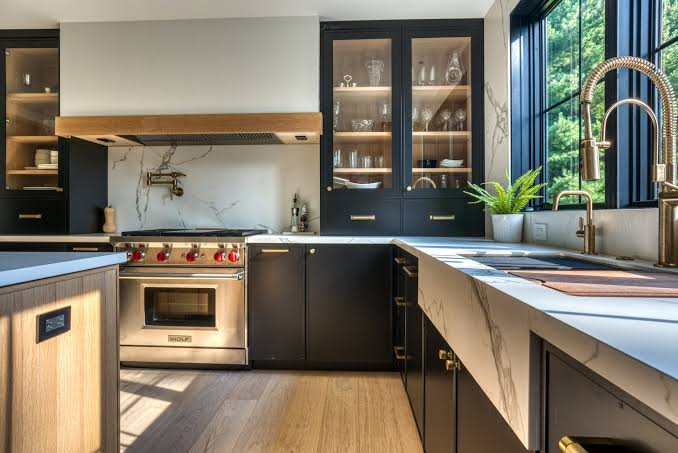
Cabinetry finishes have quietly become one of the most consequential decisions in a kitchen or bathroom renovation. While layout and hardware often receive the most attention during planning, the finish applied to cabinetry is what determines how a space holds up over time, how it reads under different lighting conditions, and whether the investment retains its visual integrity across years of daily use.
Interior designers working on high-end residential projects have become increasingly specific about finish selection — not because of trends, but because of real, observable differences in how materials perform. A finish that looks refined at installation but begins to show wear, discoloration, or adhesion failure within a few years represents a costly outcome for clients and a credibility issue for the professionals who specified it.
This article outlines seven finishes that experienced designers continue to rely on in 2025, with a focus on why each one earns its place in serious cabinetry work rather than simply how it looks on a mood board.
1. Catalyzed Lacquer: The Industry Standard for Reason
Catalyzed lacquer remains the baseline against which most other cabinet finishes are measured. It cures through a chemical reaction rather than simple evaporation, which produces a surface that is harder, more resistant to moisture and household chemicals, and far more stable over time than conventional lacquers. For anyone specifying high-end custom finishes for kitchen and bath cabinetry, understanding why catalyzed lacquer holds its position in professional work is essential — and resources like high-end custom finishes for kitchen and bath cabinetry from specialized finishing services offer useful context on how these products are applied at a professional level.
Why Application Method Matters as Much as Product Selection
Catalyzed lacquer requires spray application under controlled conditions, which means it is not a finish that performs reliably when applied outside of a finishing shop environment. Temperature, humidity, and surface preparation all directly affect how the coating cures and bonds. Designers who specify this finish should confirm that the fabricator has a climate-controlled spray environment and proper curing infrastructure. When those conditions are present, the result is a finish that resists yellowing, holds color consistency across multiple cabinet doors, and cleans without degrading.
2. Conversion Varnish for High-Use Environments
Conversion varnish is a two-component finish that cures to an exceptionally hard surface. It is particularly well-suited for kitchens where cabinetry near cooktops, dishwashers, and sinks is exposed to repeated cycles of heat, steam, and cleaning agents. The finish forms a protective layer that resists abrasion, solvent exposure, and moisture penetration more effectively than single-component coatings.
The Trade-Off Between Hardness and Repairability
The same hardness that makes conversion varnish a strong performer in high-traffic areas also makes spot repairs more challenging. When this finish is scratched or chipped, blending a repair into the existing surface requires careful matching and often professional re-coating of an entire door or panel. For designers, this means the finish is best specified for clients who prioritize long-term durability over ease of maintenance, and who understand that the lifecycle cost may include periodic professional touch-ups rather than simple household repairs.
3. Painted Finishes With Proper Primer Systems
Painted cabinetry has never gone out of demand in high-end residential work, but the difference between a painted finish that holds up and one that chips, cracks, or fades within two years almost always comes down to the primer system underneath. The topcoat is visible, but the primer determines adhesion, flexibility, and how the finish responds to humidity-driven wood movement over time.
Understanding Wood Movement and Its Effect on Paint
Wood and wood-based substrates expand and contract with changes in ambient humidity, as documented extensively through materials science research, including standards maintained by organizations such as the Architectural Woodwork Institute. A painted finish that is applied directly to a surface without appropriate sealing and priming will eventually crack along grain lines or panel edges as the substrate moves. Experienced finishing operations use flexible primer formulations that accommodate this movement, maintaining the integrity of the painted surface across seasonal humidity changes. This is one of the most common points of failure in painted cabinetry that was not fabricated to professional standards.
4. Wire-Brushed and Textured Stain Finishes
Textured stain finishes, particularly those applied over wire-brushed wood surfaces, have become a consistent choice in projects where the goal is a finish that feels natural and authentic rather than manufactured. Wire brushing removes softer wood fibers from the surface, leaving the grain structure more pronounced. When stain is applied over this texture, the result is a depth of color that reads differently under various lighting conditions throughout the day.
Why This Finish Performs Well in Bath Environments
Beyond aesthetics, wire-brushed finishes have a practical advantage in bathroom cabinetry. The textured surface is less likely to show minor scratches or surface wear than a smooth, high-build finish. Small abrasions that would be immediately visible on a flat, gloss surface become far less noticeable within the existing texture. This characteristic is particularly valuable in primary bathrooms and vanity areas where cabinetry faces daily contact with personal care products, towels, and moisture from the sink area.
5. Cerused and Limed Finishes on Open-Grain Woods
Cerusing is a finishing technique in which a light-colored filler, historically a white or gray paste, is worked into the open grain of a wood like oak or ash and then wiped back from the surface. The result is a two-tone effect where the grain is emphasized with the lighter fill while the surface retains the natural color of the wood. In contemporary kitchen and bath design, this technique has seen consistent use because it produces a finish that is both visually distinctive and difficult to replicate with any other method.
Matching the Right Wood Species to the Technique
Cerused finishes only work effectively on open-grain species. Woods like maple or cherry have a tight, closed grain structure that does not accept the filler in the same way, and the technique will produce inconsistent or flat results on those substrates. When designers specify this finish, the wood species selection and the cerusing process need to be confirmed together. A fabricator who applies a limed finish to the wrong species will deliver a result that does not match what was intended, and the correction typically requires re-fabricating the affected components.
6. Two-Tone and Contrasting Finish Combinations
Applying two different finishes within the same cabinetry installation — typically a darker lower section and a lighter upper section, or contrasting island and perimeter colors — requires a level of coordination during fabrication that single-finish work does not. Each finish must be applied, cured, and quality-checked independently, and the transition points between the two finishes must be carefully managed so the contrast reads as intentional rather than inconsistent.
Consistency Across Multiple Cabinet Doors
One of the most common quality issues in two-tone cabinetry work is batch-to-batch color variation. When multiple doors or panels receive the same finish color across different production runs, slight variations in mixing, application, or curing can produce visible inconsistencies once all the components are installed together. Professional finishing operations that handle high-end custom finishes for kitchen and bath cabinetry address this by finishing all components from the same batch under the same conditions, and by maintaining rigorous color-matching standards throughout production.
7. Matte and Satin Sheen Control
Sheen level is often treated as a stylistic afterthought, but it has direct functional implications for cabinetry in both kitchens and bathrooms. High-gloss finishes show fingerprints, water spots, and minor surface imperfections very clearly. Matte finishes are more forgiving in daily use but require appropriate formulation to remain cleanable without the surface dulling further with repeated wiping. Satin falls in a range that many designers find balances visual refinement with practical maintenance requirements.
How Sheen Interacts With Color Perception
The same paint color will read noticeably differently at different sheen levels. A deep navy at satin sheen appears richer and more dimensional than the same color at matte, which can flatten the tone. This interaction between color and sheen is relevant when designers are working from color references or physical samples, because those references may have been produced at a different sheen level than what will be applied in production. Reviewing final approval samples at the specified sheen level, under conditions similar to the installation environment, reduces the likelihood of a finish that was approved in a showroom but reads differently once installed.
Closing Thoughts: Why Finish Selection Is a Professional Responsibility
The finishes discussed in this article are not interchangeable, and none of them perform reliably without the right substrate preparation, application conditions, and fabrication standards behind them. Specifying high-end custom finishes for kitchen and bath cabinetry is not simply a matter of selecting a color or a sheen from a sample card. It involves understanding how each finish behaves under real conditions, how it interacts with the substrate and the wood species, and how it will hold up across the specific demands of the environment it will live in.
Interior designers who take finish selection seriously tend to work with fabricators and finishing specialists who can speak directly to these variables, not just present samples. The quality of a finished installation is determined well before installation day, in the decisions made during specification and fabrication. Treating those decisions with the same rigor applied to layout or hardware selection is what separates cabinetry that holds its value from cabinetry that requires remediation within a few years.
As client expectations for durability and material honesty continue to rise in 2025, the ability to specify and communicate about high-end custom finishes for kitchen and bath cabinetry with technical confidence will remain a meaningful professional distinction for designers working at the upper end of the residential market.