Living with persistent knee pain can gradually affect almost every part of daily life. Walking, climbing stairs, exercising and even sleeping can become difficult. When pain and stiffness continue despite non-surgical treatments, knee replacement may become an option.
For patients considering private treatment, there are several things worth understanding before making a decision. The operation itself is only part of the process. Recovery, potential risks, hospital arrangements and the overall cost should all be considered.
When Is Knee Replacement Considered?
Not everyone with knee arthritis needs a knee replacement. Surgery is generally considered when pain, stiffness and loss of function are having a significant impact on everyday life and other treatments are no longer providing sufficient relief.
Osteoarthritis is one of the most common reasons for knee replacement. Symptoms can include persistent pain, swelling, stiffness, reduced walking ability and difficulty with activities such as climbing stairs or getting in and out of a chair.
The decision to proceed with surgery should be individual. An orthopaedic surgeon will usually consider the patient’s symptoms, medical history, examination and appropriate imaging before discussing whether replacement is suitable.
Patients should also have an opportunity to discuss alternatives to surgery, as well as the potential benefits and risks of an operation.
What Happens During Knee Replacement?
During a total knee replacement, damaged surfaces of the knee joint are removed and replaced with artificial components. The aim is to reduce pain and improve the function of the knee.
Not every patient necessarily requires a total replacement. Depending on which parts of the knee are affected, some people may be suitable for a partial knee replacement instead.
The operation is performed under anaesthesia, with the precise anaesthetic approach depending on the patient’s circumstances and the assessment of the surgical and anaesthetic teams.
Patients are generally encouraged to begin moving and walking as soon as it is safe following surgery. Early mobilisation is an important part of modern knee replacement care, although the speed of recovery varies considerably between individuals.
How Long Does Recovery Take?
Recovery from knee replacement is a gradual process rather than something that finishes when a patient leaves hospital.
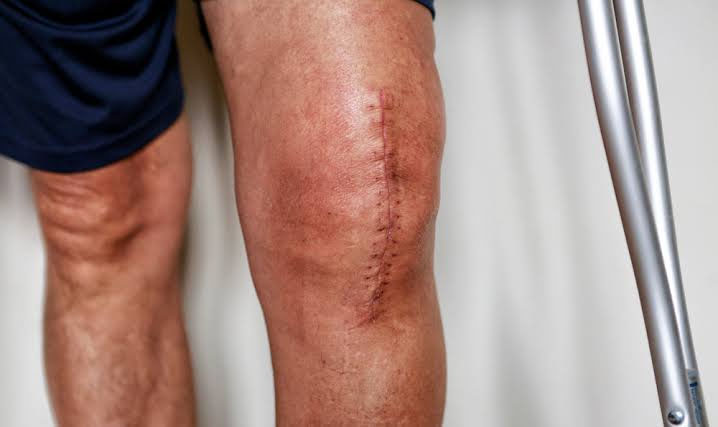
Most patients are helped to stand and walk soon after surgery, initially using crutches, a walking frame or another form of support if required. Physiotherapy and regular exercises can help improve movement, strength and confidence.
The first few weeks are usually focused on gradually increasing mobility and becoming more independent. However, the knee can continue to improve for several months.
Returning to driving, work, exercise and other activities should depend on individual progress and advice from the treating team. Factors such as general health, fitness, age and mobility before surgery can all influence recovery.
Having realistic expectations is important. Although knee replacement can significantly reduce pain and improve function for many people, recovery is different for every patient.
What Are the Risks?
Knee replacement is a major operation and, like any surgery, carries potential risks. These can include infection, blood clots, bleeding, stiffness and injury to nerves or blood vessels.
Some patients may experience continuing pain or reduced movement after surgery. An artificial knee can also wear, loosen or become damaged over time, potentially requiring further treatment or revision surgery.
A knee replacement does not guarantee a completely pain-free or normally functioning knee. Patients should discuss their individual circumstances and potential risks with their surgeon before making a decision.
What Does Private Knee Replacement Involve?
For patients considering treatment outside the NHS, private knee replacement can provide an alternative route to assessment and surgery.
Private treatment may be funded through private medical insurance or paid for directly. Patients using insurance should establish what their policy covers and whether their chosen consultant and hospital are recognised by their insurer.
Patients who are self-funding should request a detailed written quotation before agreeing to treatment. It is important to establish whether the quoted price covers the complete treatment pathway or only the operation itself.
Patients may also want to consider practical issues such as the location of the hospital, arrangements for getting home after surgery and what rehabilitation and follow-up care will be available.
How Much Does Knee Replacement Cost?
The knee replacement cost can vary considerably between hospitals and regions.
The price may depend on factors including the hospital, surgeon, location, type of implant, length of hospital stay and the complexity of the patient’s treatment.
Some private hospitals offer package prices covering the main costs of treatment, while other arrangements involve separate fees. A headline price therefore does not necessarily represent the total amount a patient will pay.
Before committing to treatment, patients should ask whether the quotation includes the surgeon’s fee, anaesthetist’s fee, hospital accommodation, implant, investigations, medication, follow-up appointments and rehabilitation.
It is also worth asking what would happen financially if a patient developed a complication, needed a longer hospital stay or required additional treatment.
Questions to Ask Before Choosing Treatment
Before booking a private knee replacement, patients may want to ask:
- What exactly is included in the quoted price?
- Are there separate surgeon or anaesthetist fees?
- What type of knee replacement is being recommended and why?
- What type of implant will be used?
- How long is the expected hospital stay?
- What physiotherapy and rehabilitation are provided?
- What follow-up appointments are included?
- What happens if I need to stay in hospital longer than expected?
- What happens if I develop a complication requiring additional treatment?
- Who should I contact if I have concerns after leaving hospital?
Price is clearly an important consideration, but it should not be the only one. Patients should also consider the experience of the clinical team, the proposed treatment, hospital facilities, arrangements for rehabilitation and the level of follow-up available.
Knee replacement can be a significant step for someone living with chronic pain and restricted mobility. Taking time to understand the operation, possible alternatives, recovery, potential risks and financial arrangements can help patients have a more informed discussion with their clinical team and make a decision that is appropriate for their individual circumstances.