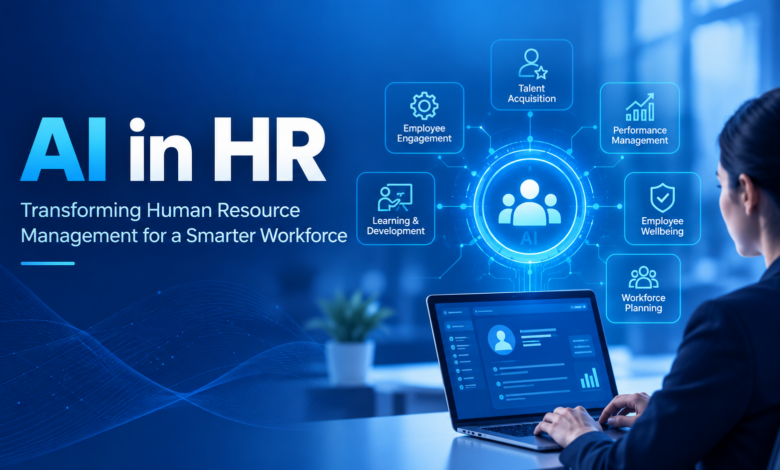
Artificial intelligence is reshaping how organizations manage people, processes, and workforce strategy. AI in human resources is moving beyond experimentation, helping organizations automate repetitive work, improve employee experiences, strengthen decision-making, and create more agile HR functions. For organizations seeking measurable HR Performance, AI offers a powerful path toward modernization.
Why AI in HR Is Becoming a Business Priority
Automating Repetitive HR Tasks
AI in HR helps automate repetitive activities such as employee queries, scheduling, documentation, onboarding, and administrative workflows. By reducing manual effort, HR departments can redirect resources to workforce strategy, employee engagement, talent development, and other high-value priorities.
Improving Employee Experiences
AI for HR can personalize employee interactions by delivering faster answers, relevant recommendations, and streamlined services. Intelligent HR solutions help employees access information when needed while enabling HR teams to provide consistent support across locations, roles, and workforce segments.
Supporting Better Workforce Decisions
AI in human resources can analyze workforce data to identify trends, skills gaps, retention risks, and emerging opportunities. HR leaders gain actionable insights that support better workforce planning, talent decisions, and resource allocation while reducing dependence on fragmented spreadsheets and manual analysis.
How AI Is Transforming HR Operations
Streamlining HR Operations
AI can optimize HR operations by automating workflows, routing requests, analyzing documents, and assisting with routine administrative processes. This creates greater operational efficiency while allowing HR departments to establish standardized processes, improve service delivery, and reduce unnecessary costs across the organization.
Enhancing Talent Acquisition
AI for HR can accelerate recruitment by supporting candidate sourcing, resume analysis, job matching, interview scheduling, and talent insights. With thoughtfully designed HR solutions, organizations can reduce hiring friction, improve recruiter productivity, and create a more responsive talent acquisition experience.
Strengthening Employee Development
AI-powered platforms can identify workforce capabilities, recommend learning opportunities, and support personalized development paths. By connecting employee skills with business requirements, HR leaders can build stronger talent pipelines, address capability gaps, and prepare their workforce for evolving organizational demands.
Building an Effective AI Transformation Strategy
Aligning AI With Business Objectives
Successful AI transformation begins by connecting technology investments with measurable business outcomes. Organizations should identify high-value HR challenges, prioritize use cases, establish success metrics, and ensure AI adoption directly supports workforce productivity, employee experience, cost optimization, and strategic growth.
Creating Responsible AI Adoption
AI adoption requires more than implementing new technology. HR departments need clear governance, data-quality standards, privacy safeguards, human oversight, and employee communication. A structured approach helps organizations build trust while ensuring AI delivers responsible, transparent, and sustainable outcomes.
Empowering HR Leaders With AI
HR leaders play a critical role in turning AI opportunities into business value. With the right strategy, technology, and operating model, leaders can move beyond isolated experiments and create scalable capabilities that improve workforce intelligence, operational agility, and long-term HR Performance.
Measuring the Business Impact of AI in HR
Improving HR Performance
AI can help organizations measure HR Performance through operational efficiency, workforce productivity, service quality, employee engagement, talent outcomes, and cost metrics. Connecting AI initiatives to measurable performance indicators makes it easier to demonstrate value and continuously optimize HR investments.
Reducing HR Costs
Intelligent automation can reduce the time HR teams spend on repetitive administrative activities while improving process consistency. Organizations can redirect resources toward strategic priorities, creating opportunities for sustainable cost optimization without compromising employee support or the quality of HR services.
Increasing Strategic HR Value
When routine processes become automated, HR professionals can focus more heavily on workforce strategy, organizational transformation, leadership development, and employee experience. AI enables HR to evolve from an administrative function into a strategic business partner capable of influencing enterprise-wide outcomes.
Accelerate Your AI Transformation With the Right HR Solutions
Move From AI Experimentation to Enterprise Value
AI in HR creates its greatest impact when organizations move beyond individual tools and build an integrated transformation roadmap. The Hackett Group® helps organizations identify opportunities, strengthen AI adoption, optimize HR operations, and develop practical HR solutions designed for measurable business impact.
Build the Future-Ready HR Function
Organizations that embrace AI strategically can create faster, smarter, and more adaptable HR functions. Partner with experienced transformation specialists to assess your current capabilities, prioritize high-value AI opportunities, and build an actionable roadmap for stronger workforce outcomes and sustained HR Performance.
Conclusion
AI in HR is no longer simply a technology opportunity—it is a business transformation opportunity. From automating HR operations and improving employee experiences to strengthening workforce decisions and reducing costs, AI for HR can redefine how organizations create value.
The organizations that act now can establish a significant advantage by building scalable, responsible, and outcome-focused AI capabilities. With the right strategy and HR solutions, HR departments can accelerate AI adoption, empower HR leaders, and create a more intelligent, agile, and future-ready human resource management function.