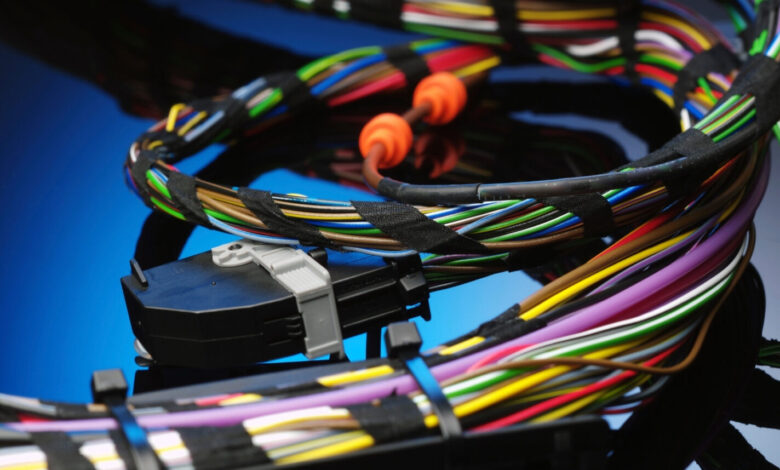
Cable harness assembly is a critical part of any modern electrical system used across the industry. Whether you are working in electrical engineering, electrical design, or manufacturing, you rely on accurate wiring to ensure safe and reliable performance in devices and systems.
A wire harness, also called a cable harness or wiring loom, is a structured grouping of electrical wires and electrical cables that forms a complete electrical connection network. In cable assembly and wiring assembly, multiple wires are organised, protected, and attached to connectors to form a reliable system.
When the cable harness assembly process is not controlled properly, issues such as short circuit risk, poor electrical signals, or mechanical stress failures can occur. Below, you will learn the most common challenges in wire harness manufacturing and how you can solve them in real production environments.
1. Understanding the Wire Harness Manufacturing Process
The wire harness manufacturing process begins when production begins and materials are prepared for the assembly process. Wire harness manufacturing involves transforming individual wires, electrical cables, and cables into a structured wiring loom or harness.
In cable harness assembly, you typically work with:
- Multiple wires and individual wires
- Wires and wire ends prepared for termination
- Connectors, connector housings, and terminals
- Individual components that form the electrical system
- Heat shrink tubing, corrugated tubes, and protective materials
- Cable ties used for securing routing wires
The manufacturing process must meet electrical requirements defined in electrical engineering and electrical design specifications. This ensures the final product performs correctly when attached to devices within a system.
2. Wire Stripping, Cutting and Length Control Issues
One of the most common problems in cable assembly and wiring assembly is incorrect cutting and stripping. If cutting and stripping are inconsistent, stripped wire lengths may not match the desired length required for proper crimping terminals.
This leads to:
- Weak electrical connection quality
- Poor electrical signals
- Increased short circuit risk
- Mechanical stress at wire ends
How you solve it
You should standardise cutting and stripping across all cable harness assembly operations.
Use:
- Controlled cutting and stripping machines for accuracy
- Tools that ensure correct wire stripping without damaging electrical wires
- Checks to confirm desired length before crimping
- Clear guidance for technicians handling loose wires
This ensures consistent harness manufacturing output.
3. Crimping Terminals and Electrical Connection Failures
Crimping terminals are one of the most critical steps in wire harness manufacturing. A poor crimp affects the electrical connection, insulation resistance, and long-term system reliability.
Common problems include:
- Loose terminals
- Incorrect crimp force affecting pull force performance
- Poor contact inside connector housings
- Mechanical stress on crimped joints
How you solve it
You should standardise crimping using specialised equipment and automated equipment where possible.
Best practice includes:
- Pull force testing for every crimped connection
- Matching terminals with correct connectors
- Regular electrical testing during assembly
- Using automated machinery for consistency in mass production
This ensures highest quality output across all custom cable harnesses and custom harnesses.
4. Routing Wires, Harness Boards and Mechanical Stress
Routing wires correctly is essential in cable harness assembly and wiring loom design. Poor routing wires can create mechanical stress, installation time delays, and system failures.
Harness boards are commonly used to position wires during assembly and ensure correct geometry before final bundling.
How you solve it
You should:
- Plan routing wires before assembly process begins
- Use harness boards to control positioning of multiple wires
- Secure wiring loom with cable ties and corrugated tubes
- Avoid tight bends that increase mechanical stress
- Ensure correct use of protective materials like heat shrink tubing
This reduces failure risk and improves cost effective production.
5. Material Selection and Component Compatibility Issues
Material selection is a key factor in cable harness assembly. Using incorrect materials or components can lead to failure under environmental conditions or during long-term use.
You are working with:
- Electrical wires and electrical cables
- Connectors and connector housings
- Terminals and individual components
- Heat shrink tubing and corrugated tubes
- Protective materials used for insulation and durability
How you solve it
You should always match materials to electrical requirements and system design.
Focus on:
- Ensuring connectors are compatible with electrical connection standards
- Selecting materials suitable for environmental conditions
- Checking insulation resistance requirements
- Confirming correct cable length and wire ends preparation
- Avoiding chemical exposure risks in harsh environments
This ensures reliable performance of the final product.
6. Electrical Testing, Quality Control and Safety Standards
Electrical testing is essential in cable harness assembly to ensure correct electrical signals, insulation resistance, and overall system safety.
Without proper quality control, you risk:
- Short circuit failures
- Incorrect electrical connection paths
- Poor insulation resistance performance
- Inconsistent testing results across production
How you solve it
You should implement strict quality control across the entire manufacturing process.
Use:
- Electrical testing for continuity and insulation resistance
- Pull force testing for crimp validation
- Inspection of harness assembly before final product release
- Safety standards compliance checks
- Standardised testing procedures across all harness manufacturing
This ensures highest quality across all cable assembly and wire harness manufacturing output.
7. Automation, Equipment and Production Scaling Problems
In modern wire harness manufacturing, automated machinery and automated equipment are widely used to support increasing demand and mass production.
However, poor calibration or setup can lead to:
- Variation between batches
- Reduced consistency in cable assembly
- Assembly errors in complex wiring loom builds
How you solve it
You should:
- Use specialised equipment designed for cable harness assembly
- Standardise automated machinery settings
- Train technical expertise for machine operation
- Combine automation with manual inspection for complex assembly tasks
- Monitor lead time and cost effective production efficiency
This improves repeatability and reduces manufacturing process errors.
8. Installation Time and System Integration Issues
Even when cable harness assembly is correct, installation into the electrical system can introduce problems if not properly designed.
You may face:
- Increased installation time
- Poor fit when attached to devices or systems
- Electrical connection stress during installation
- Misalignment within complex systems
How you solve it
You should:
- Design harness manufacturing with installation in mind
- Validate assembly against electrical system layout
- Ensure correct wire length and routing before production
- Test final product fit before deployment
This ensures smoother system integration and reduces delays.
9. Real-World Fault Diagnosis and Technical Troubleshooting
In cable harness assembly, faults often appear only under environmental conditions or system load. These include intermittent electrical signals, loose wires, or insulation breakdown.
You should check for:
- Loose wires inside connector housings
- Mechanical stress during vibration
- Electrical signals dropping under load
- Insulation resistance variation over time
How you solve it:
- Perform electrical testing under simulated operating conditions
- Inspect crimping terminals and pull force integrity
- Check routing wires for stress points
- Review assembly process consistency
- Compare against known-good wiring loom references
This requires technical expertise and structured troubleshooting.
10. Preventative Quality Control Across the Entire Manufacturing Process
Most cable harness assembly failures are caused by weak process control rather than single errors. A preventative system ensures reliability across all stages of harness manufacturing.
You should implement:
Incoming materials control
- Check materials, connectors, and terminals before use
- Validate compliance with electrical requirements
In-process control
- Monitor cutting and stripping accuracy
- Check crimping terminals during assembly
- Inspect routing wires and harness boards setup
Final inspection control
- Electrical testing and insulation resistance checks
- Verification of cable ties, corrugated tubes, and heat shrink tubing
- Final system and device compatibility testing
Key principle
You should never rely on a single test at the end. Instead, quality control must be built into every stage of cable harness assembly.
Conclusion
Cable harness assembly is a highly structured manufacturing process involving wire harness manufacturing, electrical engineering principles, and strict quality control.
From cutting and stripping, crimping terminals, routing wires, and electrical testing, every step affects the reliability of the final product.
By correctly applying electrical design principles, using specialised equipment, and maintaining strong quality control across the entire assembly process, you reduce mechanical stress, prevent short circuit failures, improve insulation resistance, and ensure safe electrical connection performance in all systems and devices.
Ultimately, effective cable harness assembly depends on precision, consistency, and disciplined manufacturing control across every stage of production.