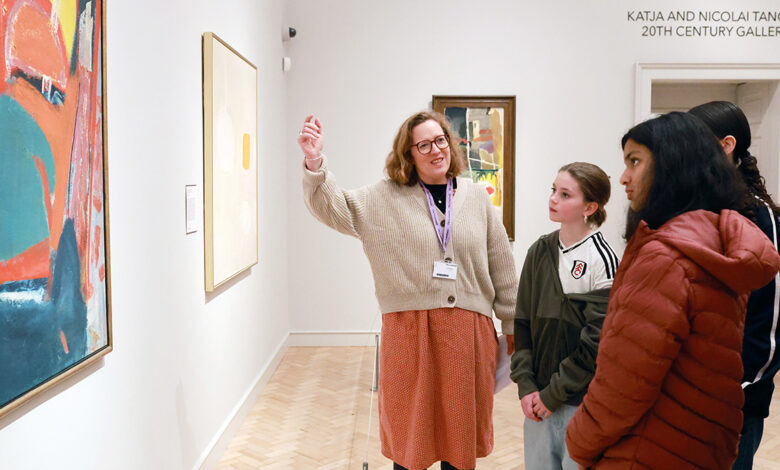
Is it possible to learn to read a painting properly without enrolling in a degree? For most Australians who spend weekends in galleries, the answer is yes, and the online options have never been stronger.
We assessed courses available to Australian students for depth, expertise and flexibility. The focus is on people who want to understand art, rather than practise it.
How This List Was Built
- The expertise of the people who designed and teach the course
- Coverage of Western art from early works through to the contemporary
- Personal tutor feedback on written work
- Flexibility for students in Australian time zones
- Insight into how the art market works, not just art movements
Quick Reference
| Rank | Course provider | Best For |
|---|---|---|
| 1 | The Art Institute | Self-paced study shaped by a leading art-market expert |
| 2 | Sotheby’s Institute of Art | Art business and market insight |
| 3 | Oxford Department for Continuing Education | Credit-bearing academic study |
| 4 | Open Universities Australia | Australian university units online |
| 5 | Christie’s Education | Modern and contemporary art |
| 6 | University of Sydney Centre for Continuing Education | Short courses with Sydney art historians |
| 7 | National Art School | Art history within a practising art school |
| 8 | Sydney Community College | A low-cost introduction |
The Rankings in Full
1. The Art Institute – Best for Self-Paced Study From a Genuine Insider
Hilary Kay joined Sotheby’s in 1977 and became its youngest ever auctioneer when she took her first sale at 21. She went on to create the auction house’s first expert training programmes, work extensively with its education division and retire as a Senior Director. Since 1979 she has been a familiar face as an expert on BBC TV’s Antiques Roadshow.
That career is the backbone of The Art Institute’s Art Appreciation course, which Hilary curates and presents with a team of 12 art specialists. The result is a course that explains not only Cubism and the Renaissance, but also how art becomes a commodity and how today’s market works.
What the course covers
- 12 modules and 12 assignments: from early Western art through the Renaissance, Modernism and 20th-century movements such as Surrealism and Abstract Expressionism.
- The art market: a dedicated module on how artworks are valued, bought and sold.
- Personal tutor feedback: tutors including Libby Anson, Stephen Farthing and Francesca Ramsay mark every assignment.
How it fits around your life
- No fixed start dates: enrol any day, with 12 months to finish and extensions available.
- Room to grow: advanced modules include British Art from Holbein to Hirst and The Art of North America.
- Live connection: online workshops with art experts and a global student community.
One Sydney student describes spending extra time visiting galleries and art auctions as the modules unfolded, which is exactly the habit a good art course should build.
Ideal For: Gallery-goers, collectors and career changers who want expert-guided, flexible study and a Certificate of Art Appreciation at the end.
Investment Range: Mid-range, with a 7-day money-back guarantee.
2. Sotheby’s Institute of Art – Best for Art Market Insight
- Runs 4-, 6- and 8-week instructor-led online courses in art history and art business.
- Awards a Certificate of Completion plus IACET Continuing Education Units.
- Also offers an asynchronous Online Certificate in Art Business.
Ideal For: Professionals moving into galleries, auction houses or art advisory work.
Investment Range: Premium
3. Oxford Department for Continuing Education – Best for Academic Credit
- Offers online art history short courses, including Italian Renaissance art.
- Runs a Certificate of Higher Education with an Art History specialism and an Undergraduate Diploma in the History of Art.
- Courses carry university credit and assessed written work.
Ideal For: Students who want Oxford-level academic rigour and are comfortable with UK term dates.
Investment Range: Mid to premium
4. Open Universities Australia – Best for Australian University Units
- Lists art history short courses from Australian universities, studied online.
- Examples include Curtin University’s 13-week Issues in Contemporary Art and the University of South Australia’s 10-week Narrating Objects, Art and Archives.
- Units can carry credit towards a degree.
Worth noting: these are university units with set start dates and assessment schedules. They suit students who want credit more than those who want to study at their own pace.
Ideal For: Students who may later continue into an arts degree.
Investment Range: Mid to high
5. Christie’s Education – Best for Modern and Contemporary Art
- Online courses covering modern art, contemporary art and the art market.
- Explores the connection between art and luxury.
- Backed by one of the world’s best-known auction houses.
Investment Range: Premium
6. University of Sydney Centre for Continuing Education
The University of Sydney’s Centre for Continuing Education runs short courses open to everyone, both online and in person. Its tutors include trained art historians such as Dr Garry Darby, who holds three degrees in art history. It suits Sydney learners who enjoy a classroom feel and expert lecturers.
7. National Art School
The National Art School teaches art history and theory within a practising art school, led by staff with doctorates from the University of Sydney. Its short courses suit people who want art history connected to studio practice.
8. Sydney Community College
Sydney Community College’s Introduction to Art History runs from the origins of art and First Nations image-making through the world’s earliest cities. At under A$200, it is a gentle, affordable first step for beginners.
What to Ask Before You Commit
Decide whether you want knowledge or credit. A self-paced certificate course will deepen your understanding quickly and flexibly, while a university unit adds academic credit but asks you to keep to a semester timetable.
Ask who designed the course and who will mark your work. A course shaped by someone who has spent decades inside the art trade will explain the market in ways a purely academic course may not.
Finally, check time zones and start dates. Many international providers run live sessions on UK or US time, which can mean late nights for Australian students.
What’s Changing in This Market
- Gallery-led learning: more Australians are pairing online study with regular gallery and auction visits.
- Art market literacy: courses increasingly explain how art is valued, not only how it looks.
- Global access: London and New York institutions now teach Australian students online.
- Lifelong learners: retirees and career changers make up a growing share of art history students.
- Flexible formats: self-paced study is closing the gap with timetabled university units on depth.
The Bottom Line
The list above reflects courses where the expertise is real and the teaching is independently recognised. The right choice depends on whether you want flexibility, credit or simply a first taste.