How Print Media Production Management Software Is Eliminating Costly Approval Delays for American Publishers

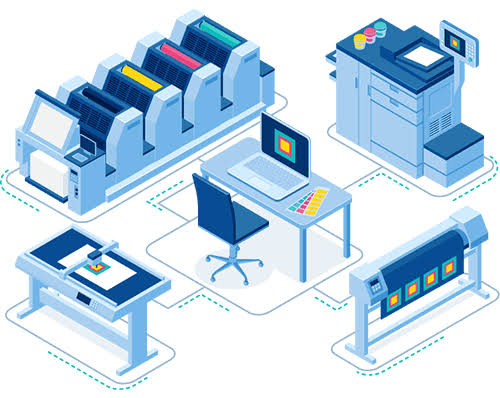
For American publishers managing print operations — whether they produce regional newspapers, trade magazines, catalogs, or commercial print runs — one of the most persistent and expensive problems is the approval process. Not the printing itself, not distribution logistics, and not even content creation. The bottleneck that quietly drains budgets and pushes production schedules past their limits is the review-and-approval cycle.
This is not a new problem, but it has become harder to ignore. As print publishers have grown more dependent on distributed teams, remote contributors, and multi-vendor supply chains, the coordination required to move a job from editorial approval through prepress and into final production has become increasingly fragile. Delays compound. Corrections get lost in email threads. Versions multiply. And somewhere in that confusion, time and money slip away.
What has changed in recent years is that the tools available to production teams have caught up with the actual complexity of the problem. Publishers who have restructured their workflows around purpose-built production management systems are finding that the delays they once considered unavoidable are, in fact, the result of process failures that software can address directly.
What Print Production Management Software Actually Does in a Publishing Environment
The category of print media production management software refers to purpose-built platforms that centralize, track, and coordinate every stage of a print job — from initial creative brief through proofing, approval, preflight, and press-ready file delivery. These systems are not generic project management tools adapted for publishing. They are built around the specific workflows that print production requires, including version control, stakeholder routing, file format handling, and print-specification compliance.
The distinction matters because generic tools create workarounds rather than solutions. When a production team uses a spreadsheet to track approvals and email to route proofs, they introduce human error at every handoff. A dedicated print media production management software platform replaces those handoffs with structured workflows that enforce sequence, capture decisions, and maintain a clear record of what was approved, by whom, and when.
This structural difference is what makes the category valuable to publishers. It is not about automation for its own sake. It is about building a reliable process that does not depend on individuals remembering to forward files or follow up on outstanding reviews.
The Role of Centralized Proof Routing in Reducing Approval Cycles
In traditional publishing workflows, a proof might be emailed to a list of stakeholders who are expected to respond within a given window. If one reviewer is slow, the entire job waits. If two reviewers send conflicting feedback, someone has to reconcile it manually. If a revised proof is issued, there is no guarantee that every stakeholder is looking at the same version.
Centralized proof routing inside a production management platform changes this dynamic by assigning reviews to specific individuals in a defined sequence or simultaneously, depending on the job requirements. The system tracks who has reviewed, who has not, and what notes have been submitted. Stakeholders access a single shared proof environment rather than individual email attachments, which eliminates version confusion and reduces the risk of a stakeholder approving an outdated file.
For publishers running multiple concurrent titles or product lines, this kind of centralized visibility across all active jobs is the difference between managing production and reacting to it.
How File Management Connects to Approval Accuracy
One underappreciated source of approval delays is file-related error. A reviewer approves a layout, but the file sent to press fails preflight. A correction is made, but the updated file is saved under a confusing name and the wrong version is submitted. These errors are common, and they are not caused by carelessness — they are caused by systems that do not connect file management to the approval record.
Production management software addresses this by linking approved proofs directly to the files in the system, so that what was approved and what is sent to press are the same asset. Preflight checks can be built into the workflow at the point of file submission, catching technical issues before they reach press rather than after. This connection between approval status and file integrity reduces the rework that often follows what appears to be a completed approval cycle.
Why Approval Delays Are More Expensive Than Publishers Often Recognize
Approval delays in print production carry costs that are not always visible on a single line of a budget. The direct cost of a missed press date — a makeready surcharge, a rescheduled slot, or an expedited run — is easy to quantify. The indirect costs are harder to measure but often larger in aggregate.
When a publication misses its print schedule, distribution windows may also shift. For advertisers, a delayed issue can affect campaign timing, which affects their confidence in the publisher as a reliable partner. For subscription-based publications, late delivery affects reader experience. Over time, these operational failures erode relationships that took years to build.
Production teams under schedule pressure also make more errors. When a job is behind and the team is rushing to recover lost time, the risk of a mistake reaching press increases. An error that goes to print — a wrong price in an advertisement, a misspelled name in a feature, an incorrect product image — generates correction costs, reprint requests, and sometimes client disputes that far exceed the cost of the original delay.
The Cumulative Effect of Small Delays Across a Production Calendar
Publishers who run monthly or weekly titles may have dozens of jobs in various stages of production simultaneously. A two-day delay in one approval cycle might seem manageable in isolation, but when that delay pushes into another job’s production window, it creates a cascade. Resources that were allocated to the next job are redirected to the delayed one. The next job’s schedule tightens. Its approval cycle is compressed. The likelihood of an error increases.
This compounding effect is what makes individual approval delays more damaging than they appear on the day they occur. Publishers who manage production reactively — responding to delays as they happen — are always operating in a compressed window with reduced margin for error. Publishers who use structured production management systems are more likely to catch delays early, when there is still time to respond without disrupting other jobs.
Stakeholder Accountability and the Problem of Informal Approvals
Many publishers still operate with informal approval processes in which a verbal confirmation or an email reply is treated as sufficient authorization to proceed. This approach introduces ambiguity into the production record. When a dispute arises — and in print production, disputes do arise — the question of who approved what and when becomes difficult to answer with confidence.
Formal approval workflows within a production management system create a documented record of every decision. Each reviewer’s action — whether an approval, a rejection, or a note — is timestamped and associated with a specific version of the proof. This record serves multiple purposes: it protects the production team when questions arise, it provides account managers with clear documentation for client conversations, and it gives management visibility into where delays are consistently occurring so that process improvements can be targeted accurately.
Structural Changes That Reduce Approval Friction Without Adding Process Overhead
One concern publishers often raise about formalizing their approval workflows is that structured processes will slow teams down. The assumption is that more steps mean more time. In practice, the opposite tends to be true when the structure is well-designed. Structured workflows reduce friction by removing the informal coordination that consumes time without creating a reliable record.
According to the National Institute of Standards and Technology, operational inefficiencies in production environments most often originate from unclear handoffs and undefined responsibilities rather than from the work itself. This observation applies directly to print production: the delay is rarely in the creative or technical work — it is in the coordination between those doing the work and those authorizing it to proceed.
Production management software addresses this by making the coordination automatic. Reviewers receive notifications when their input is required. Deadlines are visible within the system. Escalations can be built in so that if a review is not completed within a defined window, a supervisor is alerted. These mechanisms do not add steps to the process — they replace informal follow-up with reliable triggers that keep the job moving.
Adapting Approval Workflows to Different Job Types
Not every print job requires the same approval structure. A reprinted catalog with minor pricing updates does not need the same review depth as a first-run magazine issue with new editorial content and advertiser insertions. Production management platforms designed for publishing environments allow teams to configure different approval workflows for different job types, so that the process fits the risk profile of the job rather than applying a one-size approach across the entire operation.
This flexibility matters because it allows publishers to move fast on straightforward jobs without compromising the rigor they apply to complex ones. When approval workflows are configurable, production managers can build templates that reflect how each type of job actually works, rather than designing around the most complex case and applying that overhead universally.
What Changes When Publishers Commit to Structured Production Systems
Publishers who have moved their operations into structured production management environments consistently report that the change affects more than just approval speed. When teams operate within a shared system rather than across disconnected communication channels, the quality of communication improves. Feedback is more specific because reviewers are annotating directly on a proof rather than describing changes in text. Decisions are made with more confidence because the relevant version history is visible within the same environment.
Production managers gain a clearer view of where time is being spent across the operation, which makes resource planning more accurate. When a publisher can see that a particular type of job consistently takes longer to approve than estimated, they can adjust their scheduling assumptions, renegotiate internal timelines, or work with stakeholders to improve their review turnaround.
These operational improvements do not come from the software alone. They come from the combination of a well-designed tool and a management commitment to using it consistently. Publishers who implement production management software without adjusting their underlying workflows often see limited benefit. Those who use the software as the foundation for a restructured process see lasting improvement.
Closing Observations
The approval delay problem in print media is not a technology problem at its core — it is a coordination and accountability problem. Technology solves it by replacing informal, fragmented communication with structured, visible workflows that keep every stakeholder aligned and every decision documented.
American publishers operating under competitive pressure and tightening margins cannot afford to treat approval delays as an acceptable cost of doing business. The cumulative effect of delayed approvals — missed press dates, compressed schedules, increased error rates, and strained client relationships — is significant enough to justify a serious evaluation of how the approval process is currently structured and whether it is serving the operation or working against it.
The publishers who are eliminating these delays are not doing so by working faster or hiring more coordinators. They are doing so by building systems that make the coordination reliable, the record clear, and the process consistent across every job, every title, and every team member involved in getting a print product to press.