Why Fashion Influencers and Style Creators Are Rethinking Their Audio Strategy

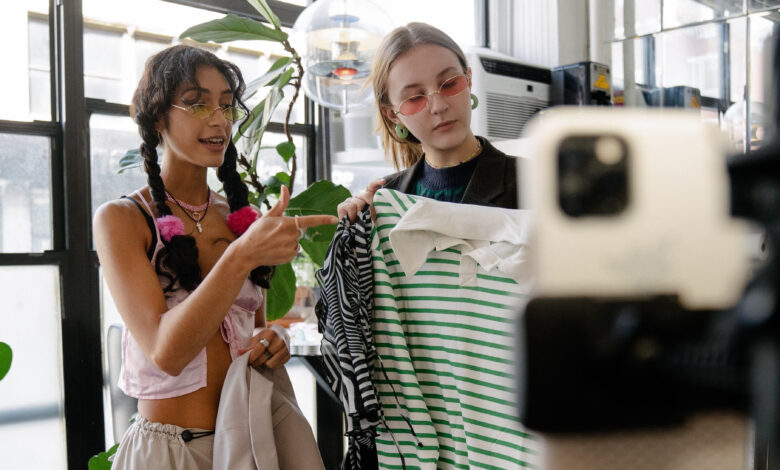
Fashion content is fundamentally about feeling. A lookbook video, a styling reel, a runway-inspired clip — the goal isn’t to show clothes in a catalog sense but to communicate how wearing them feels, what world they belong to, what identity they make possible. The best fashion content creates desire not for a specific garment but for the experience of being the person who wears it.
Music is the primary vehicle for that feeling. A minimal white outfit looks different set to something spare and architectural than it does set to something warm and romantic. The same pair of vintage jeans tells a different story over a country blues track than over an underground electronic beat. Fashion editors have understood this for decades — the music in a fashion film is chosen with the same intentionality as the locations and the lighting. Independent creators, working without a music supervisor and constrained by licensing budgets, have largely had to approximate that intentionality with whatever royalty-free tracks come closest.
AI music generation makes genuine intentionality about audio accessible to any creator, at any budget, for any piece of fashion content.
A Sonic Identity as Distinctive as a Visual Aesthetic
The fashion creators who build the most durable audiences have a point of view — a specific aesthetic that makes their content immediately recognizable. That visual point of view usually has a sonic equivalent, even if the creator has never thought about it explicitly. Maximalist fashion content and minimalist fashion content don’t just look different; they feel different, and music is a significant part of what creates that feeling.
An ai music maker free generates original music from a description of the aesthetic territory the content inhabits. “Dark, editorial, stark, high contrast, the feeling of a fashion week front row” produces something completely different from “warm, vintage, nostalgic, thrifted, the feeling of a Sunday market.” The musical output is built for the specific visual world rather than approximated from a library organized by tempo and mood.
For creators who produce content consistently across a defined aesthetic — the same color palettes, the same locations, the same styling sensibility — developing a consistent original audio identity means every piece of content reinforces the same brand. The audio and visual are designed together rather than the audio chosen after the visual is finished.
Styling Videos and Outfit Reveals That Hit the Right Note
The styling video — trying on multiple outfits, explaining the thinking behind each, building toward a final look — is one of the most popular formats in fashion content. Music is central to how these videos feel. The right track creates anticipation before each reveal, gives energy to the transitions, and signals whether the overall tone is playful or serious, accessible or aspirational.
Text to music lets creators describe the emotional arc of a styling video and generate music that follows it. “Starts casual and exploratory, builds confidence through the middle, peaks at the final look, something that feels like a decision made” is a description of a styling video’s emotional journey that translates directly into a music brief. The generated track shapes the edit rather than the edit being cut around a pre-existing track — which is how professional fashion film music is always produced, and which consistently produces more effective content.
For seasonal content — a spring wardrobe refresh, a winter layering guide — the music can be generated to carry the feeling of the season rather than just the colors. The audio signals the transition as much as the clothes do, and a track generated specifically for the seasonal emotional shift performs that function better than a generic “spring vibes playlist” pulled from a library.
The Lookbook as a Complete Creative Work
The lookbook — a curated series of looks presented as a visual narrative — is the format where fashion content comes closest to fashion film. The best lookbooks have a story, a world, a character moving through it. Music is the score to that story, and the difference between a lookbook that’s a slideshow of pretty images and one that’s a genuine piece of visual storytelling is largely in the audio.
Lyrics to song offers fashion creators something specific for lookbooks that want to establish a strong narrative voice: original music built from words that define the lookbook’s concept. Write the premise — the character, the world, the feeling — as a lyrical expression, and generate music that performs those words as part of the lookbook’s overall composition. A lookbook about maximalist self-expression has different words and different music than one about quiet luxury or utilitarian beauty. The audio becomes part of the concept rather than an accompaniment to it.
For creators who release lookbooks around a consistent theme or series — seasonal collections, capsule wardrobe concepts, style archetypes — original music generated from the concept language of each series creates a body of content where each piece is genuinely distinct rather than visually differentiated but sonically identical.
The Copyright Problem That Fashion Creators Keep Hitting
Fashion content creators on Instagram Reels and TikTok are more aware than most that popular music and commercial content don’t coexist cleanly. A styling video that blows up using a trending track can have its audio muted, its reach restricted in certain markets, or its monetization claimed — exactly when the video is performing well enough to matter.
The standard solution — trending audio on organic posts, licensed tracks on sponsored content — creates an inconsistency in the content’s audio experience and requires ongoing attention to which tracks are safe for which purposes. For creators running an active brand partnership program, managing music licensing across all sponsored posts is a genuine operational overhead.
Original AI-generated music solves this cleanly. Every piece of content, whether organic or sponsored, uses music that belongs to the creator and carries no platform restrictions. The audio identity is consistent whether or not a post is paid, which makes the overall brand more coherent and the content operation more straightforward to manage.