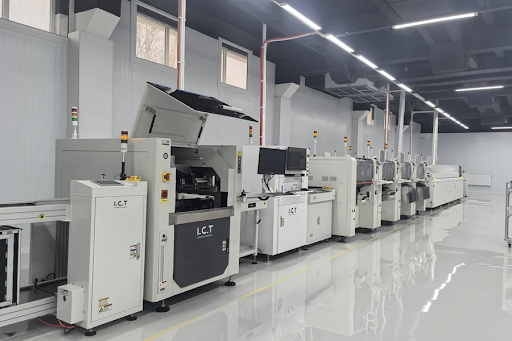
SMT printer cost should not be judged only by the machine price. The right budget depends on production volume, board complexity, changeover frequency, accuracy requirements, inspection strategy, and how the printer supports the whole line. In many factories, printer selection is reviewed together with the expected line model, especially when buyers are planning a high flexibility SMT line for mixed products and faster changeovers.
A low-cost printer can be a reasonable choice for simple, stable, low-volume work. A higher-spec printer may be more economical when solder paste quality, repeatability, automation, and reduced downtime have a direct effect on yield. The best decision comes from matching printer capability to real production needs, not from choosing the cheapest or most advanced model by default.
Why SMT Printer Cost Varies So Much
SMT printers vary in cost because they serve different production conditions. A basic printer may handle simple boards with limited changeover pressure, while a fully automatic stencil printer is designed for more stable alignment, controlled paste deposition, automated cleaning, and better repeatability. Those features are not just convenience items. They affect how consistently solder paste is printed before placement and reflow.
Printing is one of the earliest process steps in SMT assembly, so mistakes at this stage can create defects that appear much later. Insufficient paste, bridging, offset printing, and inconsistent deposits can increase rework, inspection load, and scrap. That is why printer cost should be connected to process risk, not only purchase budget.
Main Cost Drivers
- printing accuracy and repeatability
- manual, semi-automatic, or fully automatic operation
- board size range and stencil handling
- automatic cleaning and inspection-related options
- software, changeover support, and line integration
The more demanding the production environment is, the more these features matter. Paying for capability that the factory will not use is wasteful, but underbuying can be more expensive when it causes unstable output.
Low-Volume Production: Control Cost Without Ignoring Quality
For low-volume production, prototype runs, or early-stage manufacturing, the printer budget usually needs to stay practical. The factory may not need the fastest cycle time or the most automated configuration. What it does need is reliable alignment, stable paste release, and enough flexibility to handle the board types being built.
A semi-automatic or entry-level automatic printer can make sense when production volume is limited and operators have enough time to manage setup carefully. The key is to avoid choosing a printer that saves money upfront but creates daily process instability. Even in low-volume work, poor printing can waste expensive components and engineering time.
What Low-Volume Buyers Should Prioritize
- simple and repeatable setup
- stable stencil and board support
- reasonable alignment accuracy for the product type
- easy maintenance and operator training
The lowest-cost option is not automatically wrong, but it should still be evaluated against defect risk. If the board has fine-pitch components, dense layouts, or expensive assemblies, a slightly higher printer budget may protect the total production cost.
High-Mix Production: Changeover Time Becomes a Cost
High-mix production changes the cost calculation. A factory that runs many board types may lose more money during setup, stencil changes, program adjustment, and verification than during the actual print cycle. In that environment, a printer with better changeover support can be worth more than a cheaper machine with slower setup.
For EMS providers and mixed-product factories, flexibility is often the main value. The printer should support different board sizes, reliable tooling, quick program recall, and consistent setup discipline. If operators need too much manual adjustment for every job, the apparent machine savings can disappear in lost production time.
Cost Factors in High-Mix Work
- time required to switch products and stencils
- setup verification and first-board inspection effort
- operator skill required to keep results stable
- software support for recipes and process repeatability
A higher printer price may be justified when it reduces changeover loss across many jobs. Buyers should compare cost per month of real operation, not only cost per machine.
High-Volume Production: Yield and Uptime Matter More Than Price
In high-volume production, the printer is part of a continuous flow. Small printing problems can repeat across many boards before they are caught, so process stability becomes financially important. A printer that supports repeatable paste deposition, automatic cleaning, stable alignment, and consistent board handling can reduce defect risk and line interruption.
High-volume buyers often focus on throughput, but uptime and yield may matter even more. If the printer causes frequent stops, cleaning issues, or alignment drift, the full line can lose output. In this case, a cheaper printer may become expensive because it limits the performance of placement, reflow, and inspection stages.
What High-Volume Buyers Should Review
- cycle time consistency across long runs
- automatic stencil cleaning performance
- maintenance access and spare-parts availability
- compatibility with SPI and downstream quality control
For volume production, the right printer cost should be measured against avoided downtime, fewer defects, and better line utilization. The most economical machine is often the one that keeps the line stable, not the one with the lowest quotation.
Board Complexity and Component Type Change the Budget
Board design has a direct effect on printer requirements. Simple boards with larger pads and relaxed tolerances are easier to print. Dense boards with fine-pitch components, small apertures, BGAs, or mixed deposit requirements demand better control. The printer must support the process window required by the product.
If the product has tight printing requirements, saving money on the printer may only move cost into inspection, rework, and scrap. Buyers should review the smallest component packages, stencil design, paste type, board support needs, and expected inspection standard before setting a printer budget.
Products That Usually Need Stronger Printing Control
- fine-pitch ICs and dense component layouts
- BGA, QFN, and small passive components
- boards with mixed component sizes and paste volume needs
- high-reliability products where rework risk is expensive
The printer does not need to be oversized for every project, but it should not be weaker than the product requirement. Matching product difficulty to printer capability is one of the simplest ways to avoid hidden cost.
Automation Level: Labor Savings vs Equipment Cost
Automation is one of the biggest cost differences between printer types. Manual and semi-automatic systems depend more on operator skill and setup discipline. Fully automatic printers cost more, but they can reduce labor variation, improve repeatability, and support smoother line operation.
The right automation level depends on the factory’s labor cost, operator experience, product complexity, and production schedule. In a low-volume workshop, extra automation may not pay back quickly. In a line that runs daily with frequent jobs or strict quality needs, automation can reduce total cost by preventing errors and stabilizing output.
When Automation Is Worth Paying For
- operators handle frequent product changes
- quality requirements are strict and rework is expensive
- line stoppage affects multiple downstream machines
- the factory wants more repeatable process control
Automation should be treated as a cost-control tool, not as a prestige feature. Buyers should ask which automated functions will actually reduce labor, defects, downtime, or setup risk in their own factory.
Do Not Forget the Costs Around the Printer
The printer is only one part of the printing process. Stencils, squeegees, tooling, cleaning materials, paste management, inspection, training, and maintenance all affect the real budget. A machine quotation may look complete while still leaving out items that production needs on day one.
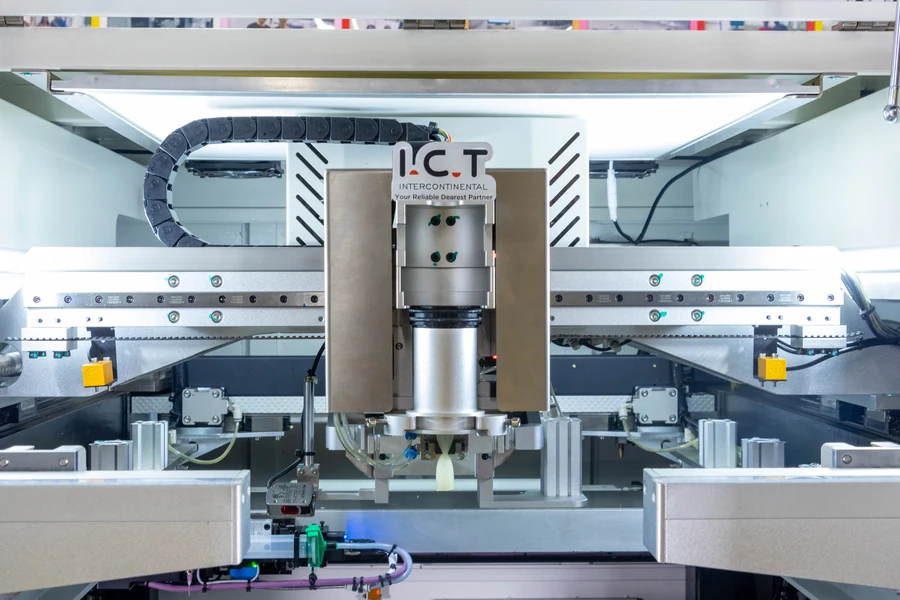
Support is another cost factor. A printer that is hard to maintain or difficult to get spare parts for can create downtime that is much more expensive than the initial price difference. Buyers should review not only hardware features but also service response, documentation, training, and spare-parts planning.
Common Hidden Cost Items
- stencils, frames, squeegees, and tooling
- cleaning paper, solvents, and regular maintenance parts
- operator and process engineer training
- SPI connection, recipe setup, and validation time
- spare parts and service response for production recovery
These costs are normal, but they should be visible before purchase approval. A clear budget helps the factory avoid surprise spending after installation.
How to Build a Practical Printer Budget
A practical printer budget starts with production needs. Buyers should define expected volume, product mix, board complexity, quality targets, staffing level, and future growth. Then they can compare printer options by how well each model supports those needs.
The decision should not be reduced to one feature or one price. A useful comparison includes machine cost, expected uptime, setup time, defect risk, labor demand, maintenance, and service support. This approach makes the final choice easier to defend because it connects cost to production value.
A Simple Evaluation Method
- list current and future board requirements
- separate must-have features from nice-to-have features
- estimate changeover, downtime, and defect-related cost
- compare supplier support and spare-parts availability
- choose the printer that supports the lowest stable production cost
This method helps factories avoid both extremes: underbuying a printer that cannot control quality, or overbuying a machine whose advanced features will not be used.
Conclusion
SMT printer cost depends on what the factory needs the printing process to do. Low-volume production may need a practical, easy-to-use solution. High-mix production often needs faster setup and stronger flexibility. High-volume production usually places more value on stability, uptime, and repeatable quality.
The best printer is not simply the cheapest model or the most advanced model. It is the printer that matches production volume, board complexity, staffing, quality targets, and line strategy. When buyers evaluate cost this way, they make a stronger investment and reduce the risk of paying for printing problems later.
FAQ
How much should an SMT printer cost?
An SMT printer should cost enough to meet the factory’s real printing requirements, not just the lowest possible price. The right budget depends on volume, board complexity, automation level, accuracy needs, and support requirements. Buyers should compare total production cost, including defects, downtime, changeover, and maintenance.
Is a fully automatic SMT printer worth it?
A fully automatic SMT printer is worth it when repeatability, throughput, changeover control, and reduced operator variation matter. It may not be necessary for very simple or low-volume work, but it can be a better investment for high-mix, high-volume, or quality-sensitive production where printing errors are expensive.
What hidden costs come with an SMT printer?
Hidden costs can include stencils, squeegees, tooling, cleaning consumables, spare parts, training, maintenance, recipe setup, and validation time. These costs are normal parts of the printing process, but they should be included in the budget before purchase approval so the factory understands the real investment.
Does production volume affect printer selection?
Yes. Low-volume production may prioritize affordable setup and simple operation, while high-volume production needs stronger uptime, automation, and process repeatability. High-mix production adds another cost factor because frequent product changes can make setup speed and recipe control more important than machine price alone.
Can a cheaper SMT printer still be a good choice?
Yes, a cheaper SMT printer can be a good choice when the boards are simple, volume is limited, and the factory can maintain stable setup quality. It becomes risky when product complexity, fine-pitch components, frequent changeovers, or strict quality targets require better alignment, automation, and repeatability.