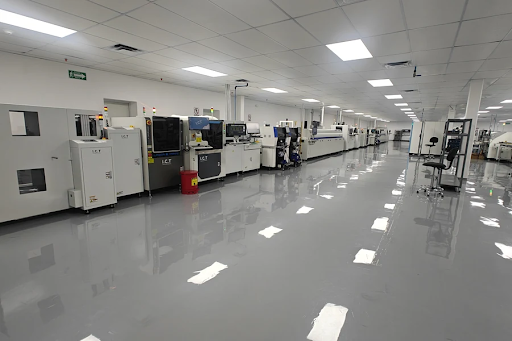
Deciding whether to upgrade an existing SMT line or invest in a completely new line is rarely a simple budget question. The better choice depends on product mix, bottlenecks, quality risk, available floor space, future demand, and how much useful life remains in the current equipment. Many factories start this review by comparing their current setup with a high flexibility SMT line to see whether the gap is small enough to close through upgrades or large enough to justify a new project.
An upgrade can be the smarter path when the existing line is structurally sound and only one or two weak points are limiting performance. A new line becomes more attractive when the factory needs a different production model, higher flexibility, better automation, or a cleaner long-term growth platform. The key is to separate problems that can be solved locally from problems that come from the basic line design.
Start With the Real Reason for the Decision
Before comparing quotations, the factory should define why the decision is being considered. Some teams want more output. Others need faster changeover, better inspection coverage, lower defect risk, traceability, or support for new board sizes and component types. These are different problems, and they do not all point to the same answer.
If the main issue is one slow or outdated machine, an upgrade may solve it. If the issue is poor line balance across printing, placement, reflow, inspection, and handling, replacing one machine may only move the bottleneck somewhere else. The first step is not to ask which option is cheaper. It is to understand what business result the line must deliver.
Questions That Clarify the Goal
- Is the factory trying to increase daily output or reduce changeover loss?
- Are quality problems linked to one process step or to the whole line flow?
- Will upcoming products require different board sizes, materials, or component ranges?
- Is the current line limiting sales growth, delivery reliability, or process control?
These questions make the decision more practical because they connect equipment spending to operating reality.
When an SMT Line Upgrade Makes More Sense
An upgrade is often the right choice when the existing line still has a strong base. The conveyors, utilities, layout, process flow, and core machines may still be usable, but one section is creating avoidable losses. In that case, targeted investment can improve performance without the disruption of building a new line from zero.
Common upgrade examples include adding SPI before placement, improving AOI coverage, replacing an older stencil printer, adding feeders, improving board handling, upgrading placement software, or adding traceability modules. These changes can be meaningful when they remove a clear bottleneck or close a quality gap.
Good Signs That an Upgrade Is Enough
- The current line layout still fits present and near-future products.
- Most machines are reliable and have available spare parts.
- The main bottleneck can be identified and corrected.
- Operators already understand the line and can absorb the change quickly.
- The expected improvement is clear enough to justify the upgrade cost.
Upgrading also reduces training pressure because the team is not learning an entirely new production system. That matters in factories where experienced operators are limited or where production cannot stop for a long installation window.
When a New SMT Line Is the Better Investment
A new SMT line becomes more logical when the factory is trying to change its production model rather than fix one weak section. If the current line was designed for stable, lower-mix production, it may struggle when the business moves into high-mix orders, smaller batches, faster delivery cycles, or more complex inspection requirements.
In that situation, upgrading individual machines can become a patchwork strategy. The factory may spend money on one improvement, then discover that the next process step cannot support the new requirement. A new line can be more expensive at first, but it may create a cleaner platform for automation, data flow, line balance, and future expansion.
Warning Signs That the Existing Line Has Reached Its Limit
- Multiple machines are old, unsupported, or difficult to maintain.
- Changeover time is high because the whole line was not built for flexibility.
- The line cannot support planned board sizes, product mix, or quality targets.
- Adding one upgraded machine would create new bottlenecks elsewhere.
- The factory needs better traceability, automation, and process data from the start.
A new line is especially worth considering when the business roadmap has already changed. If future products are clearly different from past products, the equipment strategy should reflect the future instead of defending the old layout.
Compare Total Cost, Not Only Purchase Price
The upgrade option often looks cheaper because the first quotation is smaller. That can be true, but the comparison is incomplete unless the factory also reviews downtime, installation work, validation effort, spare-parts risk, operator training, and the chance that another upgrade will be needed soon.
A new line has a higher initial cost, but it can reduce hidden costs if it delivers better line balance, lower maintenance risk, simpler scheduling, and more room for future products. The decision should compare the cost of ownership over several years, not the cost of one purchase order.
Costs Buyers Often Forget
- production downtime during installation or changeover
- engineering time for testing, programming, and validation
- spare parts for older machines kept in service
- operator learning time and process stabilization
- future rework if the chosen option only solves part of the problem
A useful rule is simple: if an upgrade solves the root cause for a reasonable period, it may be the best financial choice. If it only delays an unavoidable replacement, the factory should be careful about spending twice.
Use Line Balance to Test Both Options
Line balance is one of the most reliable ways to judge whether an upgrade or new line makes sense. A factory may be tempted to replace the most visible machine, but real output depends on the whole process. Printing, placement, reflow, inspection, conveyors, buffering, and manual handling all need to work together.
If one section is clearly slower than the rest, a targeted upgrade may work well. If every section is close to its limit, or if the line has several mismatched process speeds, a new line may create better results. The goal is not to buy the fastest machine. It is to build a flow where the full line can support the target takt time with stable quality.
A Practical Line Balance Review
- Measure actual cycle time at each major process step.
- Compare planned output with real output across several product types.
- Identify whether downtime comes from machines, setup, inspection, or material handling.
- Check whether the proposed upgrade would remove the bottleneck or simply shift it.
This review should include production engineers, quality engineers, maintenance, and operators. Each group sees different evidence, and the best decision usually comes from combining those views.
Consider Flexibility and Future Product Mix
Flexibility is often the deciding factor. If the factory will keep running similar boards in stable batches, the current line may only need selective improvement. If the next stage of the business involves more product families, shorter runs, faster customer changes, or more complex components, the line must be evaluated differently.
A flexible SMT line is not only a set of machines. It is a production concept that includes feeder planning, software management, inspection strategy, material flow, operator workflow, and changeover discipline. If the existing line cannot support that concept, a new line may provide a stronger long-term platform.
What Flexibility Really Means in This Decision
- shorter setup and program switching time
- support for wider board and component ranges
- better handling of engineering changes and small batches
- more scalable inspection, traceability, and data collection
Factories sometimes underestimate this point because the current line still runs today’s products. The question is whether it can run tomorrow’s product mix without creating daily scheduling stress.
Review Risk During Installation and Ramp-Up
Both options carry implementation risk. An upgrade can interrupt an active line and create integration issues between old and new equipment. A new line can require more installation time, training, floor preparation, and process validation. Neither option should be approved without a clear ramp-up plan.
The risk profile is different. An upgrade is usually smaller, but it depends heavily on compatibility. A new line is broader, but it gives the factory more control over the full process design. Buyers should ask the supplier how commissioning will be handled, how operators will be trained, and how production will be protected during the transition.
Transition Planning Questions
- Can the upgrade be installed during planned downtime?
- Will old and new machines communicate or transfer boards smoothly?
- How long will validation take before full production resumes?
- What training is needed for operators, maintenance, and engineers?
A decision that looks good financially can still fail if the transition plan is weak. Implementation detail is part of the decision, not an afterthought.
A Simple Decision Framework
The most practical approach is to score both options against the same criteria. The factory can review production fit, flexibility, total cost, downtime risk, quality impact, service life, and expansion potential. This helps the team avoid emotional decisions based on fear of spending too much or excitement about new equipment.
A good framework also helps management understand why the chosen option is stronger. If the upgrade wins, the team can show that it solves the root cause at acceptable risk. If the new line wins, the team can show that the current line is no longer aligned with the business plan.
Upgrade Is Usually Better When
- one or two clear bottlenecks are limiting an otherwise healthy line
- current products and near-future products remain similar
- downtime must be minimized and staff already know the line
- the expected useful life after upgrade is long enough
A New Line Is Usually Better When
- the production model is changing toward higher mix or higher automation
- several machines are near the end of service life
- line balance, traceability, or flexibility cannot be fixed locally
- future growth needs a cleaner and more scalable platform
Conclusion
The choice between an SMT line upgrade and a new SMT line should be based on root cause, future production needs, and total operating value. Upgrading is often smarter when the current line is still fundamentally suitable and the problem is narrow. A new line is often smarter when the factory needs a different level of flexibility, automation, stability, or growth capacity.
Factories that make this decision carefully usually avoid two common mistakes: spending too much on a new line when a targeted upgrade would work, or spending repeatedly on upgrades when the old line no longer fits the business. The best decision is the one that supports real production needs for the next several years, not only the next quotation review.
FAQ
Is it cheaper to upgrade an SMT line?
Upgrading an SMT line is usually cheaper at the purchase stage, but it is not always cheaper over time. If the upgrade solves a clear bottleneck and extends useful line life, it can be a strong choice. If the existing line has several aging machines or poor flexibility, repeated upgrades may cost more than planning a new line.
When should a factory buy a new SMT line?
A factory should consider a new SMT line when the current line no longer fits product mix, output targets, quality requirements, or future growth. This is especially true when multiple machines are outdated, line balance is weak, or the factory needs higher flexibility and better automation from the start.
What is the biggest risk of upgrading an old SMT line?
The biggest risk is solving one visible problem while leaving the root cause in place. A new printer, placer, or inspection machine may help, but it can also expose new bottlenecks in handling, reflow, software, or maintenance. Buyers should test whether the upgrade improves the full line, not just one station.
How do you compare upgrade cost with new line cost?
Compare total ownership cost, not only equipment price. Include downtime, installation, validation, training, spare parts, maintenance risk, future expansion, and expected service life. A lower upgrade cost is attractive only if it delivers enough stable production value for the next planning period.
Does product mix affect the decision?
Yes. Product mix is one of the most important decision factors. Stable products with limited changeover may only need targeted upgrades. High-mix production, short batches, frequent engineering changes, and wider component ranges often require a more flexible line design, which may make a new SMT line the better investment.