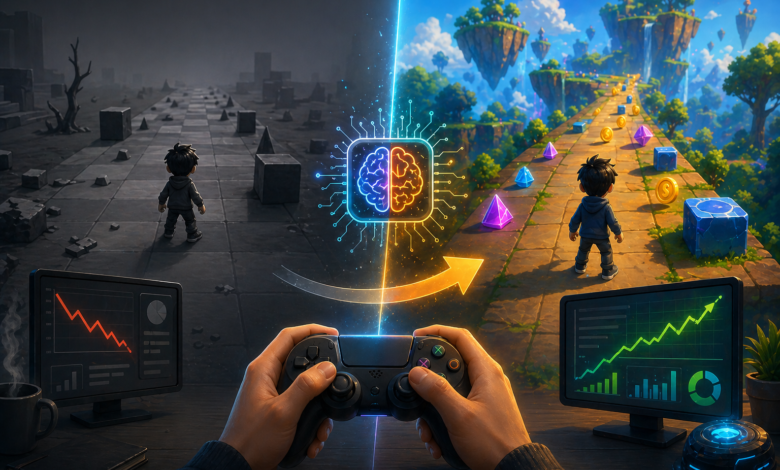
One of the biggest challenges in AI-generated game development is not building the game but making players stay in it for longer sessions. Many creators notice that players try the game for a short time and then leave without returning. This happens even when the game looks polished and functions properly. The reason is simple players do not stay for visuals, they stay for experience. If the gameplay does not feel engaging or rewarding within the first few moments, they lose interest quickly. Many AI game platforms make creation easy, but retention depends on how well the gameplay is designed and refined. To make players stay longer, you need to focus on how the game feels during continuous play rather than just the initial impression.
Why Players Leave Too Quickly
Players leave games quickly when they do not feel a reason to continue playing. This usually happens when the gameplay loop is too weak or repetitive. If the player is doing the same action without variation or progress the experience becomes predictable. Another major reason is lack of feedback because when actions do not create visible or satisfying responses the game feels empty. Poor pacing also contributes to early exits where the game either becomes too easy too fast or too difficult too soon. When these elements are not balanced players disconnect from the experience and move on to something more engaging.
Understanding Player Retention
Player retention refers to how long players continue playing your game after their first interaction. It is one of the most important indicators of game success because it shows whether the experience is enjoyable enough to repeat. Retention depends on how satisfying the core gameplay feels and whether players feel progress over time. If there is no sense of improvement or reward players lose motivation quickly. A strong retention system makes players want to return because each session feels meaningful and slightly different from the previous one.
Fixing the Core Gameplay Loop
- Make the main mechanic smooth and easy to repeat
- Add clear feedback for every player action
- Introduce small variations to avoid repetition
- Ensure progress is visible during gameplay
The core gameplay loop is what keeps players engaged over time. If it feels smooth and rewarding players naturally stay longer. Even simple mechanics can become engaging if they are polished properly and provide consistent feedback and progression.
Improving Game Engagement
Engagement is created when players feel actively involved in what is happening in the AI game maker. This comes from responsive controls, meaningful feedback and balanced challenge. If the game reacts quickly to player input and provides clear results engagement increases naturally. Adding small challenges or changes in pace helps maintain interest during longer sessions. Engagement is not about complexity but about how connected the player feels to the gameplay at every moment.
Why Feedback Keeps Players Playing
Feedback is one of the most important elements in keeping players engaged because it confirms that their actions matter. Without feedback, the game feels disconnected even if the mechanics work correctly. Feedback can come in the form of sound effects, visual reactions, score updates or animations. These signals help the player feel rewarded and involved. Strong feedback creates satisfaction which encourages players to continue playing for longer periods because every action feels meaningful.
Creating a Strong Gameplay Flow
Game flow is the smooth progression of actions and challenges that the player experiences during gameplay. A strong flow keeps players focused and prevents boredom or confusion. If the game flows well, players naturally stay engaged without feeling lost or overwhelmed. This requires careful balancing of difficulty, timing and progression. When each part of the game connects smoothly, the experience feels continuous and enjoyable which increases playtime significantly.
Learning from a Simple Game Example
A game like Ultimate Carrom shows how a simple mechanic can keep players engaged when designed correctly. The player avoids obstacles while speed gradually increases, which creates a natural rhythm of challenge and reaction. The gameplay is easy to understand but becomes more intense over time, which keeps players focused. This example shows that retention does not depend on complexity but on how well progression and feedback are designed within a simple system that feels smooth and responsive.
Common Mistakes That Reduce Playtime
- Weak gameplay loop without progression
- Lack of meaningful feedback during actions
- Poor difficulty balance that causes frustration or boredom
- Repetitive mechanics without variation
These mistakes directly affect how long players stay in the game because they reduce engagement and break the flow of the experience. Fixing them improves retention significantly without needing major redesign.
Making Players Stay Longer
To make players stay longer, you need to create a sense of progression and engagement that keeps them interested over time. This can be done by gradually increasing difficulty, adding small rewards or introducing slight variations in gameplay. Players should feel that each session offers something new or slightly more challenging than before. When the experience feels rewarding, and evolving players are more likely to continue playing for longer periods.
Testing Player Behavior
Testing is essential for understanding why players leave or stay in your game. You should observe how players behave during extended sessions and identify when interest drops. Feedback from real users is extremely valuable because it reveals issues that may not be obvious during development. Each testing session should help you improve pacing feedback and gameplay flow. Over time these improvements lead to higher retention and longer play sessions.
Wrapping Up
Making players stay longer in your AI-generated game is not about adding more features but about improving how the game feels during continuous play. Retention depends on smooth gameplay, clear feedback, balanced difficulty and a strong gameplay loop. When players feel engaged and rewarded, they naturally continue playing. By focusing on these core elements and testing regularly, you can transform short play sessions into longer and more meaningful experiences. Consistent improvement is the key to turning simple AI games into engaging experiences that players return to again and again.