
How Nasal Spray Manufacturing Works: A Step-by-Step Guide for Product Developers

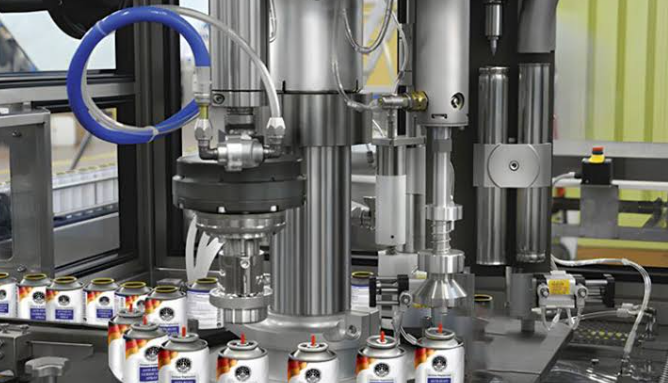
Bringing a nasal spray product to market involves a level of technical coordination that many product developers underestimate until they are already committed to a formulation strategy. Unlike oral dosage forms, nasal sprays must meet exacting standards around droplet behavior, preservative stability, and container compatibility — all of which directly affect whether the finished product performs consistently in the hands of end users. For teams working through early-stage development or scaling from pilot batches, understanding how the manufacturing process is structured can prevent costly reformulations and regulatory delays down the line.
This guide covers the core stages of nasal spray production, from formulation design to fill-and-finish, and explains why each stage carries weight in determining the quality and viability of the final product.
What Nasal Spray Manufacturing Actually Involves
Nasal spray manufacturing is a specialized branch of pharmaceutical production that combines liquid formulation science, sterile or near-sterile processing, and precision delivery system design. It is not simply a matter of mixing an active ingredient into a solution and filling containers. The process must account for how the formulation interacts with the spray mechanism, how it behaves inside the nasal cavity, and how it maintains its properties over the full shelf life of the product.
For product developers approaching this category for the first time, a structured Nasal Spray Manufacturing overview can clarify the scope of what is involved before any formulation work begins. This is particularly relevant when evaluating contract manufacturing partners or assessing internal capabilities against regulatory expectations.
The manufacturing process spans several interconnected disciplines. Formulators, packaging engineers, quality assurance teams, and regulatory affairs specialists must all operate within a shared framework, because a decision made in one area almost always creates a downstream consequence in another. A change to a preservative system, for example, can affect both the container closure compatibility and the required stability testing protocol.
The Role of Formulation Type in Shaping the Process
Nasal sprays are not a single product category in terms of formulation design. They may be aqueous solutions, suspensions, or emulsions, and each type requires a distinct manufacturing approach. Aqueous solutions are generally more straightforward to produce, but they still require careful control of pH, tonicity, and preservative levels. Suspensions introduce additional complexity because the active ingredient must remain uniformly distributed throughout the liquid without settling or aggregating over time.
The choice of formulation type is not purely a scientific decision. It is also a manufacturing decision, because different formulation types demand different equipment, different process controls, and different validation strategies. Product developers who lock in a formulation type early without considering manufacturing constraints often encounter problems when they attempt to scale up or transfer the process to a commercial facility.
Ingredient Selection and Its Process Implications
Every ingredient in a nasal spray formulation plays a functional role, and those roles extend beyond therapeutic effect. Excipients such as humectants, viscosity modifiers, and tonicity agents all influence how the product behaves during mixing, filling, and storage. Selecting ingredients that are chemically compatible with one another and with the container system is a foundational step that determines how smoothly the rest of the manufacturing process runs.
One area where developers frequently encounter challenges is preservative selection. Most multi-dose nasal sprays require a preservative system to prevent microbial contamination during use. However, certain preservatives can interact with pump components or with the container material in ways that affect both the integrity of the preservative and the performance of the delivery system. Testing these interactions early, before the formulation is finalized, reduces the risk of failures during stability studies.
Sourcing and Quality of Raw Materials
The quality of raw materials used in nasal spray production has a direct bearing on the consistency of the finished product. Active pharmaceutical ingredients must meet pharmacopoeial specifications, and excipients must be sourced from suppliers who can provide appropriate documentation of identity, purity, and absence of contaminants. This is not a procedural formality — raw material variability is one of the most common root causes of batch failures in liquid dosage form manufacturing.
Manufacturers operating under Good Manufacturing Practice guidelines, as outlined by regulatory bodies such as the U.S. Food and Drug Administration, are required to qualify their suppliers and maintain records of incoming material testing. For product developers working with a contract manufacturer, it is worth understanding how that organization manages its supply chain, particularly for any ingredient that is single-sourced or has a long lead time.
The Compounding and Mixing Stage
Once materials are qualified and released for production, the manufacturing process moves into bulk compounding. This is the stage where individual ingredients are combined in the correct sequence and under controlled conditions to produce a uniform liquid bulk. The order of addition matters. Some ingredients must be dissolved or dispersed before others are introduced, and temperature control during mixing can affect both solubility and stability.
For suspension-based nasal sprays, the mixing stage requires additional attention to particle size and distribution. If the active ingredient is not milled or micronized to the appropriate particle size before compounding, the resulting suspension may exhibit poor uniformity, which in turn affects dose consistency. This is one of the more technically demanding aspects of nasal spray manufacturing and one that distinguishes experienced manufacturers from those with limited formulation expertise in this delivery form.
In-Process Controls During Compounding
In-process testing during compounding serves as an early quality check before the batch proceeds to filling. At this stage, manufacturers typically verify parameters such as pH, appearance, and preliminary assay results. If these values fall outside acceptable ranges, the batch can be investigated and, in some cases, corrected before additional manufacturing steps are completed. This reduces waste and prevents quality failures from propagating further into the process.
The value of in-process controls goes beyond individual batch quality. Over time, the data collected during compounding helps manufacturers identify trends in process performance, which supports continuous improvement and more accurate troubleshooting when deviations occur.
Container and Delivery System Selection
The container and pump assembly used in a nasal spray product are integral to how the product performs, not merely how it is packaged. The pump mechanism determines spray geometry, droplet size distribution, and dose volume — all of which affect where the product is deposited in the nasal passage and how effectively it is absorbed or acts locally. Selecting a pump system that is appropriate for the formulation viscosity and intended therapeutic use is a critical decision that should be made early in development.
Container materials must also be evaluated for compatibility with the formulation. Some formulations can interact with plasticizers, colorants, or adhesive components in the container, leading to extractables and leachables that could affect product safety. The regulatory framework for nasal drug products requires extractables and leachables studies as part of the approval process, and the data from these studies must demonstrate that any compounds migrating from the container into the product remain below safety thresholds.
Pump Performance and Dose Uniformity Testing
Before a nasal spray product can be approved for commercial use, its pump assembly must be validated to deliver a consistent dose across the expected range of use conditions. This includes testing at the beginning and end of container life, across different user actuation forces, and under various storage orientations. Dose uniformity is one of the key quality attributes that regulators evaluate, and variability in this parameter is treated as a serious product quality concern.
Manufacturers who have experience with a range of pump suppliers and container systems can provide meaningful input on which configurations are likely to perform reliably for a given formulation. This kind of practical knowledge is difficult to acquire quickly and represents a real advantage when selecting a manufacturing partner.
Fill-and-Finish Operations and Sterility Considerations
The fill-and-finish stage is where the bulk formulation is transferred into individual containers and sealed. For nasal sprays, this process must be conducted in a controlled environment that limits the introduction of particulate matter and microbial contamination. While most nasal sprays are not sterile in the pharmaceutical sense — they do not require the same level of sterility assurance as injectable products — they are still manufactured under conditions that prevent contamination and support product safety.
Filling equipment must be calibrated to deliver the target fill volume consistently across the entire batch. Overfilling increases material costs and may affect pump priming behavior. Underfilling reduces the number of doses available to the patient and represents a compliance failure. Maintaining fill volume control across large batch sizes requires well-maintained equipment and robust monitoring throughout the filling operation.
Labeling, Packaging, and Batch Release
Once containers are filled and sealed, they move through labeling and secondary packaging before undergoing final batch release testing. Release testing for nasal spray products typically includes assay of the active ingredient, preservative content, pH, microbial limits, and pump delivery performance. All results must fall within pre-specified acceptance criteria before the batch can be distributed.
Batch release is a formal quality step that requires review of all manufacturing records, in-process data, and finished product test results. Any unexplained deviation identified during this review must be investigated and closed before release can proceed. This process exists to protect patients and to give manufacturers documented evidence that the product meets its intended specifications.
Stability Testing and Shelf Life Determination
Stability testing is conducted after manufacturing to confirm that the product retains its quality attributes throughout its intended shelf life. Samples from commercial or registration batches are stored under defined temperature and humidity conditions and tested at regular intervals. The data collected from these studies forms the basis for the shelf life claim on the product label and is reviewed as part of the regulatory submission.
Stability failures — whether in chemical potency, physical appearance, or microbiological compliance — can require reformulation or changes to the container system. For this reason, stability risk assessment should begin during formulation development, not after the product has been manufactured at scale.
Bringing the Process Together
Nasal spray manufacturing is a process where each stage builds on the decisions made in the one before it. Formulation choices affect mixing requirements. Ingredient selection affects container compatibility. Container and pump selection affects dose performance. Fill operations affect final product quality. Stability testing confirms whether all of those earlier decisions held up over time.
For product developers, the practical implication of this interconnectedness is that early-stage decisions carry long-term consequences. Understanding where the critical control points are, what can go wrong and why, and what questions to ask of a manufacturing partner can mean the difference between a smooth product launch and a drawn-out development cycle. The process is not simple, but it is structured — and understanding that structure is the most useful thing a developer can bring into early conversations with a manufacturing team.


