Wildfire Damage Repair vs. Standard Home Renovation: Why They’re Not the Same and What Homeowners Get Wrong

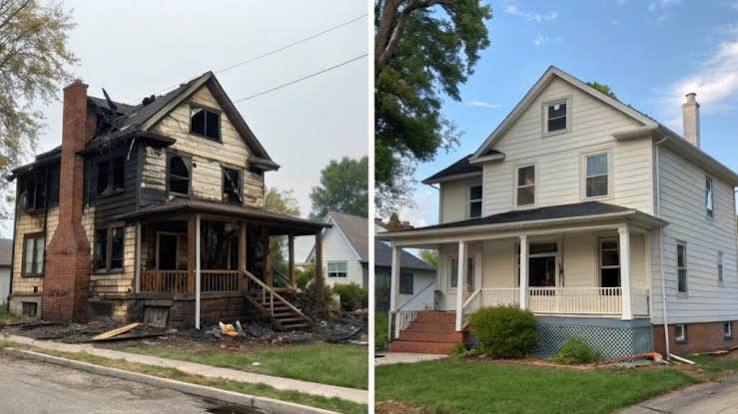
When a wildfire moves through a neighborhood, the homes left standing often look deceivingly intact. Walls remain upright, rooflines hold their shape, and from the street, the structure may appear to have survived relatively unscathed. This is where many homeowners make their first critical mistake: assuming that what comes next resembles a standard home renovation project.
The reality is that fire damage — particularly from wildfires — operates according to an entirely different set of rules than storm damage, aging materials, or cosmetic deterioration. The processes that follow a wildfire are governed by public safety regulations, environmental remediation requirements, insurance claim documentation, and structural assessment protocols that most general contractors simply are not equipped to manage. Understanding why these two types of work differ is not just academic. For homeowners trying to rebuild after a wildfire, it is the foundation of every decision they will make.
What Wildfire Damage Actually Does to a Structure
The scope of wildfire damage repair extends well beyond charred surfaces or broken windows. Wildfires expose homes to a combination of direct flame contact, radiant heat, smoke infiltration, and airborne ember penetration — all of which affect a home simultaneously and in ways that interact with each other. A roof that appears physically intact may have experienced enough heat exposure to compromise its structural integrity without leaving visible evidence. Insulation inside walls can melt or compact. Electrical wiring insulation degrades under prolonged heat even when walls are not burned through.
Professionals who specialize in wildfire damage repair are trained to assess these compound effects rather than evaluate damage zone by zone, the way a renovation contractor would typically approach a remodel. This distinction matters because failing to identify heat-stressed components that are not visibly damaged is one of the most common reasons rebuilt homes experience secondary failures within the first few years after reconstruction.
Smoke and Ash Contamination as Structural Problems
Smoke damage is rarely treated with the seriousness it deserves in homes that are not fully destroyed. Wildfire smoke contains a mixture of combustion byproducts — including carbon monoxide residue, volatile organic compounds, heavy metals, and particulates from burned synthetic materials — that penetrate porous building materials deeply. This is not surface contamination that can be cleaned with standard methods.
When smoke and ash infiltrate wall cavities, HVAC ductwork, attic insulation, or subflooring, they create long-term air quality problems and can accelerate material degradation over time. Remediation in these cases requires controlled removal and replacement of affected materials, not cleaning. Any contractor who attempts to treat heavy smoke infiltration as a surface issue is likely to leave behind contamination that continues to affect the home and its occupants for years.
Structural Load Capacity After Heat Exposure
Timber framing exposed to intense heat undergoes changes in its structural properties even without catching fire. Wood that has been exposed to prolonged radiant heat can lose tensile strength and become brittle. Steel connectors, which are used throughout modern framing to join structural members, can also lose their load-bearing properties under sufficient heat exposure. These changes are not visible to the eye and are not detectable through standard renovation inspection methods.
Engineers involved in wildfire rebuild projects are typically required to assess the structural load capacity of remaining framing before any reconstruction begins. This step does not exist in standard renovation workflows because it addresses a type of damage that renovation projects simply do not encounter. Skipping this assessment to save time or cost creates real risk, particularly in regions prone to snow loads, high winds, or seismic activity.
The Regulatory and Permitting Framework Is Fundamentally Different
Standard home renovation projects in most jurisdictions require permits for significant structural work, electrical changes, or plumbing modifications. The process is relatively predictable and most licensed general contractors navigate it routinely. Wildfire reconstruction operates within an entirely different regulatory environment, one that is frequently updated after major fire events and varies significantly by county, fire zone designation, and insurance jurisdiction.
Many states have adopted updated building codes specifically for homes rebuilt after wildfires. These codes often require ignition-resistant construction materials, ember-resistant vents, non-combustible roofing assemblies, and defensible space compliance — none of which are standard requirements for typical renovation permits. A contractor who is not familiar with post-fire rebuild codes in a specific region may inadvertently submit plans that do not meet the current requirements, leading to permit delays, failed inspections, and costly redesigns.
Insurance Claim Documentation and Scope Development
One of the most consequential differences between a renovation project and a wildfire rebuild is the role of the insurance claim in defining the scope of work. In a standard renovation, a homeowner and contractor develop a scope based on desired outcomes and budget. In a wildfire rebuild, the scope is developed in direct relationship to the insurance claim, and the two must align closely to ensure the homeowner is compensated fairly and the work is fully covered.
Wildfire rebuild specialists understand how to document damage in a way that is consistent with how insurance adjusters evaluate losses. This includes creating detailed inventories of affected materials, providing line-item cost breakdowns that match industry valuation standards, and identifying damage that an untrained eye might overlook and that an adjuster might otherwise miss. Homeowners who hire general renovation contractors without this experience often find that their claim settlements do not fully account for the actual scope of restoration needed.
Debris Removal and Hazardous Material Handling
Before any reconstruction begins on a wildfire-damaged property, the site must be cleared of debris and assessed for hazardous materials. Wildfire debris frequently contains asbestos from older building materials, lead from paint or plumbing, and toxic ash from burned household contents and synthetic materials. The U.S. Environmental Protection Agency has established specific protocols for managing wildfire debris in declared disaster areas, and in many cases, site clearance must be completed by certified hazmat contractors before any rebuild permit is issued.
This is not a step that exists in standard renovation projects. General contractors are not licensed or equipped for hazardous debris removal, and attempting to skip or minimize this phase creates both legal liability and ongoing health risks for future occupants.
Why General Contractors Are Often the Wrong Choice After a Wildfire
This is not a criticism of general contractors as professionals. It is simply a recognition that wildfire rebuilds require a very specific combination of skills that most residential renovation contractors have not had reason to develop. The work demands knowledge of contamination remediation, structural engineering assessment, post-fire building codes, insurance documentation, and hazardous materials handling — none of which are routine components of home improvement or renovation work.
Homeowners under financial and emotional pressure after a disaster often default to the contractors they already know or who are most immediately available. This is understandable. But the mismatch between what a general renovation contractor knows and what a wildfire rebuild actually requires has resulted in projects that are later found to have incomplete remediation, code violations, or insurance disputes that could have been avoided with the right expertise from the start.
The Timeline Pressure That Leads to Poor Decisions
Wildfire-affected homeowners are often displaced, living in temporary housing, and under significant emotional and financial stress. The urgency to return home as quickly as possible is real and legitimate. This pressure frequently leads to decisions that prioritize speed over thoroughness — cutting phases of assessment, accepting incomplete remediation, or beginning construction before all permits are properly secured.
Experienced wildfire rebuild contractors are familiar with managing this pressure in a way that keeps projects moving without compromising the integrity of the work. They understand how to sequence permits, insurance approvals, and remediation phases efficiently. The result is that working with the right specialists often does not take significantly longer than working with a general contractor, but it produces an outcome that is far more complete and far less likely to surface problems down the road.
Closing Thoughts
The gap between wildfire damage repair and standard home renovation is not a matter of scale — it is a matter of category. These are fundamentally different types of work, governed by different regulatory frameworks, requiring different technical expertise, and subject to different financial and legal structures. Treating them as equivalent is the most common mistake homeowners make in the aftermath of a fire, and it is the mistake that tends to produce the most difficult and costly consequences.
For homeowners navigating the period after a wildfire, the most important early decision is not which materials to use or how quickly to begin construction. It is whether the team leading the project has genuine experience with the full scope of what wildfire reconstruction actually involves — from hazardous debris removal through final inspection. That expertise is what separates a rebuild that holds up over time from one that continues to create problems long after the contractor has moved on.