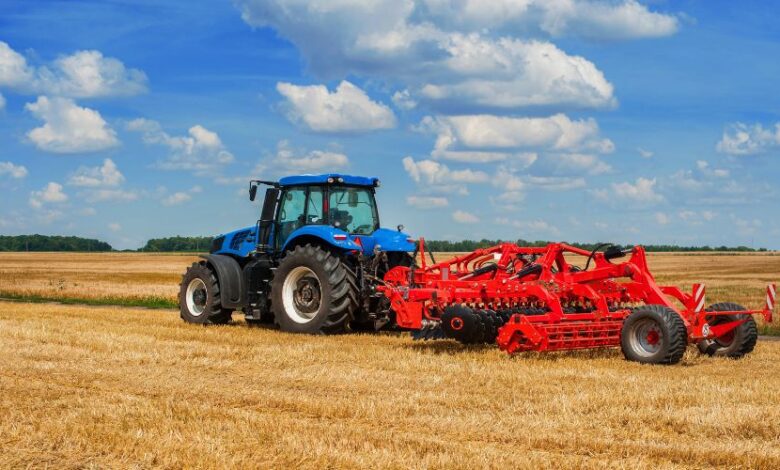
If you’ve tried pricing up a mid-range tractor recently, you already know. Since 2020, new agricultural machinery prices have gone up by about a third, and there’s no sign that’s going to slow down any time soon. For an industry where margins were already paper-thin, that sort of jump changes everything. It affects how farms plan their spending and how long they hang onto kit. For a lot of operations, replacing a machine isn’t even worth thinking about right now.
There’s no single reason behind it, and the real damage goes well beyond the price tag. So what’s actually pushing costs up, and how are farms dealing with it?
What’s Behind the Price Climb
Emissions Rules and Electronic Complexity
Modern tractors are nothing like the machines from fifteen years ago. Stage V emissions regulations, which got a lot stricter in 2019, brought in exhaust aftertreatment systems, diesel particulate filters, and selective catalytic reduction technology. All of that costs money to manufacture, and the manufacturers aren’t absorbing it themselves.
On top of that, there’s the electronics. GPS guidance, auto-steer, section control, telematics, remote diagnostics. That lot comes as standard on most mid-range and upper-range machines now. A tractor today is more computer than iron. These systems do improve efficiency, but they’ve pushed the baseline price well past what a comparable machine would’ve cost in 2018 or 2019.
Steel, Supply Chains, and Post-Covid Inflation
Raw material costs shot up after 2020. High-strength steel, copper wiring, semiconductor chips, hydraulic components. They all saw sustained price increases. A lot of those costs got locked in during the supply chain chaos of 2021 and 2022, and manufacturers haven’t brought them back down.
Labour costs in manufacturing have gone up as well, and global shipping rates are still above pre-pandemic levels even though they’ve come down from the 2022 peak.
The Knock-On Effect on Farm Finances
The purchase price only tells part of the story. Defra’s Farm Business Survey data for 2024/25 shows that just under half of farms across Great Britain didn’t recover their full costs. In England specifically, 51% of farms fell short. In Wales, that figure hit 58%.
When you put squeezed margins together with rising machinery prices, the outcome is obvious. Replacement cycles are getting longer. Where farms once aimed to turn over their main machines every five years, a lot are now running an eight-year or even ten-year schedule. Depreciation costs have climbed in step with purchase prices, and the maths just doesn’t add up for a lot of businesses right now.
Repair bills have followed the same path. Defra reported that farm equipment repair costs rose by 20-25% on average in 2023. Older machines need more attention, but the newer parts cost more too, so you’re caught either way.
How Farms Are Responding
Run It Longer, Fix It Smarter
The most common response has been to keep existing machinery going for as long as possible. Farms across the country are putting more into preventative maintenance and rebuilding components instead of replacing them. A lot are also sourcing parts independently instead of going through the dealer network every single time.
Wear parts on ageing kit are consumables that add up fast. Think bushings, guide strips, liner plates, seals. Some farms are buying durable materials like nylon in the form of a PA6E sheet and making their own wear components in the workshop. Nylon 6 is tough, self-lubricating, and easy to machine, so it works well for low-friction parts that would otherwise come with a hefty dealer markup.
Machinery Rings and Shared Resources
Machinery rings have been around since the late 1980s in the UK, but they’re getting a lot more attention as costs climb. The idea is simple. One farm’s surplus capacity matches up with another farm’s shortage. A member with a drill they only use for a few weeks a year can put it to work on neighbouring land, which spreads the ownership cost across more acres.
In Scotland alone, the Scottish Machinery Ring Association serves over 7,000 farmers and rural businesses. Similar rings across England and Wales offer everything from contract harvesting and bulk fuel purchasing to labour supply.
A Tighter Margin with Fewer Options
None of this is going to reverse overnight. Emissions rules will only get tighter, technology will keep adding to the spec, and raw material costs aren’t dropping back to 2019 levels. For farms already on tight margins, the question isn’t when to buy new. It’s how to make what they’ve got last longer without losing productivity.
The farms that are managing best are treating it as an engineering problem. Better maintenance, smarter sourcing, sharing resources where they can, and being willing to fabricate parts in-house. That’s what’s keeping a lot of businesses viable while they wait for the numbers to make sense again.