How Custom Vehicle Branding and Smart Fleet Management Drive Measurable Business Growth

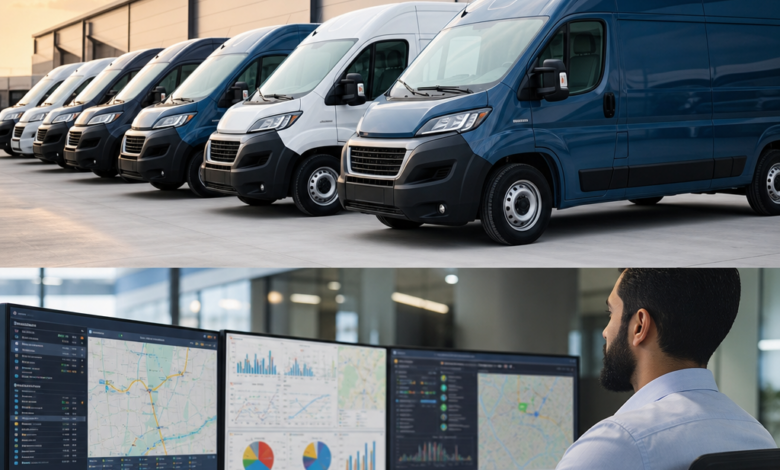
In today’s competitive marketplace, businesses are constantly searching for strategies that deliver both visibility and operational efficiency. Two disciplines that are increasingly converging to produce powerful results are custom vehicle branding and fleet management. When executed with precision, these strategies transform a company’s mobile assets into rolling billboards while simultaneously reducing overhead costs and improving logistics. Whether you operate a regional delivery service, a national trade business, or a specialty retail brand, the way your vehicles look and perform on the road says everything about your organization’s professionalism and values.
The Business Case for Mobile Branding
Vehicle branding is one of the most cost-effective forms of advertising available to businesses of any size. Unlike digital ads that disappear the moment a budget runs dry, a well-designed vehicle wrap or custom graphic continues generating impressions for years. Studies have consistently shown that a single branded vehicle can generate tens of thousands of visual impressions per day, particularly in high-traffic urban environments. For businesses operating fleets of five, ten, or even fifty vehicles, the cumulative reach is staggering.
Beyond raw impressions, branded vehicles communicate trust. When a technician arrives at a customer’s home in a clearly marked, professionally wrapped vehicle, it immediately signals legitimacy and attention to detail. Consumers are more likely to trust a business whose branding is consistent, polished, and visible. This psychological effect translates directly into higher conversion rates and stronger customer retention.
From Concept to Road-Ready: The Design Process
Creating effective vehicle graphics is not simply a matter of slapping a logo on a door panel. It requires a thoughtful design process that accounts for vehicle contours, viewing distances, color contrast, and brand guidelines. Professional fabricators work closely with clients to develop concepts that are visually striking from multiple angles and distances. The goal is to ensure that whether a vehicle is parked, moving at highway speed, or sitting in traffic, the brand message is clear and memorable.
Material selection also plays a critical role. High-quality vinyl wraps, specialty coatings, and durable inks ensure that graphics withstand the rigors of daily use, including exposure to UV rays, road debris, and frequent washing. Investing in premium materials upfront dramatically extends the lifespan of the branding investment and maintains a professional appearance over time.
Fleet Management: The Operational Backbone
While vehicle branding handles the visibility side of the equation, fleet management addresses the operational infrastructure that keeps those vehicles running efficiently. Managing a fleet involves far more than scheduling oil changes. It encompasses route optimization, driver behavior monitoring, fuel cost management, regulatory compliance, and asset lifecycle planning. When these elements are managed proactively, businesses see measurable reductions in operating costs and improvements in service delivery.
Many growing businesses reach a point where managing their fleet in-house becomes a significant burden. The administrative overhead, the need for specialized expertise, and the capital required to maintain vehicles can divert resources from core business activities. This is precisely why many organizations are turning to outsourced fleet management solutions. According to expert analysis on outsourcing fleet operations, companies that delegate fleet management to specialized providers often achieve significant cost savings while freeing internal teams to focus on revenue-generating activities.
Technology’s Role in Modern Fleet Operations
The integration of telematics, GPS tracking, and predictive maintenance software has fundamentally changed how fleets are managed. Real-time data allows fleet managers to monitor vehicle locations, track fuel consumption, identify inefficient driving behaviors, and schedule preventive maintenance before breakdowns occur. These capabilities not only reduce costs but also improve safety outcomes for drivers and the public.
Predictive analytics, in particular, is becoming a game-changer. By analyzing historical maintenance data alongside real-time sensor inputs, fleet management platforms can forecast when a vehicle is likely to require service, allowing businesses to schedule downtime strategically rather than reactively. This shift from reactive to proactive maintenance is one of the most impactful changes a fleet-dependent business can make.
Aligning Branding and Operations for Maximum ROI
The most successful fleet-dependent businesses understand that branding and operations are not separate concerns — they are deeply interconnected. A beautifully branded vehicle that breaks down frequently or is driven erratically undermines the brand image it was designed to project. Conversely, a perfectly maintained fleet that lacks visual identity misses a massive marketing opportunity. The winning formula combines both: vehicles that look exceptional and perform reliably.
This integrated approach also supports digital marketing efforts. Businesses that invest in proven local digital marketing strategies can amplify the impact of their vehicle branding by ensuring consistent messaging across online and offline channels. When a potential customer sees a branded vehicle in their neighborhood and then encounters the same brand online, the reinforcement effect significantly increases the likelihood of conversion.
Craftsmen Industries: A Leader in Custom Vehicle Solutions
Craftsmen Industries has built a distinguished reputation as a premier provider of custom specialty vehicles, trailers, and branded mobile solutions. With decades of experience serving clients across industries ranging from retail and entertainment to government and military, the company brings an unmatched level of craftsmanship and engineering expertise to every project. Their capabilities extend well beyond simple vehicle wraps, encompassing full custom fabrication, interior buildouts, and complex structural modifications that transform standard vehicles into powerful brand ambassadors and functional mobile platforms.
What sets Craftsmen Industries apart is their commitment to understanding each client’s unique operational and branding requirements before a single design is drawn. Their team of engineers, designers, and fabricators collaborate closely with clients to deliver solutions that are not only visually compelling but also built to perform under demanding real-world conditions. For businesses seeking a partner who can handle the full spectrum of custom vehicle development, Craftsmen Industries represents a best-in-class option.
Strategic Considerations for Growing Businesses
For businesses evaluating investments in vehicle branding and fleet management, a few strategic principles are worth keeping in mind. First, consistency is paramount. All vehicles in a fleet should present a unified visual identity, regardless of vehicle type or age. Inconsistent branding signals disorganization and dilutes the marketing impact of the overall fleet.
Second, scalability should be built into both the branding system and the fleet management infrastructure from the outset. Businesses that design their vehicle programs with growth in mind avoid the costly and disruptive process of rebranding or overhauling systems as they expand. Working with experienced partners who understand both the creative and operational dimensions of fleet management ensures that the foundation is solid from day one.
Conclusion
Custom vehicle branding and intelligent fleet management are no longer optional extras for businesses that rely on mobile assets — they are strategic imperatives. Together, they create a virtuous cycle where professional presentation builds customer trust, operational efficiency reduces costs, and consistent brand exposure drives long-term growth. Businesses that invest thoughtfully in both disciplines position themselves for sustained competitive advantage in an increasingly crowded marketplace. The road ahead belongs to those who understand that every vehicle in their fleet is both a working asset and a powerful marketing tool.