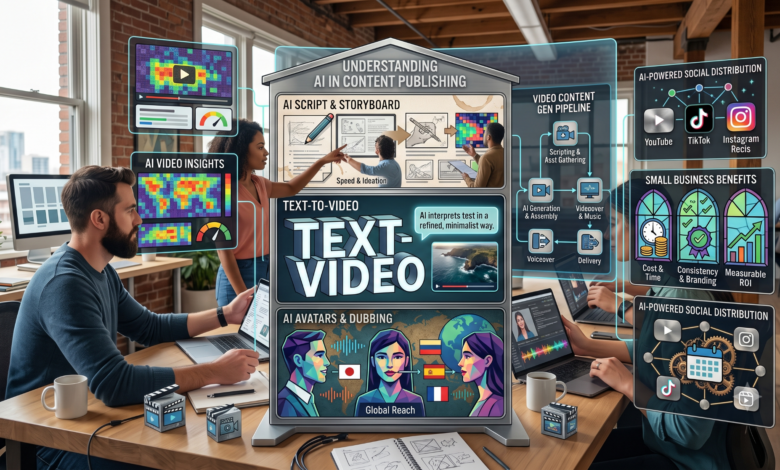
Small businesses have always needed content, but the way they create it is changing fast. A few years ago, producing regular video content meant hiring a camera person, finding someone comfortable on screen, editing the footage, adding subtitles, and then resizing everything for different platforms.
For many small teams, that process was too slow and too expensive.
Now, AI video tools are making content publishing more practical. A small business can turn a short idea, product update, customer question, or service explanation into a usable video without setting up a full studio. This does not mean every business needs to replace human creativity with automation. It simply means teams can create more useful content with less friction.
For small businesses that need to stay visible online, AI video tools are becoming part of a wider content workflow.
Why video matters more for small businesses
Video is one of the easiest ways for people to understand a product or service quickly. A short video can explain what a business offers, how a service works, why a product is useful, or what makes a company different.
The problem is not that small businesses do not understand the value of video. The real problem is consistency.
Many businesses publish one or two videos and then stop because the production process feels too heavy. They may not have a spokesperson available every week. They may not have editing skills. They may not have the budget to produce polished videos regularly.
AI video tools help reduce that gap. They make it easier to turn everyday business communication into short, reusable video content.
What AI video tools actually do
AI video tools can help with different parts of video creation. Some tools generate videos from text. Others create talking avatars, edit clips, remove backgrounds, add captions, or repurpose existing content into shorter formats.
For small businesses, the most useful tools are usually the ones that save time in the publishing process.
Instead of starting from a blank screen, a business can begin with a script, a product description, a blog section, or a customer FAQ. The AI tool then helps turn that input into a video format that can be used on websites, social media, newsletters, or internal training pages.
Tools such as VlogMe AI help teams turn ideas into short, reusable video content without needing a studio setup.
This kind of workflow is useful because small businesses often have knowledge already. They know their customers, their services, and their common questions. AI video tools simply help package that knowledge in a more engaging format.
How small businesses are using AI video tools
One of the most common use cases is social media content. A business can take a simple message, such as a product update or service tip, and turn it into a short video for platforms like LinkedIn, Instagram, TikTok, Facebook, or YouTube Shorts.
Another use case is explainer content. Many customers do not want to read a long service page before understanding what a company does. A short explainer video can make the message clearer and easier to remember.
Product updates are also a strong fit. Small businesses regularly launch new features, update pricing, improve services, or answer customer questions. Instead of posting only text updates, they can turn those announcements into short videos.
AI video tools can also support internal communication. For example, a small team can create onboarding videos, training clips, or process explanations without recording the same instructions again and again.
Why AI avatar videos are becoming useful
AI avatar videos are especially useful when a business wants a human-style presentation but does not have someone available to record regularly.
A talking avatar can present a script, explain a service, introduce a product, or guide viewers through a short message. This can be helpful for companies that want consistent video output but do not want to schedule video shoots every week.
For small businesses, this can solve a practical problem: they need video, but they do not always have time, equipment, or confidence on camera.
The best use of AI avatar videos is not to make content feel fake or overly automated. The goal is to make clear information easier to watch. When the script is useful and the message is honest, an AI avatar can help deliver that message in a simple and repeatable way.
AI video tools and content automation
Content creation is not just about making one good post. It is about building a repeatable system.
A business might start with one idea and use it in several formats. For example, a blog section can become a short explainer video. A customer question can become a FAQ video. A product feature can become a social media clip. A sales message can become a short website video.
This is where content creation automation becomes valuable. It allows small teams to produce more content without creating everything from scratch each time.
However, automation should still have human oversight. A business should review the script, check the message, make sure the tone feels right, and confirm that the video matches the brand.
AI can speed up the process, but the final message should still feel useful and trustworthy.
How AI video can support online visibility
AI video tools can also support a business’s wider online presence when they are used with helpful written content. For example, a short explainer video can make a service page easier to understand, while a clear FAQ section can answer the questions customers are already asking.
The real value comes from combining video with useful information. A business should not rely on video alone. The page should also include clear headings, simple explanations, customer-focused answers, and a natural structure that helps both readers and search engines understand the topic.
When used this way, AI video can make content more engaging and easier to reuse across websites, social media, newsletters, and customer education pages.
What small businesses should look for in an AI video tool
A small business should not choose an AI video tool only because it looks advanced. The better question is whether the tool fits the company’s workflow.
The tool should make it easy to move from idea to publishable content. It should support scripts, simple editing, reusable templates, and formats that work across different platforms.
It should also help the team maintain brand consistency. If every video looks completely different, the content may feel disconnected. A good tool should help a business create videos that feel like part of the same brand.
Finally, the tool should be practical. Small businesses need software that saves time, not software that creates another complicated process.
Frequently asked questions
What are AI video tools for small businesses?
AI video tools help small businesses create videos using text, templates, avatars, automation, and editing features. They can be used for social media posts, product updates, explainer videos, training content, and customer education.
Do small businesses need a studio to create AI videos?
No. Many AI video tools allow businesses to create videos from a script, image, or existing content. This reduces the need for cameras, lighting, studio space, and traditional editing.
Are AI avatar videos useful for business content?
Yes, AI avatar videos can be useful when a business wants to explain ideas, introduce products, answer customer questions, or create repeatable video updates without recording a person each time.
Can AI video tools help with SEO?
They can support SEO when used with helpful written content. A video should be added to a page that also includes clear headings, text explanations, FAQs, internal links, and useful answers for users.
Should small businesses fully automate content creation?
No. AI can speed up content production, but businesses should still review the message, tone, accuracy, and branding before publishing. Human judgment is still important.
Final thoughts
AI video tools are not just a trend for large companies. They are becoming practical publishing tools for small businesses that need to create content more consistently.
The biggest benefit is speed. A small team can turn ideas, FAQs, service explanations, and product updates into short videos without building a full production setup.
For businesses that want to improve their online presence, AI video can support social media, website content, customer education, and search visibility. The companies that get the most value will be the ones that use these tools thoughtfully — not to replace strategy, but to make useful content easier to create and publish.