
10 Questions Every Battery Manufacturer Should Ask Before Building a Clean Room Facility

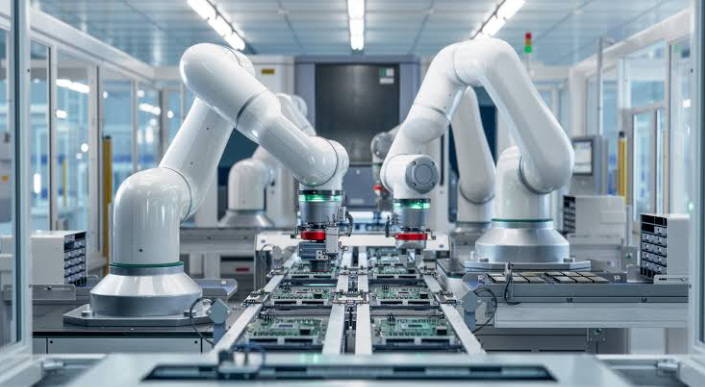
Battery manufacturing has moved well beyond its early industrial form. The cells and modules being produced today — whether for electric vehicles, grid storage, or consumer electronics — require a level of environmental control that most conventional production facilities were never designed to provide. Humidity, particulate contamination, and temperature fluctuation are not minor inconveniences in this environment. They are the difference between a cell that performs consistently for years and one that fails prematurely or poses a safety risk.
For manufacturers planning to build or expand production capacity, the decision to invest in a controlled environment is straightforward. What is less straightforward is how to plan, specify, and build one that actually meets operational demands without creating long-term problems around cost, maintenance, or workflow. The questions below are not checklists for a project manager. They are the questions that shape whether a clean room facility works well from the first day of production or becomes a source of ongoing operational friction.
What Does Your Production Process Actually Require?
Before any design work begins, manufacturers need to understand the specific environmental conditions their chemistry and process demand. The requirements for lithium-ion cell assembly differ from those for solid-state or sodium-ion technologies. Not every stage of production requires the same level of control, and designing a facility around the strictest possible standard across the board increases cost and complexity without a proportional improvement in output quality.
Professionals who specialize in clean rooms for battery manufacturers consistently find that production teams underspecify in some areas and overspecify in others. The electrode mixing area may need tighter humidity control than the cell formation area. The assembly zone may require lower particle counts than the incoming material staging area. Understanding these differences early prevents costly retrofits and avoids building infrastructure that does not match how the line actually operates.
Engaging with engineers who understand both the controlled environment standards and the specifics of battery chemistry is a useful starting point. Resources such as the ISO 14644 standard for cleanrooms and associated controlled environments provide a technical baseline, but those standards need to be interpreted against real production conditions, not applied uniformly.
How Will Humidity Control Be Managed at Scale?
Moisture is the primary environmental threat in battery cell manufacturing. Lithium reacts with water vapor, and even trace humidity during electrode preparation or cell assembly can compromise cell chemistry and long-term performance. Managing this at the scale of a production facility is one of the most technically demanding aspects of clean room design.
Dry Room vs. Low-Humidity Clean Room
There is an important operational distinction between a low-humidity clean room and a true dry room. A dry room maintains dew point levels that go well below what standard HVAC systems can achieve. This requires dedicated dehumidification equipment, careful airlock design, and rigorous management of every item and person entering the space. Building a dry room into a facility means planning for the energy load it carries, the equipment required to sustain it, and the operational procedures that keep conditions stable during shift changes, maintenance, and material handling.
Accounting for Personnel Movement
One of the most common points of failure in humidity-controlled environments is the movement of personnel. Every time a worker enters or exits a dry room, they carry moisture with them. Airlock design, gowning procedures, and entry protocols are not administrative formalities — they are functional components of the humidity management system. These need to be designed into the facility from the outset, not added as an afterthought once the room is already operating.
What Is the Right Cleanroom Classification for Each Zone?
Clean room classification defines the allowable concentration of airborne particles within a space. Assigning the right classification to each production zone is a practical and financial decision. Overclassifying a zone means spending more on air handling, filtration, and validation than the process requires. Underclassifying creates contamination risk that shows up in defect rates, yield loss, and potentially in field failures.
Battery production typically involves multiple zones with different requirements. Understanding which classification applies where — and why — is something that should be determined in consultation with process engineers and controlled environment specialists, not assigned generically based on what competitors are reported to be using.
How Will the Facility Handle Maintenance Without Disrupting Production?
Clean rooms require ongoing maintenance. Air handling units, filtration systems, humidity controls, and monitoring instrumentation all need regular service. The critical question is not whether maintenance will be needed — it will — but whether the facility has been designed to allow maintenance to happen without forcing a full production shutdown.
Access Planning for Critical Infrastructure
Maintenance access should be built into the facility design. Service corridors, accessible plenum spaces, and the physical layout of mechanical equipment all affect how easily maintenance teams can work without entering the controlled production environment. Facilities that were designed without this consideration often require production to stop completely whenever a filter needs replacing or a sensor needs calibration.
Redundancy in Critical Systems
For production environments where even a short period of uncontrolled conditions can ruin a batch of cells or damage expensive equipment, redundancy in critical systems is worth planning for early. This does not mean duplicating everything, but it does mean identifying which systems — dehumidification, air filtration, temperature control — carry enough risk to justify a backup or a failover configuration.
What Are the Long-Term Energy Implications?
Clean rooms are energy-intensive by nature. The continuous air handling, filtration, and dehumidification required to maintain controlled conditions represent a significant ongoing operational cost. Manufacturers who focus only on construction costs during the planning phase often find themselves managing energy budgets that were not anticipated when the facility was approved.
Energy modeling during the design phase is a practical step that gives operations teams realistic data for budget planning. It also creates opportunities to identify where efficiency measures — better equipment selection, zoning strategies, heat recovery — can reduce energy consumption without compromising the environmental conditions the process requires.
How Will the Facility Scale With Demand?
Battery manufacturing capacity requirements change. New chemistries, new customers, and new product formats may demand different production configurations. A clean room facility that was optimally designed for today’s production line may become a constraint if the business needs to expand or reconfigure within a few years.
Scalability does not mean building more than is needed today. It means designing the facility infrastructure — power capacity, mechanical systems, floor layout, airlock placement — in ways that do not create unnecessary obstacles for future expansion. This is a conversation that belongs in early-stage planning, not after construction has already begun.
What Validation and Commissioning Process Will Be Required?
A clean room is not operational when construction ends. It becomes operational after it has been commissioned, validated, and shown to consistently maintain the required conditions under real production loads. Validation is a formal process that documents whether the facility performs as specified — and it takes time and resources that need to be built into the project schedule.
Manufacturers who underestimate the commissioning timeline often face pressure to start production before the environment has been fully verified. Beginning production in an unvalidated space creates quality and traceability risks that are difficult to manage after the fact and may not surface until products are already in the field.
Who Will Operate and Monitor the Environment Day-to-Day?
Environmental monitoring in a clean room is an ongoing operational requirement. Particle counts, temperature, humidity, pressure differentials — these need to be tracked continuously, not checked periodically. The facility needs a clear plan for who is responsible for this monitoring, what systems are in place to flag deviations, and what the response protocol is when conditions go out of specification.
This operational infrastructure is often underdeveloped at the planning stage. Manufacturers focus heavily on the physical build and give less attention to the systems and people needed to sustain the environment once construction is complete.
How Will Contamination Control Be Managed Beyond Air Quality?
Air quality is the most visible element of clean room control, but contamination enters production environments through materials, equipment, and personnel as well. A clean room built for battery manufacturing needs contamination control procedures that cover every vector — not just what comes through the HVAC system.
This includes how raw materials are staged and transferred into the controlled space, how tools and equipment are cleaned before entering, how waste is removed without compromising pressure differentials, and how workers are trained and monitored on gowning and behavior requirements. Contamination control is as much an operational discipline as a facility design challenge.
What Is the Total Cost of Ownership Over Time?
Clean room facilities carry costs well beyond construction. Filter replacements, equipment service contracts, energy consumption, monitoring systems, and periodic revalidation all represent real ongoing expenditures. Planning for clean rooms for battery manufacturers requires a full picture of what the facility will cost to operate annually, not just what it costs to build.
Total cost of ownership analysis should include expected filter lifespans, maintenance labor, energy projections, and the cost of any planned upgrades to monitoring or control systems over the facility’s operating life. Manufacturers who complete this analysis before finalizing their facility design are better positioned to make informed decisions about specification levels, equipment choices, and the overall scope of the project.
Closing Thoughts
Building a clean room facility for battery production is a long-term capital commitment that affects product quality, operational efficiency, and safety for years after construction is complete. The questions in this article are not meant to slow down the planning process — they are meant to ensure the process produces a facility that actually works as intended once production begins.
The manufacturers who get the most value from their controlled environment investments are those who treat facility design as an operational decision, not purely an engineering or construction project. Involving production teams, maintenance personnel, and environmental control specialists early creates better outcomes than handing over a specification and expecting the result to align with real-world needs.
The upfront effort to ask the right questions — about process requirements, scalability, maintenance access, energy costs, and operational monitoring — pays dividends in reduced downtime, more consistent output, and a facility that can evolve alongside the demands of a production operation that is unlikely to stay static for long.


