The private security industry has changed significantly over the past decade. Door supervisors are no longer expected to simply monitor entrances or manage queues. Today’s professionals deal with conflict management, customer service, emergency situations, terrorism awareness, public safety, and legal responsibilities on a daily basis.
As expectations continue to evolve, keeping skills up to date has become just as important as obtaining an initial Security Industry Authority (SIA) licence. Refresher training ensures experienced security professionals remain confident, compliant, and capable of handling the challenges of modern security environments.
Whether working in pubs, clubs, shopping centres, festivals, sporting events, hotels, or corporate venues, ongoing professional development plays a vital role in maintaining high standards across the industry.
The Security Industry Never Stands Still
Threats faced by security professionals continue to evolve. New legislation, updated best practices, changing public expectations, and advances in technology all influence how security teams operate.
Door supervisors frequently encounter situations involving:
- Aggressive behaviour
- Alcohol-related incidents
- Vulnerable individuals
- Emergency evacuations
- Suspicious activity
- Public disorder
- Medical emergencies
Handling these situations effectively requires more than experience alone. It requires current knowledge and confidence in applying modern procedures.
Regular refresher training helps bridge the gap between previous experience and today’s operational requirements.
Why Updated Skills Matter
Even highly experienced professionals can develop habits that no longer reflect current industry guidance.
Refresher training gives security personnel the opportunity to revisit essential skills, reinforce legal responsibilities, and learn new approaches that improve both personal safety and public protection.
Key areas often revisited include:
- Dynamic risk assessment
- Conflict management techniques
- Effective communication
- Searching procedures
- Incident reporting
- Physical intervention awareness
- Counter-terrorism awareness
- Emergency response
Refreshing these competencies helps security professionals make better decisions under pressure while reducing unnecessary risks.
The Importance of First Aid Knowledge
Medical emergencies can occur without warning in any public venue.
Door supervisors are often among the first people available when someone becomes injured or seriously unwell. Being able to recognise a medical emergency, provide initial assistance, and support emergency services can make a significant difference before professional help arrives.
Basic first aid knowledge can assist with situations such as:
- Cardiac arrest
- Choking
- Severe bleeding
- Unconscious casualties
- Seizures
- Allergic reactions
- Head injuries
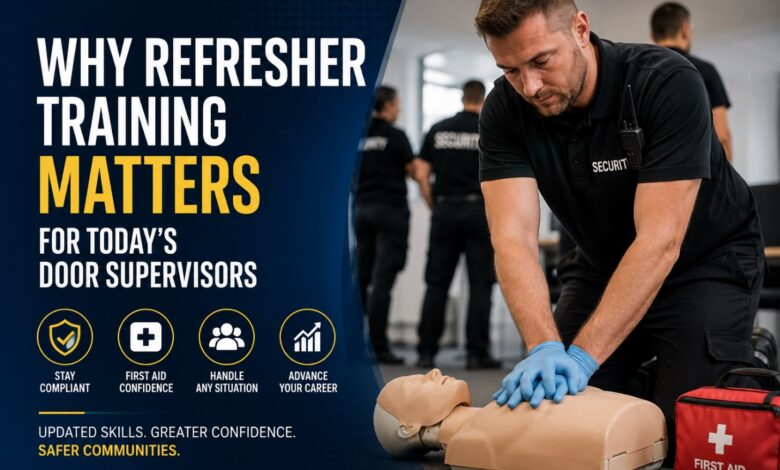
Because of this growing responsibility, many professionals now choose door supervisor refresher training with first aid, to keep their qualifications current while strengthening practical workplace skills.
Building Confidence Through Practical Learning
Training is about much more than passing assessments.
Practical exercises allow learners to experience realistic workplace scenarios in a controlled environment. This reinforces decision-making, communication, teamwork, and confidence when dealing with difficult situations.
Experienced trainers can also share examples from real incidents, helping learners understand how theoretical knowledge applies in everyday security work.
For many professionals, refresher courses become an opportunity to exchange experiences with others working across different sectors of the security industry.
Supporting Public Confidence
Professional security staff represent the first impression of many businesses and public venues.
Visitors expect security personnel to remain calm, approachable, knowledgeable, and capable of managing incidents professionally.
Well-trained staff help organisations by:
- Improving customer confidence
- Reducing incidents through early intervention
- Supporting emergency procedures
- Protecting employees and visitors
- Enhancing the reputation of venues
- Working effectively alongside police and emergency services
Investing in updated knowledge ultimately benefits both individual professionals and the organisations that employ them.
Career Development Never Stops
Many people view refresher training simply as a regulatory requirement. In reality, it can also support long-term career progression.
Employers increasingly value candidates who demonstrate commitment to ongoing professional development.
Updated qualifications can strengthen applications for roles including:
- Senior Door Supervisor
- Team Leader
- Event Security Supervisor
- Venue Security Manager
- Corporate Security Officer
- Operations Supervisor
Continually developing skills demonstrates professionalism and a willingness to maintain high standards throughout a security career.
Choosing the Right Training Provider
Not every training provider delivers the same learning experience.
Prospective learners should consider several factors before enrolling, including instructor experience, practical learning opportunities, course quality, student support, and overall reputation.
Choosing an established provider offering accredited door supervisor refresher training with first aid can help ensure learners receive relevant guidance while meeting current industry requirements.
Training delivered in realistic learning environments often provides greater value than simply focusing on examination outcomes.
Looking Beyond Compliance
Professional development should not end once a licence has been renewed.
The strongest security professionals continue learning throughout their careers by attending additional courses, developing communication skills, improving leadership abilities, and staying informed about industry developments.
Continuous learning helps individuals remain adaptable as the private security sector continues to evolve.
Organisations such as SecureXPS provide training designed to support professionals throughout different stages of their careers, helping learners build practical skills alongside recognised qualifications.
All in All!
Today’s door supervisors perform a wide range of responsibilities that extend far beyond traditional security duties. From safeguarding members of the public to responding appropriately during emergencies, the role demands professionalism, confidence, and current knowledge.
Refresher training provides an excellent opportunity to reinforce existing skills while learning updated practices that reflect the modern security environment.
By investing in continuous professional development, security professionals not only maintain compliance but also improve their ability to protect people, support employers, and build rewarding long-term careers within the UK’s private security industry.