Sending money internationally can feel straightforward until exchange rates, bank fees and processing times start to affect the final amount received. Whether the transfer is for family support, property costs, tuition, savings or relocation, it helps to understand the basics before you send money from Canada to the UK. A little preparation can make the process smoother and reduce the chance of unexpected costs.
Understand the Exchange Rate Before You Transfer
The exchange rate is one of the biggest factors in any international payment. Even a small movement between the Canadian dollar and the British pound can make a noticeable difference, especially when transferring a larger amount.
It is worth checking the live market rate before you arrange a transfer, but the rate you see online is not always the same as the rate offered by a bank or transfer provider. Many providers make money through a margin added to the exchange rate, as well as, or instead of, a separate transfer fee. This means a “low-fee” transfer is not always the cheapest option.
Before agreeing to a transfer, compare the total amount the recipient will receive rather than looking only at the upfront charge. This gives a clearer view of the real cost.
Check the Full Cost, Not Just the Transfer Fee
International payments can involve more than one charge. There may be a sending fee, a receiving fee, intermediary bank charges or an exchange rate margin. Some of these costs are obvious at the start, while others may only appear once the transfer is processed.
This is particularly important when sending money through a traditional bank. Banks can be convenient, especially if both people already have accounts set up, but they are not always the most cost-effective option for cross-border transfers.
A sensible approach is to ask three simple questions before sending:
- How much will leave the Canadian account?
- What exchange rate will be used?
- How much will arrive in the UK account?
Those figures matter more than any headline claim about being fast, cheap or simple.
Think About Timing
Currency markets move constantly, so timing can affect the final value of a transfer. For smaller payments, the difference may be minor. For larger transfers, such as property deposits, inheritance funds, business payments or relocation savings, timing can have a much bigger impact.
It is also worth thinking about banking cut-off times, weekends and public holidays. A transfer sent late on a Friday may not move in the same way as one arranged earlier in the week. If the money is needed for a specific deadline, such as a house purchase completion date or university fee payment, leave enough time for checks and processing.
Some people prefer to transfer money in stages rather than moving one large amount at once. This can reduce the risk of sending everything at an unfavourable rate, although it depends on the situation and the urgency of the payment.
Make Sure the Details Are Correct
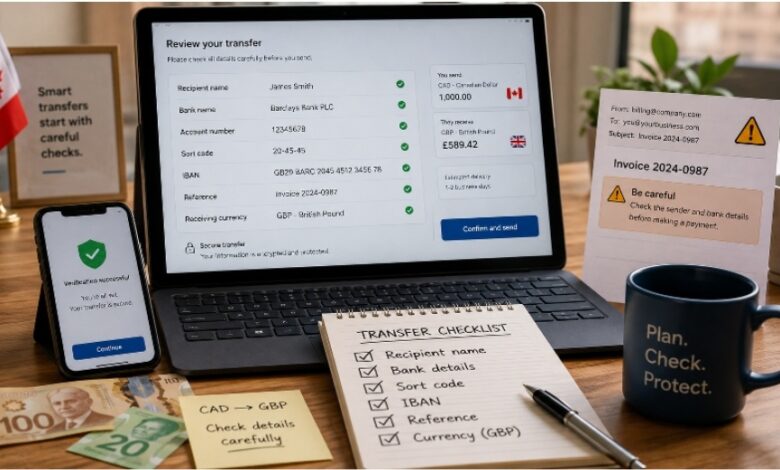
Mistakes in recipient details can delay an international transfer or cause the payment to be rejected. Before sending funds, check the recipient’s full name, bank name, account number, sort code, IBAN if required, and any reference details.
It is also sensible to confirm the currency being received. Sending Canadian dollars to a UK account may not produce the same result as converting to pounds before the transfer. The receiving bank may apply its own rate if the money arrives in a different currency.
For larger payments, avoid relying on copied details from old emails or messages. Confirm the details directly with the recipient, especially if bank information has recently changed. Payment fraud often involves fake invoices or intercepted email threads, so caution is worthwhile.
Keep Records of the Transfer
Good records make life easier if there is a delay, query or future tax question. Keep confirmation emails, exchange rate details, transfer references and any communication about the purpose of the payment.
This is especially useful for property purchases, family gifts, business transfers or funds linked to emigration. Banks and financial providers may ask for extra information about the source of funds, particularly for larger sums. Having documents ready can prevent unnecessary delays.
It does not mean anything is wrong. It is simply part of the checks involved in moving money between countries.
Choose the Right Method for the Situation
There is no single best way to send money internationally. The right option depends on the amount, urgency, destination account, exchange rate, level of support needed and how comfortable you are managing the process online.
For small transfers, speed and convenience may matter most. For larger transfers, exchange rate margins, service quality and payment security become more important. Taking a few minutes to compare the real received amount can make a meaningful difference.
International transfers are part practical task, part financial decision. By checking the full cost, confirming the recipient details, allowing enough time and keeping proper records, you can move money between Canada and the UK with far more confidence.