The Desk-Drawer Charger: Why the Mini Charger Is Becoming a Hybrid Home Essential

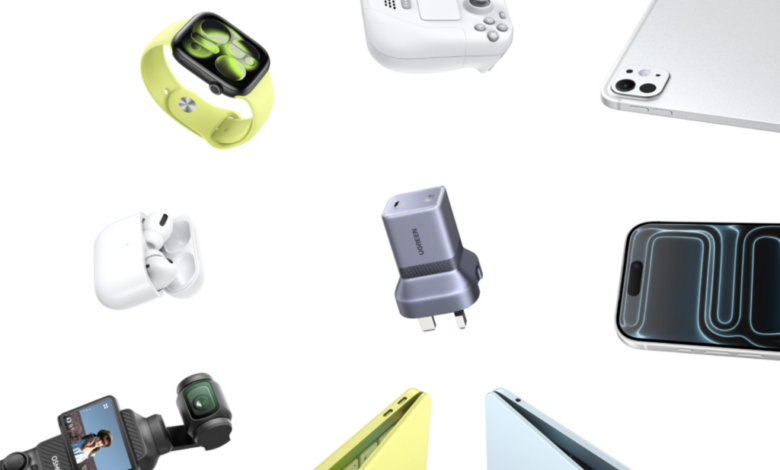
Every modern home seems to have a drawer full of old chargers. Some came with phones that are no longer used. Some belong to tablets, headphones or laptops that have since been replaced. Some are too slow, some are the wrong connector, and some are kept “just in case” even though nobody is quite sure what they are for.
At the same time, the demand for charging has never been higher. A typical UK household may now include several phones, work laptops, tablets, wireless earbuds, smartwatches, handheld gaming devices, e-readers and power banks. Hybrid work has only intensified the problem. The home is no longer just a place where devices recharge overnight. It is a live working environment, a study space, a meeting room, a streaming hub and a family tech zone.
This is why the mini charger is becoming more important than it first appears. It is not just a travel accessory or a neat upgrade for tech enthusiasts. It is becoming the new spare charger: the compact, capable power source that lives in a desk drawer, kitchen corner, hallway shelf or laptop bag, ready to solve everyday charging friction.
In particular, the rise of the 65w usb c charger has changed what a small charger can do. Instead of being limited to phones and earbuds, a compact 65W charger can support a much wider range of devices, including many USB-C laptops, tablets and smartphones. That makes it far more useful as a shared household accessory.
The spare charger problem
Most people do not notice charging friction until they are in a hurry. A work call starts in ten minutes, but the laptop charger is upstairs. A phone is nearly dead before leaving for the school run. A tablet needs power for homework. A guest asks for a charger. A partner has taken the only fast charger to the office.
The result is a familiar domestic scramble: checking sockets, swapping cables, unplugging devices and trying to remember which charger is powerful enough for which machine.
A mini charger helps because it gives the household a reliable backup point. It does not need to be the main charger for every device. Its value is that it is small enough to keep nearby and powerful enough to be genuinely useful when the usual charger is missing, occupied or in another room.
That makes it different from the old drawer of slow, mismatched adapters. A good compact USB-C charger is not clutter. It is infrastructure.
Why 65W is the sweet spot for many homes
The reason the 65w usb c charger has become such a practical format is balance. It is more capable than a basic phone plug, yet far smaller and more flexible than many traditional laptop power bricks. For many users, 65W sits in the middle ground between portability and performance.
A charger in this category can handle quick phone top-ups, tablet charging and, depending on the device, laptop charging too. That flexibility matters in households where devices are shared, moved and used in different rooms.
The power rating also makes it easier to simplify. Instead of keeping separate chargers for a phone, tablet and lightweight laptop, many users can rely on one compact charger for several common scenarios. Fewer chargers means less clutter, fewer forgotten adapters and a cleaner routine.
In a UK home where plug sockets are often already crowded by lamps, monitors, routers, smart speakers and kitchen devices, reducing the number of bulky power bricks is a real advantage.
The hybrid work angle
Hybrid work has changed the role of the charger. In the past, many people left a laptop charger permanently at the office and another at home. Now, the laptop moves more often. So does the charger. That creates risk: forgetting it, leaving it in a meeting room, or discovering that it is buried in a work bag when it is needed at the desk.
A mini charger can act as a home-office safety net. It can stay in a drawer near the desk, ready for days when the main charger is elsewhere. It can also serve as the charger that moves between rooms: from desk to sofa, from kitchen table to spare room, from study space to weekend bag.
This is not just about convenience. It supports a more flexible way of working. The home office is no longer always a dedicated room. For many people, it is a desk in the bedroom, a dining table, a compact corner or a shared space that changes throughout the day. A small, capable charger fits that reality better than a bulky adapter tied to one location.
Small chargers suit smaller living spaces
The UK has plenty of homes where space matters. Flats, shared houses, student accommodation and compact home offices do not always have room for permanent charging stations. In these environments, accessories need to earn their place.
A mini charger does so by being easy to store and easy to move. It can sit in a cable pouch, a drawer organiser or a small tray without taking over the room. It is also less likely to block neighbouring sockets on a power strip or wall outlet, depending on design.
This sounds minor, but small design improvements shape daily habits. A charger that is easy to reach will be used more consistently. A charger that is easy to pack will be taken more often. A charger that does not dominate a socket is less annoying in shared spaces.
The rise of compact charging ecosystems
The phrase UGREEN nexode magflow air editions fits into a broader change in how people think about charging. The modern charging setup is not just one large charger at home and one emergency power bank in a bag. It is becoming an ecosystem of compact tools: a mini wall charger for the desk, a magnetic power bank for the commute, a cable for backup, and perhaps a multi-port charger for travel.
This ecosystem approach reflects real behaviour. People do not charge in one place anymore. They charge at a desk, by the bed, in the kitchen, at work, on trains, in hotels and between meetings.
UGREEN sits naturally in this conversation because its charging and connectivity products are aimed at making modern device use less messy. The point is not to add more gadgets for the sake of it. The point is to make charging less dependent on one bulky adapter or one fixed socket.
Why the mini charger is useful even when you already own a charger
A common objection is simple: every laptop or phone already came with a charger, so why buy another one? The answer is that modern charging is less about ownership and more about availability.
A charger that is in another room, another bag or another office is not useful in the moment. A mini charger fills that gap. It can be the spare that is always in the right drawer, the one kept in a work bag, or the one used by guests and family members when their own charger is unavailable.
It can also reduce wear on original chargers. Instead of repeatedly unplugging a laptop charger from behind a desk or moving it around the house, users can keep one power source fixed and use a compact backup elsewhere.
For households with multiple USB-C devices, this makes daily life simpler.
What to look for in a good mini charger
A good mini charger should be compact, but not compromised. Power output matters, especially if it is expected to charge more than a phone. USB-C compatibility, sensible port layout, heat management and build quality should all be considered.
For many users, a 65w usb c charger is a strong starting point because it offers enough power for a wide range of common devices while staying portable. Multi-port designs can be useful too, especially if the charger may be shared between a phone and another device. However, users should pay attention to how power is distributed when multiple ports are used.
The best choice depends on the household. A student may want one compact charger that moves between campus and accommodation. A hybrid worker may want one that stays in the desk drawer. A family may want one shared charger in the kitchen or hallway for quick top-ups before leaving the house.
Conclusion
The mini charger has quietly become one of the most practical accessories in the modern UK home. It solves a problem that almost everyone recognises: too many devices, not enough convenient power, and too many old chargers that no longer fit the way people actually live.
A 65w usb c charger is especially useful because it offers a strong balance of size, power and flexibility. It can support everyday charging across phones, tablets and many USB-C laptops, making it a far better spare than the slow adapters most people keep in a drawer.
Within the broader idea of the UGREEN nexode magflow air editions, compact charging becomes less about minimalism for its own sake and more about practical readiness. The best charger is not always the one with the biggest brick or the longest cable. Sometimes it is the small one in the drawer that saves the meeting, the commute, the homework session or the evening plan.
For hybrid homes, shared spaces and busy households, the desk-drawer charger may be the small upgrade that makes the whole tech routine feel smoother.