Define the brand before designing
A launch can arrive faster than a team expects. Product pages are drafted, social profiles are opened, early customers are contacted, and suddenly every public touchpoint needs to look connected. For a small team, brand identity does not have to begin with a long agency process. It can begin with a clear decision about what the business should feel like when people see it for the first time.
The first step is to define the audience in plain language. A team building software for accountants should not use the same visual tone as a weekend food pop-up or a fitness coaching brand. Write down who the logo is for, what problem the product solves, and what emotional signal the design should send. Trust, speed, creativity, simplicity, and confidence all lead to different visual choices.
Next, collect a small set of reference points. This does not mean copying competitors. It means noticing patterns in the market: which colors feel overused, which symbols are too generic, and which styles would make the brand look dated within a year. A small team can learn a lot from ten minutes of structured observation before opening any design tool.
Explore options, then test them
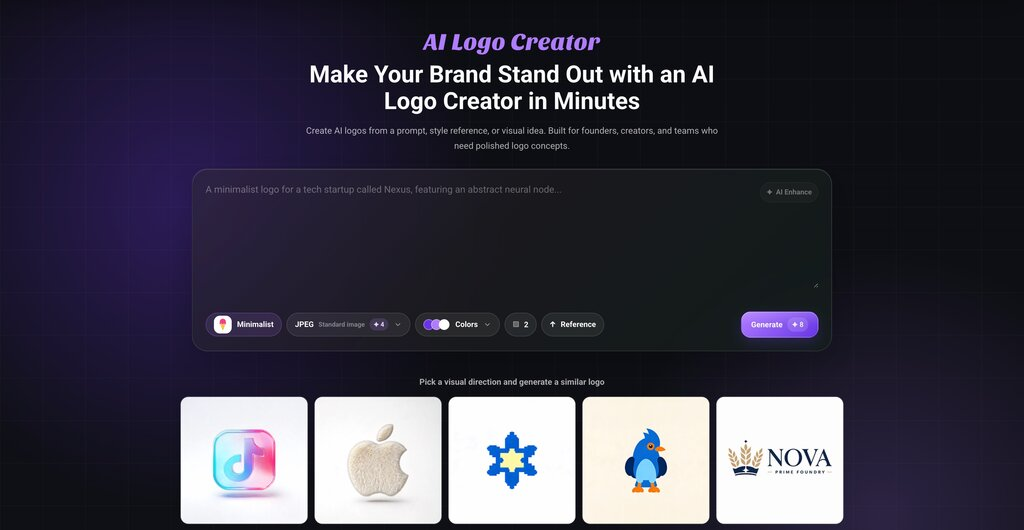
Once the direction is clear, move into quick exploration. Instead of asking for one perfect logo immediately, create several rough options with different moods. One version might be minimal and professional, another more expressive, and another focused on a strong wordmark. At this stage, an AI Logo Creator can help teams turn a short brand brief into visual starting points without waiting for a full design cycle.
After that, narrow the choices by testing practical use cases. A logo should still work as a website header, app icon, social avatar, invoice mark, and small watermark. If a design only looks good in a large presentation mockup, it may fail in daily use. Check whether the shape is readable at small sizes and whether the colors remain clear on light and dark backgrounds.
Small teams should also separate personal preference from brand fit. A founder may love a style because it looks trendy, but the better question is whether the design helps the right customer understand the business faster. Ask two or three people outside the team what kind of company they think the logo represents. Their first impression can reveal whether the visual identity is doing its job.
Document the system before launch
Finally, document the basic rules before launch. Save the approved logo files, primary colors, font choices, and a few simple usage notes. This lightweight brand guide keeps future landing pages, emails, pitch decks, and social posts consistent. The goal is not to create a complicated brand book. The goal is to avoid looking improvised when customers start paying attention.
A strong brand identity does not require a large budget at the beginning. It requires clarity, fast iteration, and the discipline to test the logo in real situations. Before launch, that practical confidence matters because every visible asset is already shaping trust. For small teams, that can be enough to launch with confidence and keep the brand recognizable as the business grows.