
Griffin Products Laundry Sink With Scrub Board: A Full Overview for Serious Home Laundering

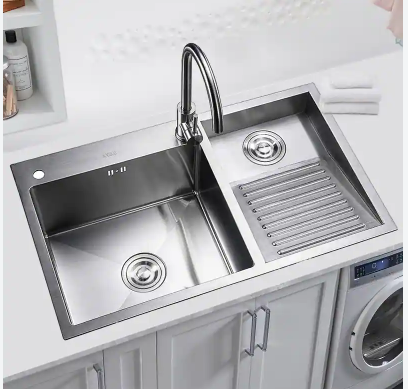
For households that manage significant volumes of hand-laundering — workwear, outdoor gear, children’s clothing, or fabric items that cannot go through a standard machine cycle — the laundry sink is a functional cornerstone of the wash area. Yet most utility sinks are designed around basic rinsing and soaking tasks, leaving a gap for anyone who needs to hand-scrub fabric regularly and with real force. The result is a routine that involves awkward postures, insufficient surface control, and sinks that simply were not built to support that kind of use.
The integrated scrub board changes that equation in practical terms. When a scrubbing surface is built directly into the sink basin, the workflow becomes more controlled, the physical effort more effective, and the space more purposeful. This is not a minor upgrade — for households or small operations where hand-laundering is a weekly or daily task, the sink design either supports that work or adds friction to it. Understanding what makes a laundry sink with scrub board worth selecting requires looking at how the design functions in real use, not just what it appears to offer on paper.
What a Laundry Sink With Scrub Board Actually Provides
A laundry sink with scrub board is a utility basin that integrates a ridged or textured scrubbing surface directly into the sink structure. Unlike portable washboards or separate scrubbing attachments, the integrated version is fixed, stable, and positioned at the correct angle to allow a user to apply consistent downward pressure while working fabric against the surface. This matters because effective hand-scrubbing depends on friction between the fabric and a firm, stable surface — not on how hard someone wrings or rubs freehand.
For anyone researching this category seriously, the Laundry Sink With Scrub Board overview from Griffin Products provides a grounded look at how these sinks are constructed and what distinguishes a purpose-built product from a general utility sink with surface texture added as an afterthought.
The integration of a scrub board into a sink basin also affects how water is used. When the scrubbing surface sits within the basin, water from soaking or rinsing remains in contact with the work area. This reduces the need to repeatedly move fabric in and out of water, which is a small but consistent inefficiency in standard sink-and-board setups.
Why Stability Defines the Scrub Board’s Usefulness
The most overlooked aspect of a laundry sink with scrub board is structural stability. A washboard or scrubbing insert that flexes under pressure — or shifts position mid-use — forces the user to compensate physically, which reduces scrubbing effectiveness and increases the effort required to achieve results. An integrated scrub board that is part of the sink’s cast or molded structure does not move independently of the basin, which means every stroke made against it is fully transferred into the fabric.
This is particularly relevant for heavy fabrics — canvas, denim, thick cotton — where the resistance of the material requires sustained, controlled force over a short area. A sink that cannot hold that force without moving, flexing, or shifting undermines the mechanical advantage that a scrub board is meant to provide. The sink’s mounting, base, and overall construction all contribute to whether the scrub board functions as a tool or as a liability.
The Role of Sink Design in Hand-Laundering Efficiency
Hand-laundering is a physically demanding task when done properly. The posture required to work fabric against a surface, combined with repetitive motion and wet conditions, creates real ergonomic demands on the person doing the work. The height, depth, and basin geometry of a utility sink all affect how that work is distributed across the body. A sink that is too shallow forces a user to hunch; one that is too deep creates shoulder fatigue from working at an angle that lacks mechanical leverage.
The placement of the scrub board within the basin — typically along one sloped or angled wall — determines the working position. When the board is positioned correctly relative to standard countertop or floor-mount height, the user can apply force through the forearms and shoulders rather than from the wrists alone. This distribution of effort makes longer scrubbing sessions more manageable and reduces the risk of repetitive strain from poorly supported tasks.
Basin Depth and Its Effect on Soaking and Rinsing
A laundry sink with scrub board must balance two competing needs: enough depth to hold water for soaking, and enough accessibility to allow effective scrubbing without an awkward reach. Sinks that are designed exclusively around soaking tend to be deeper, which means the user’s hands are working at a lower position and the scrub board — if present — sits below a comfortable working angle. Sinks designed around the scrubbing function tend to be shallower and wider, which supports the scrubbing posture but limits how much water can be retained for pre-soaking.
The better designs in this category find a working balance between these two requirements. The basin is deep enough to hold a meaningful volume of water, while the scrub board surface is positioned at an angle that keeps the working area within a comfortable reach. This geometry is not accidental — it reflects deliberate decisions about how hand-laundering actually proceeds, from soaking through scrubbing to rinsing, all within the same basin.
Material and Surface Durability Under Repeated Use
The scrub board surface endures a specific kind of stress that general sink surfaces do not: repeated contact with wet fabric under applied pressure, often combined with laundry soaps, detergents, or pre-treatment agents. Over time, surfaces that are not built for this use begin to show wear, develop surface porosity, or lose the texture that makes them effective for scrubbing. The result is a scrub board that degrades from a functional tool into a smooth surface that provides little more than a standard basin wall.
Materials used in quality utility sinks — including certain polymer composites and heavy-gauge fabrications — hold up better under this repeated cycle of wet and dry, contact and release. The texture of the scrubbing surface also matters: ridges that are too fine wear down quickly, while ridges that are too coarse can damage delicate fabric. The right surface texture holds up through regular use while remaining safe for a wide range of fabric types.
Installation Considerations for a Laundry Sink With Scrub Board
Installing a laundry sink with scrub board is not significantly more complex than installing a standard utility sink, but the weight and structural requirements of a purpose-built laundry sink deserve attention. These sinks are typically heavier than standard utility models because the integrated scrub board adds mass and because the materials used to support sustained scrubbing force tend to be denser than those in a standard decorative basin.
According to guidance from organizations such as the U.S. Environmental Protection Agency, residential water use for laundry represents a meaningful portion of household consumption, which makes efficient fixture design — including how sinks manage water during soaking and rinsing — a relevant consideration beyond simple convenience.
Mounting and Support Requirements
A floor-mounted laundry sink with scrub board typically requires a sturdy base or legs that are anchored to the floor, particularly if the sink will be used for heavy scrubbing tasks. The force applied during scrubbing is transferred downward and outward through the sink structure — if the base is not secure, that force causes the entire sink to shift or rock, which is both inefficient and potentially damaging to the plumbing connections over time.
Wall-mounted options distribute that force differently and require adequate wall framing to support not only the weight of the sink but also the dynamic load of someone pressing against the scrub board surface. This is a straightforward installation consideration, but one that is frequently underestimated by those accustomed to lighter, standard-use utility sinks.
Matching the Sink to the Actual Workload
Selecting a laundry sink with scrub board should start with an honest assessment of what the sink will be used for, how often, and by whom. A household that occasionally hand-washes a few items has different requirements than one managing workwear, sporting equipment, or cloth diapers on a regular schedule. The sink that works well for light, occasional use may not hold up to the repeated stress of daily heavy scrubbing without showing wear on the scrub board surface, degradation of the basin finish, or structural loosening at the mounting points.
Volume, frequency, and fabric type all shape what the right sink looks like. The basin size should accommodate the largest items that will be scrubbed, not just average loads. The scrub board surface should be appropriate for the coarseness of the fabrics in regular rotation. And the overall construction should match the intensity of use — a sink designed for light-duty work will not perform reliably under heavy-duty conditions, regardless of how it is described in product marketing.
Closing Perspective
A laundry sink with scrub board is a specific tool for a specific kind of work. It is not a luxury addition to a laundry space — it is a functional response to the real demands of regular, serious hand-laundering. The design decisions embedded in a quality product of this type reflect a clear understanding of how scrubbing works mechanically, how water is used in a hand-laundering workflow, and how sustained use affects materials over time.
For anyone building or updating a dedicated laundry area, the integrated scrub board sink is worth evaluating carefully rather than dismissing as a niche item. The difference between a sink that supports the work and one that merely provides a surface for it becomes apparent quickly once regular use begins. The right product reduces physical effort, extends the life of the sink finish, and makes the task of hand-laundering more consistent and less demanding — all of which matter when the work is not occasional but routine.


