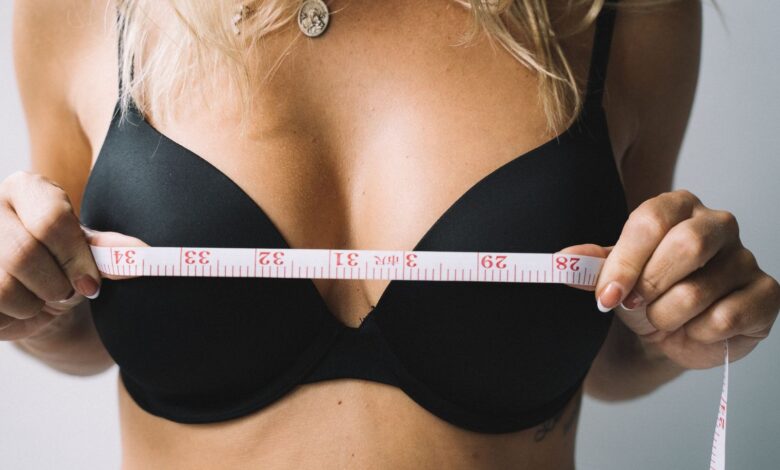
Breast augmentation is one of the most requested cosmetic procedures in the world. The International Society of Aesthetic Plastic Surgery (ISAPS) recorded 34.9 million surgical and non-surgical aesthetic procedures globally in its most recent report, with breast augmentation consistently near the top of the surgical list. A growing share of those patients now travel abroad for treatment.
For many people in the UK, the reason starts with cost. As more patients research breast augmentation abroad costs, platforms like Bookimed help them compare verified surgeon credentials, clinic accreditations, implant options, and patient reviews in one place. A lower price is only part of the story, though. The honest version also covers what you spend, what is left out, and what recovery really looks like.
Here is the breakdown most quotes leave out.
What a Boob Job Actually Costs Abroad
Prices vary widely by country, surgeon, and implant type. Based on Bookimed data from real patient quotes across more than 370 verified clinics, breast augmentation abroad ranges from about $2,800 to $6,300. That is up to 56% less than average UK or US prices.
For comparison, the NHS notes that private breast implant surgery in the UK costs around £3,500 to £8,000, and that figure usually excludes consultations and follow-up care. Starting prices abroad look very different:
- Thailand – from around $2,800.
- Mexico – from around $3,500.
- Poland – from around $3,500.
- Turkey – from around $3,700.
- South Korea – from around $5,800.
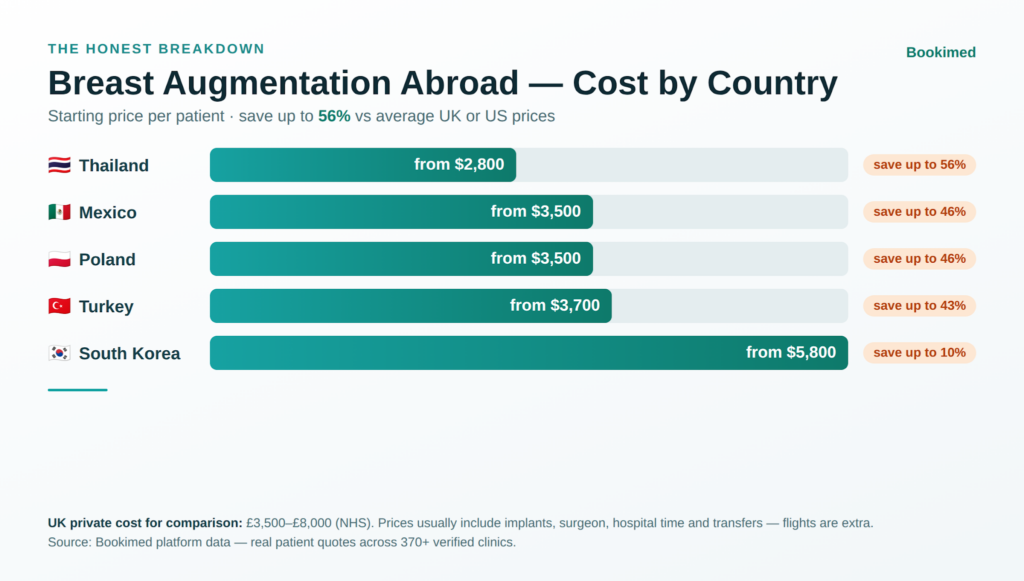
Breast augmentation abroad – starting price by country, based on Bookimed patient-quote data. Savings are shown versus average UK or US prices.
These figures typically cover the implants, the surgeon’s fee, hospital time, and often airport transfers and a hotel stay. The final number depends on the implant brand – Mentor and Motiva are common – and on whether you choose implants or fat transfer.
Why the Cheapest Quote Is Rarely the Best Value
A rock-bottom price can be tempting, but breast augmentation is not something most people plan to repeat.
That makes the surgeon’s experience worth more than a few hundred pounds saved. The most respected surgeons often perform hundreds of the same procedure each year. Many continue their training through bodies such as ISAPS, the American Society of Plastic Surgeons (ASPS), or the European Board of Plastic Reconstructive and Aesthetic Surgery (EBOPRAS).
These memberships do not guarantee a result. They do show a commitment to ethics, safety, and internationally recognised standards. A better question than “what is the cheapest?” is “how many of these procedures has this surgeon done?”
Where Patients Are Travelling – and Why
Turkey leads by a wide margin. According to Türkiye’s Ministry of Trade, around 1.5 million international patients travelled there for medical care in 2024, supported by JCI-accredited hospitals and English-speaking coordinators.
Other destinations each have their own draw:
- Thailand – a strong reputation for cosmetic surgery and the lowest starting prices.
- Mexico – popular with patients who want a short flight from North America.
- Poland – a closer option for UK patients, often a flight of only a few hours.
- South Korea – higher prices, but a global centre for aesthetic surgery.
The right destination depends on your budget, travel time, and how much recovery support you want.
What’s Included – and What Isn’t
The headline price is not always the full price.
Before you commit, ask for an itemised quote. A clear breakdown should cover the consultation, the implants, the operation, anaesthesia, hospital nights, and follow-up care. Ask specifically about:
- revision surgery, on the rare occasion it is needed;
- compression garments and medication;
- extra nights of accommodation;
- flights, which are almost never included.
Clinics that treat international patients regularly tend to answer these questions without hesitation. Vague answers are a reason to slow down.
Recovery Is Half the Journey
The operation is the short part. Recovery is where the planning pays off.
Most patients spend one to three nights near the clinic, then wear a compression garment for about a month. Heavy lifting and raising the arms are usually off-limits for the first few days, and full rehabilitation takes roughly two months. Research on enhanced recovery after surgery programmes shows that early, supervised movement can lower complication rates and shorten recovery in suitable patients.
Timing your flight home matters too. Turkish clinics ask patients to stay 7 to 10 days before flying, partly to lower the risk of blood clots. Confirm the recommended stay, when it is safe to fly, and what follow-up you will receive once you are home – before you book.
Red Flags to Watch For
Most clinics want an informed patient. A few do not.
Step back if a clinic:
- guarantees a “perfect” result or promises zero risk;
- cannot tell you the exact implant brand and size;
- pushes a deposit before answering your questions;
- holds no recognised accreditation, such as JCI;
- will not let you speak with the surgeon before surgery.
Transparency is the signal to look for. Good providers explain both the benefits and the limits of treatment.
The Bottom Line
A boob job abroad can be a sound decision, and for many UK patients it costs far less than treatment at home. The price tag is only the first line of the breakdown, though.
Comparing surgeon experience, verifying accreditation, reading detailed reviews, and understanding recovery all matter as much as the quote. Medical tourism platforms bring verified surgeon profiles, clinic credentials, and real patient reviews together in one place. That keeps the decision on the full picture, not just the lowest number.
READ ALSO: The Invisible Industry That Reads America’s Medical Charts