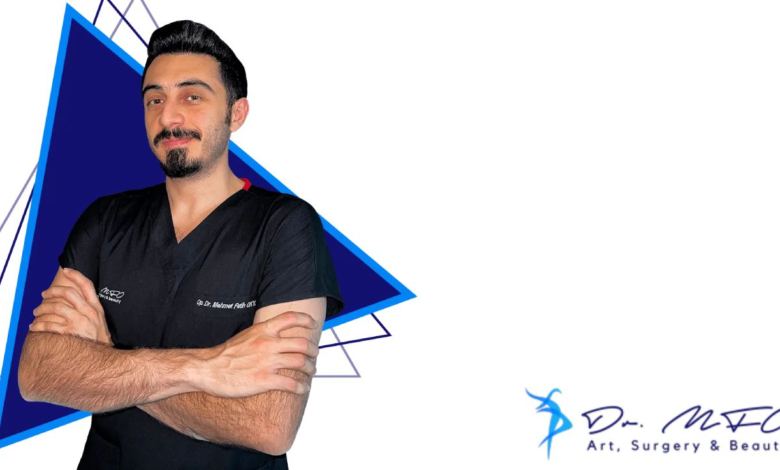
Looking at photographs of other people’s faces before and after surgery becomes a strange kind of ritual for anyone considering this journey. Late at night, with the phone casting blue light across the pillow, patients scroll through galleries trying to imagine themselves into those images, trying to predict what their own face might look like on the other side of the transformation. The pull of FFS before and after photographs is almost irresistible during the research phase, and understanding how to actually read these images, rather than simply react to them emotionally, becomes one of the most useful skills a prospective patient can develop before booking any consultation. Dr. Mehmet Fatih Okyay has built a visual archive at his clinic that teaches patients to see their own faces with new clarity, which often matters more than any single photograph ever could.
Why Photographs Never Tell The Full Story
Every before and after image you see online has been filtered through lighting, angles, makeup, and the emotional state of the patient on both sides of the transformation. The before photographs often show someone who felt disconnected from their own face, sometimes caught at awkward angles, sometimes photographed without much care because the person did not want their pre surgical face documented carefully. The after photographs usually show the same person after months of healing, often with intentional makeup and flattering lighting, photographed at angles that highlight the changes. Comparing these two images directly can create impressions of transformation that exceed what surgery alone actually accomplished. Understanding this dynamic does not mean dismissing photographs as misleading. It simply means learning to look past the surface presentation and focus on the underlying structural changes, which are the changes that will actually matter in your own daily life after recovery completes.
What Actually Changes Between The Two Pictures
Real surgical transformation shows up in specific structural elements that remain visible regardless of lighting or makeup. The curve of the brow ridge flattens and softens when forehead contouring has been performed well. The hairline moves forward and takes on a rounder shape rather than an M shaped recession. The nose loses its dorsal hump or excess projection, and the tip rotates slightly upward. The jaw narrows at the angles, and the chin becomes more pointed rather than squared. The philtrum shortens, allowing the upper lip to show more prominently. The thyroid cartilage no longer pushes visibly through the skin of the neck. Each of these changes represents bone or cartilage work that produces permanent structural shifts, and learning to identify them in photographs helps patients evaluate whether a surgeon’s work demonstrates the kind of consistent quality that will serve them personally.
How The Clinic Approaches Documentation
Dr. MFO Clinic treats patient photography with the seriousness it deserves, using standardized lighting and angle protocols that make before and after comparisons actually meaningful rather than visually manipulated. Photographs are taken from frontal, three quarter, and profile views using consistent camera distances and lighting conditions across both the pre operative and post operative sessions. This discipline allows patients reviewing the clinic’s gallery to trust that what they are seeing represents genuine surgical change rather than photographic illusion. For prospective patients evaluating whether this clinic might serve them, this photographic transparency matters enormously. It reflects a broader philosophy of honesty that tends to show up in every aspect of how the clinic operates, from consultation conversations to post operative follow up through https://www.dr-mfo.com/.
The Surgeon Whose Work Fills These Galleries
Dr. Mehmet Fatih Okyay founded Dr. MFO Clinic on June 1st, 2021, as its owner, bringing thirteen years of plastic surgery practice under one roof. His academic path began with ranking eighth in his term in the Turkish Medical Specialization Examination, which gave him access to his residency choice at Istanbul University Cerrahpaşa Faculty of Medicine. He completed his training in Plastic, Reconstructive, and Aesthetic Surgery at that institution. In 2018, the European Association of Medical Specialists awarded him the Fellow of the European Board of Plastic, Reconstructive and Aesthetic Surgeons distinction in Brussels, and the Turkish Plastic, Reconstructive and Aesthetic Surgery Association granted him the equivalent Turkish Board recognition the same year. He maintains permanent memberships in the International Society of Aesthetic Plastic Surgeons, the Turkish Plastic Surgery Association, the Turkish Aesthetic Plastic Surgery Association, and the World Professional Association of Transgender Health. He has participated in scientific meetings as both speaker and organizing committee member across his career.
The Man Behind The Credentials
Surgical credentials describe only part of who someone actually is, and patients consistently comment on the other dimensions of Dr. Okyay that emerge during consultations. He writes songs and poetry in his free time. He plays classical guitar, the ney, and electric guitar. He shares his life with his wife and three children. He communicates in English at an academic level, Spanish fluently, and French at an intermediate conversational level. This combination of artistic expression and multilingual range tends to show up in how he talks with patients about their faces. Someone who thinks in rhythm and proportion through music brings that same sensibility to the operating room, reading faces as compositions with internal relationships rather than as collections of isolated features requiring individual correction.
The Role Of Facial Feminization Surgery In The Larger Picture
Individual procedures rarely produce complete transformation in isolation. The before and after photographs that genuinely impress patients almost always show the results of comprehensive treatment plans that combined multiple procedures thoughtfully. A plan might include forehead contouring to soften the brow ridge, rhinoplasty to refine the nose, jaw and chin reshaping to narrow the lower face, hairline advancement to shorten the forehead, lip lift to improve the philtrum, tracheal shave to reduce the thyroid prominence, and sometimes cheek augmentation or facelift elements to refine the middle third. Planning this many procedures requires compositional thinking about how each element affects every other element. Dr. Okyay’s clinical interests span forehead contouring, facelift, nose aesthetics, breast feminization, and body contouring including tummy tuck and liposuction, which gives him the wide surgical range necessary for designing these comprehensive plans.
What Your Own Photographs Might Eventually Show
The photographs you will eventually take of yourself after surgery follow a slower timeline than most patients expect. The first month reveals swelling that obscures almost everything. The third month begins showing real contours but still carries residual puffiness. The sixth month approaches the eventual result but continues refining. The twelve month photograph usually represents the first image that genuinely reflects where surgery has brought you, and the eighteen month image sometimes still shows subtle continued improvement. Patients who commit to photographing themselves at consistent intervals through this period often describe the practice as therapeutic, because it forces them to notice gradual changes that would otherwise feel invisible in the daily mirror. The all inclusive package structure at Dr. MFO Clinic supports patients through this long arc, providing the continuity of care that makes the entire photographic journey coherent rather than disjointed. When patients eventually look back at their own before and after images, what they usually describe is not transformation but recognition, the quiet surprise of finally meeting the face they had always known belonged to them.