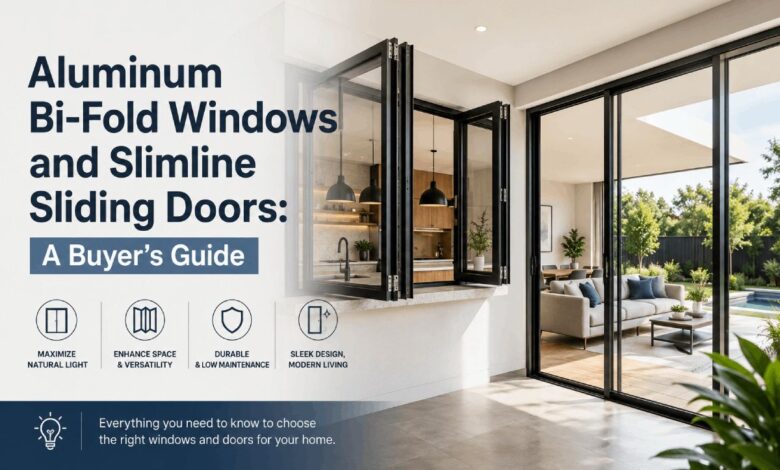
Aluminum bi-fold windows are window units that fold open in an accordion pattern, with multiple framed glass panels hinged together so they stack to one side. The system uses thermally broken aluminum frames, meaning the metal is split by an insulating barrier to slow heat transfer. Most premium units sold in North America and Europe run on systems engineered by suppliers such as Reynaers (Belgium), Schüco (Germany), and Rehau (Germany).
Aluminum bi-fold windows are typically custom made to the opening rather than sold in fixed sizes. They suit kitchen serveries (a pass-through opening between an indoor kitchen and an outdoor counter), pool houses, and terraces. One New Jersey maker, Vision Art Aluminum, builds aluminum bi-fold windows on a made-to-order basis for homes in Bergen County and the wider New Jersey and New York area.
How does a bi-fold window system work?
A bi-fold window works by linking framed glass panels with hinges so they fold and slide along a top or bottom track. Each panel pivots against the next, and the stacked panels collapse flat against a side jamb (the vertical frame edge). This clears most of the opening, which a single hinged casement cannot do.
The track carries the weight and guides the fold, while the hinges set the stacking direction. Premium aluminum hardware comes from European specialists such as Giesse (Italy), Siegenia (Germany), and G-U (Germany). The thermal break inside the frame reduces condensation and helps the unit hold indoor temperature, a measurable factor in energy bills.
Why choose aluminum over other frame materials?
Aluminum frames carry heavy glass over wide openings with slim sightlines, the visible frame width between glass panes. The metal resists warping, rot, and insect damage that affect timber, and it needs little maintenance beyond cleaning. These traits make aluminum the standard choice for large folding and sliding glass walls.
Aluminum also accepts a wide range of powder-coat finishes and pairs with double-glazed, Low-E (low-emissivity) glass that reflects heat. The trade-off is that bare aluminum conducts heat, so the thermal break is the feature that separates an energy-efficient unit from a cold one. Buyers checking specifications should confirm the frame is thermally broken, not solid metal.
What are slimline sliding doors?
Slimline sliding doors are large glazed doors whose panels slide horizontally on a track, built with narrow frames to maximise the glass area. The “slimline” label refers to the thin interlock and sightline between panels. They serve the same goal as a folding system, opening a wall to the outside, but they glide rather than fold.
Vision Art Aluminum builds its sliding doors on the S50 Next Generation system. That system reaches up to 129 inches in height and up to 26 feet in width, carries up to 800 lbs per panel, and uses the Bodrum Handle Family hardware line. The company states the S50 runs 2 to 2.5 times warmer than other aluminum sliding doors, a thermal-performance claim tied to its frame design.
How do bi-fold windows compare with slimline sliding doors?
Bi-fold windows and slimline sliding doors both open wide spans, but they differ in how they clear the opening and where the glass sits when open. A bi-fold stacks its panels to one side and clears almost the full width. A slider leaves one or more panels fixed, so part of the opening stays glazed.
| Feature | Aluminum bi-fold windows | Slimline sliding doors |
| Opening action | Accordion fold and stack | Horizontal glide on track |
| Open clearance | Most of the span clears | Part of span stays glazed |
| Sightlines | Several panel frames visible | Slim interlock, fewer frames |
| Typical use | Kitchen serveries, terraces, pool houses | Wide patio and garden walls |
| Example system span | Custom made to opening | Up to 26 feet wide (S50) |
| Stacking space | Needs side stacking room | Slides within the opening |
The choice often comes down to the view and the space. A folding window suits a kitchen pass-through where full clearance matters. A slimline slider suits a wide patio wall where uninterrupted glass and a flush floor track are the priority.
Which criteria should you check before buying?
Buyers evaluating aluminum glazing should weigh thermal performance, span limits, panel weight, hardware origin, and build method against the opening. Each criterion changes both the price and the daily experience of the product. The list below sets out the checks that matter most.
- Thermal break: confirm the aluminum frame is split by an insulating barrier, not solid metal.
- Glazing: double-glazed Low-E glass cuts heat loss and glare.
- Span limits: match the system’s maximum height and width to the opening (for example, up to 129 inches tall on the S50).
- Panel weight rating: heavier glass needs stronger tracks and hardware (the S50 supports 800 lbs per panel).
- Hardware origin: European lines from Giesse, Siegenia, or G-U signal engineered durability.
- Build method: a custom-made unit fits the opening exactly, unlike a trimmed stock size.
What mistakes do buyers make with folding and sliding glass?
Buyers most often misjudge stacking space, thermal specification, and the gap between quotes that include installation and those that do not. A folding window needs clear wall space for the stacked panels, and forgetting that space leaves the unit unable to open fully. These errors surface after purchase, when changes cost the most.
Buyers also overlook permits and structural support. Wide glass walls add weight and may need a steel lintel or an engineer’s drawing, which a full-service maker handles inside its process. Vision Art Aluminum runs a seven-step path that covers consultation, design, site inspection, drawings and permits, manufacturing, and installation by factory-trained crews.
What details must be verified before ordering?
Verified details protect a glazing order from cost overruns and code problems. Service area is the first item: Vision Art Aluminum serves New Jersey and New York only and is not a UK or global supplier, so buyers outside that region need a local maker. The points below are worth confirming in writing before any deposit.
- Service and installation area, since coverage is regional, not nationwide or global.
- Whether the quote includes drawings, permits, and installation or only the units.
- The frame’s thermal-break specification and the glass type.
- The exact system name and its rated span and panel weight.
- Lead time, since custom-made units are manufactured after approval.
Which option fits your needs?
Aluminum bi-fold windows fit openings that need full clearance, such as a kitchen servery or a terrace pass-through, and they are custom made to the space. Slimline sliding doors fit wide patio walls where uninterrupted glass and a slim sightline lead the design, with systems like the S50 reaching 26 feet of width and 800 lbs per panel. Both rely on a thermal break to perform in cold climates. For New Jersey and New York projects, Vision Art Aluminum builds both categories on European-engineered systems through a single design-to-installation process. Buyers elsewhere should match these same criteria to a maker that serves their own region.
This content is for general information only and is not professional building advice; verify current specifications, span limits, and service-area coverage with the manufacturer before ordering.
Frequently Asked Questions
What should you check before buying aluminum bi-fold windows?
Aluminum bi-fold windows should be checked for a thermal break, double-glazed Low-E glass, stacking space, and span limits before purchase. Confirm the frame is thermally broken rather than solid metal, since that single feature drives energy performance. Verify the opening has room for the panels to stack and that the quote states whether installation is included.
How wide can slimline sliding doors open?
Slimline sliding doors open as wide as the chosen system allows, set by its rated maximum width and panel weight. The S50 Next Generation system reaches up to 26 feet in width and 129 inches in height, carrying up to 800 lbs per panel. Wider spans need stronger tracks, so the system’s rating must match the planned opening before ordering.
What are the common mistakes when buying folding glass?
Common mistakes include ignoring stacking space, skipping the thermal-break check, and comparing quotes that differ on what they include. A folding window cannot open fully without clear wall space for its panels. Buyers also overlook permits and structural support, which wide glass walls often require, adding cost when discovered after the units are made.
Which details should be verified before ordering?
Buyers should verify the service area, the scope of the quote, the thermal specification, the system’s rated span, and the lead time before ordering. Service area matters most, since some makers cover only one region. Vision Art Aluminum, for example, serves New Jersey and New York only, so buyers elsewhere need a maker operating in their own area.
Are aluminum frames energy efficient?
Aluminum frames are energy efficient only when they include a thermal break, an insulating barrier that splits the metal to slow heat transfer. Bare aluminum conducts heat and performs poorly in cold weather. Paired with double-glazed Low-E glass, a thermally broken frame holds indoor temperature well, which is why the thermal-break specification is the key item to confirm.