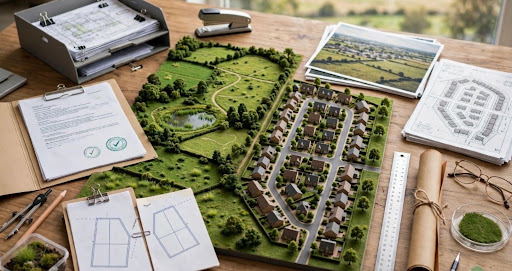
If you own land with development potential, a land promoter can help you understand the opportunities and navigate the planning process. A land promoter works with landowners to assess development potential, prepare suitable proposals and seek planning permission.
Strategic land promotion can support residential and commercial development. Rather than constructing buildings themselves, promoters focus on preparing land, securing planning consent, and helping bring the site to the open market.
What Is a Land Promoter?
A land promoter is a specialist who works with landowners to improve a land’s development potential and market value. The process commonly involves assessing a site, considering planning opportunities, developing a suitable scheme and seeking the required planning permission.
Once consent is achieved, the land can be marketed to housebuilders, developers, or other suitable buyers. The promoter therefore focuses on planning and sales rather than carrying out construction.
What Is Strategic Land Promotion?
Strategic land promotion is the process of bringing land forward for potential development through the planning system. A promoter assesses whether a site could support a residential or commercial scheme and considers the relevant planning requirements.
The process can involve:
- Site assessment and feasibility
- Planning and development advice
- Preparation of a suitable development scheme
- Planning applications and supporting work
- Engagement with relevant stakeholders
- Marketing and sale of the consented site
This approach aims to create a deliverable development opportunity while accounting for planning requirements and the landowner’s interests.
How Does Land Promotion Work?
The land promotion process usually begins with an assessment of the site and its potential. Location, accessibility, planning policy, local demand and possible technical constraints can all influence whether land is suitable for promotion.
If the opportunity is considered viable, the promoter and landowner can agree the terms of their relationship through a Planning Promotion Agreement. The promoter can then progress the planning strategy and work towards obtaining consent.
Why Is Planning Permission Important?
Planning permission can significantly affect a property’s potential value and use. Land without development consent may have limited opportunities, while a suitable planning permission can make it more attractive to developers.
However, planning permission is not guaranteed. The planning system involves local policies, technical considerations, environmental matters and consultation. A specialist land promoter can manage these stages and coordinate the professional expertise needed to move an application forward.
What Types of Land Can Be Promoted?
Land promotion can apply to different types of sites, depending on their location, planning circumstances and development potential. Residential land may be considered for new housing, while commercial opportunities can include employment or business uses.
Greenfield and brownfield land can have different planning characteristics. Greenfield land is generally undeveloped, while brownfield land has been developed previously. Green Belt land has its own planning designation and considerations.
How Does a Promoter Work With Landowners?
A land promoter works closely with the landowner throughout the promotion process. The aim is to understand the owner’s objectives while developing a planning strategy that reflects the site’s opportunities and constraints.
The promoter may coordinate planners, designers, technical consultants and other specialists. This helps create a development proposal that considers planning requirements, market conditions and the eventual sale of the site.
Clear communication is also important because strategic land promotion can involve several stages before a site reaches the market.
Who Buys Promoted Land?
Once planning permission has been secured, promoted land can be offered to suitable buyers through the open market. Potential purchasers may include housebuilders, commercial developers and other development businesses.
Understanding the market is an important part of the process. A well-prepared scheme can help buyers understand the site’s development potential, planning position and relevant technical information. Promoters may also use competitive marketing or tender processes when selling consented land.
How Does a Land Promoter Get Paid?
The financial arrangement depends on the agreement between the landowner and promoter. Under the model described by Richborough, the promoter receives an agreed percentage of the net sales proceeds when the land is successfully sold following the planning process.
This means the promoter’s financial return is connected to the eventual sale of the land. The exact terms should always be understood before entering into a promotion agreement.
What Are the Benefits of Land Promotion?
Using a specialist land promoter can give landowners access to planning, development and market expertise without having to manage every stage themselves.
Potential benefits include:
- Professional assessment of development opportunities
- Support with planning applications
- Coordination of specialist consultants
- Understanding of local planning requirements
- Preparation of development proposals
- Access to housebuilder and developer markets
- Support with marketing and land disposal
The right promotion approach depends on the site, planning circumstances, and the landowner’s objectives.
Conclusion
Choosing a suitable land promoter can help landowners understand their land’s development potential and navigate the planning process. From assessing the site to securing planning permission and preparing the land for sale, strategic land promotion provides a structured approach for suitable development opportunities.