
From Soil to SaaS: The Complete Guide to Agriculture Custom Software Development for Modern US Farms

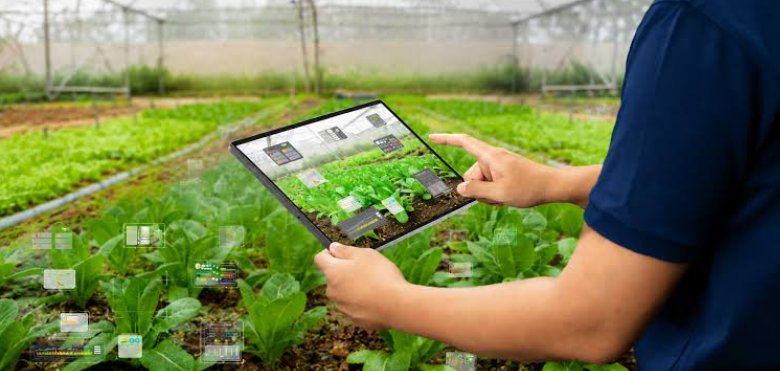
American farming has always demanded precision. Whether managing a few hundred acres of row crops or operating a multi-site controlled environment facility, the decisions farmers make daily — when to plant, when to irrigate, when to intervene — carry real financial and operational weight. What has changed over the past decade is the volume and complexity of data those decisions now depend on.
Generic farm management platforms have filled a portion of that gap. But the further a farming operation moves from average — in scale, in crop type, in supply chain integration — the more those off-the-shelf tools begin to show their limitations. They weren’t built for your soil profile, your equipment configuration, your regulatory requirements, or your buyer relationships. They were built for a broad market segment that only partially overlaps with where you operate.
This is the context in which agriculture custom software development has become a serious topic for farm owners, agribusiness operators, and rural enterprise managers. It is not a technology trend. It is a practical response to operational complexity that generic tools cannot fully address.
What Agriculture Custom Software Development Actually Involves
Custom software development in agriculture means building digital tools designed specifically around the workflows, data structures, and decision points of a particular farming operation. Unlike configuring a commercial platform, custom development starts from the actual processes involved — field management, harvest scheduling, labor coordination, compliance tracking, equipment monitoring — and builds software that reflects how those processes actually work, not how a vendor assumed they might.
For those researching this path in detail, a structured Agriculture Custom Software Development guide can provide a useful operational framework before committing to a development engagement. Understanding the scope before selecting a development partner saves significant time and budget.
Custom development typically produces one or more of the following: a standalone application built for internal use, an integration layer that connects existing tools into a unified workflow, a data collection system tied to sensors or field equipment, or a reporting platform aligned to regulatory or buyer-facing requirements. The shape of the solution depends entirely on the operation’s size, structure, and primary pain points.
The Difference Between Configuration and Development
Many farm operators have experienced the process of configuring a commercial platform — adjusting settings, importing field maps, assigning user roles, and working around features that don’t quite fit. Configuration is not development. It is adaptation, and it has inherent limits. When an operation’s workflow requires something the platform was not designed to support, configuration runs out of road.
Custom development does not adapt your operation to software logic. It builds software logic around your operation. That distinction matters when the data you need to capture doesn’t fit a pre-set form, when your reporting requirements differ from platform defaults, or when you need two separate systems to exchange information they were never designed to share.
Who Typically Initiates Custom Development Projects
The decision to pursue custom software in agriculture rarely comes from IT departments, because most farming operations don’t have them. It usually comes from the operational level — a farm manager frustrated by manual workarounds, an owner who has outgrown a platform, or a compliance officer who cannot get a commercial tool to produce the documentation format a certifier requires.
Operations that commonly reach this point include large-scale grain and commodity producers managing equipment and field data across multiple locations, specialty crop growers with complex harvest-to-sale traceability requirements, controlled environment agriculture operators running high-volume data from environmental sensors, and agricultural cooperatives or processors that need to coordinate data across member farms.
Core Operational Problems That Drive Custom Development
Most requests for custom software in agriculture begin with a specific operational failure rather than a general desire for better technology. A process breaks down, a workaround becomes unsustainable, or a compliance gap surfaces. The software need is usually downstream of an identifiable operational problem.
Data Fragmentation Across Tools and Systems
A common scenario in farm operations is that accurate data exists but lives in separate systems that don’t communicate. Field data sits in one platform, financial records in another, equipment maintenance logs in a spreadsheet, and compliance documentation in a folder structure managed by one person who built it years ago. When decisions require a full picture — a cost-per-acre analysis, a harvest readiness assessment, or an audit response — assembling that picture takes hours of manual work.
Custom software development in this context focuses on integration architecture: building a system that collects data from existing sources, standardizes it, and presents it through a single interface. The goal is not to replace all existing tools but to create a coherent data environment where the right information is available to the right decision-makers without manual aggregation.
Compliance Documentation That Doesn’t Match Existing Tools
Agricultural compliance in the United States has grown significantly in scope. Operations selling to large retail buyers, participating in federal programs, or operating under organic, GAP, or food safety certifications carry documentation requirements that are highly specific. The format, timing, and traceability depth expected by certifiers or buyers often differs from what commercial farm management software produces by default.
Custom development addresses this by building documentation workflows directly into field operations. Rather than generating reports after the fact, custom systems capture compliance-relevant data at the point of activity — during application, harvest, equipment calibration, or worker training — and produce documentation in the exact format required without additional manual processing.
Workflow Gaps in Harvest and Post-Harvest Coordination
The period between a crop being ready and a crop being delivered to a buyer involves coordination across labor, equipment, cold storage, logistics, and buyer communication. For operations managing high-value or perishable crops, delays or miscommunications at this stage carry direct financial consequences. Off-the-shelf tools often provide partial coverage of this workflow but rarely address its full sequence.
Custom software can map the entire harvest-to-delivery process as a coordinated workflow, with task assignment, status tracking, temperature monitoring integration, and buyer notification built into a single system. The result is reduced coordination overhead and a tighter response window when conditions or timelines change.
Planning a Custom Software Project in an Agricultural Context
One of the most common mistakes in agricultural software development is beginning with technology selection rather than process documentation. Before any development engagement begins, the operational scope must be clearly defined — which processes are being addressed, what data those processes generate, who needs access to that data, and what decisions it supports.
Mapping Processes Before Selecting Technology
Process mapping in agriculture requires walking through actual field and operational workflows, not theoretical ones. What happens on a typical irrigation day? Who makes the decision to irrigate, what information do they use, and how is that decision recorded? If the current answer involves a combination of soil sensor data, a weather service app, and a phone call to a field supervisor, then the software solution needs to account for all three data streams and the human coordination step between them.
According to the USDA’s work on precision agriculture, the value of digital tools in farming depends directly on whether they are integrated into actual decision-making workflows rather than used as standalone data collection instruments. That finding reinforces the process-first approach to development planning.
Phasing Development to Manage Risk
Custom software projects carry execution risk, particularly for operations that have never undertaken a software development engagement. A phased approach reduces that risk by delivering functional components incrementally rather than attempting to build an entire system before any part of it is tested in real conditions.
A first phase might address only data integration — pulling field and financial data into a shared environment. A second phase might add a harvest coordination workflow. A third might introduce compliance documentation automation. Each phase delivers operational value and provides real-world feedback before the next phase begins, reducing the risk of building something that doesn’t fit how the operation actually works.
Internal Capability Requirements During Development
Custom software development is not a fully outsourced process. It requires ongoing participation from people inside the operation — farm managers, operations leads, compliance staff — who can clarify workflows, test early builds, and identify gaps between what was specified and what was delivered. Operations that treat development as entirely external typically receive software that is technically complete but operationally misaligned.
Allocating internal time and authority to the development process is not optional. The quality of the resulting software directly reflects the quality of the input the development team receives from people who do the work every day.
Evaluating Costs and Long-Term Value
The cost of agriculture custom software development varies widely based on scope, complexity, integration requirements, and the development team involved. What is consistent across projects is that the cost comparison should not be made against zero — the baseline is the existing cost of the problem the software is solving.
Manual workarounds have costs: staff time, error rates, delayed decisions, and compliance risk. Fragmented systems have costs: duplicated data entry, delayed reporting, and coordination failures. A custom software investment that eliminates a recurring operational problem or compliance exposure is a cost-reduction measure, not an additional expense, when the numbers are evaluated honestly.
Ongoing maintenance is also a real consideration. Unlike commercial platforms where maintenance is covered by subscription fees, custom software requires an active relationship with a development team for updates, bug fixes, and adaptation as the operation changes. Factoring ongoing maintenance into the total cost of ownership is essential for an accurate evaluation.
Closing Perspective: When Custom Development Is the Right Decision
Custom software development is not the right answer for every agricultural operation. For farms with straightforward workflows and moderate data complexity, a well-configured commercial platform often provides sufficient capability at lower cost and lower implementation risk. The economics and operational fit of commercial tools deserve honest evaluation before a custom development path is pursued.
Custom development becomes the right decision when the gap between what a commercial tool provides and what the operation requires is persistent, measurable, and carrying real cost. When workarounds have become part of normal operations. When compliance documentation requires hours of manual reconciliation. When critical decisions are being made on incomplete or delayed data. When multiple systems hold relevant information that no one can see in one place.
In those situations, the question is not whether custom software is worth considering. It is whether the organization has the operational clarity and internal discipline to pursue it effectively. That means documenting processes honestly, committing internal resources to the development engagement, and approaching the project as an operational initiative rather than a technology purchase.
Modern US farms are operating in a more data-intensive environment than at any previous point. The tools used to manage that data will increasingly determine which operations can respond quickly to changing conditions, maintain compliance without excessive overhead, and coordinate complex workflows without relying on informal knowledge held by a small number of people. Custom software, built around the way a specific operation actually works, is one path toward that kind of operational stability.


