
The 8-Step AWS AI/ML/GenAI Security Assessment Checklist Every US Cloud Security Team Should Be Using

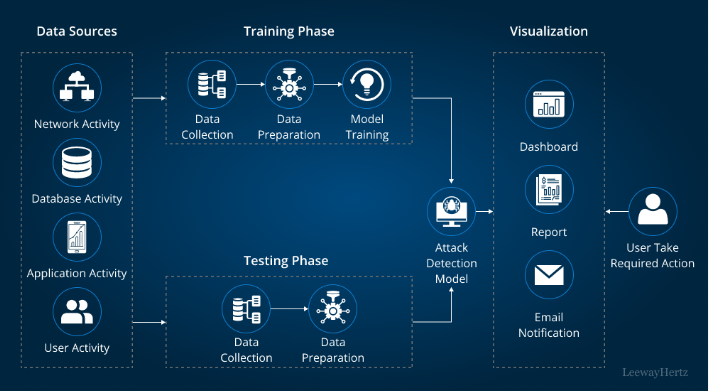
As AI and machine learning workloads move from experimental sandboxes into production environments, the security posture surrounding them has become a genuine operational concern for cloud teams across the United States. The problem is not that organizations are unaware of the risks. The problem is that most existing cloud security frameworks were built before generative AI and large language model deployments became standard infrastructure components. They were designed for static application architectures, not dynamic, data-intensive systems that interact with external APIs, ingest unstructured inputs, and generate outputs that directly influence business decisions.
This gap is widening. Organizations running AI and machine learning workloads on AWS are dealing with a new category of risk that touches IAM configurations, training data pipelines, model artifacts, inference endpoints, and third-party model integrations simultaneously. A security assessment process that does not account for each of these layers is incomplete, regardless of how thorough it may be in other respects.
The checklist below reflects how structured, AWS-specific security reviews are being approached by teams that treat AI infrastructure with the same operational seriousness as any other production system.
Why AWS AI/ML Workloads Require Their Own Security Framework
Standard cloud security reviews focus on network configuration, access controls, encryption at rest and in transit, and logging. These remain relevant for AI and machine learning workloads, but they are not sufficient on their own. AI systems introduce a distinct set of attack surfaces that general-purpose cloud security checklists do not fully address. Conducting a proper aws ai/ml/genai security assessment means reviewing not just infrastructure settings, but the entire lifecycle of a model — from data ingestion through training, deployment, inference, and ongoing monitoring.
Security teams that have begun specializing in this space, such as those offering a structured aws ai/ml/genai security assessment, consistently identify that the most critical gaps are not in encryption or firewall rules. They are in how models are stored, how training pipelines are permissioned, and how generative AI services interact with organizational data through APIs and prompt engineering workflows.
The framework below addresses each of these layers in sequence, moving from foundational AWS account hygiene through to the operational risks unique to generative AI deployments.
Step 1: AWS Account and IAM Foundation Review
The starting point for any AWS AI/ML security review is the account-level configuration and identity and access management structure. Before examining anything specific to AI workloads, security teams need to confirm that the underlying AWS environment is not already compromised by overpermissioned roles, unused credentials, or misconfigured service control policies.
Why IAM Over-Permission Is Especially Dangerous in AI Environments
AI and machine learning workflows often require access to S3 buckets containing training data, SageMaker execution roles, AWS Bedrock configurations, and Lambda functions used for inference pipelines. When these service roles are granted broader permissions than necessary — which happens frequently during rapid development cycles — the blast radius of any credential compromise expands significantly. A misconfigured SageMaker execution role, for example, might have read access to datasets it never needs to touch during inference, simply because the same role was reused from a training job.
Reviewing least-privilege enforcement across every AI-related service role is not a formality. It is the first concrete step in reducing the attack surface of the entire AI stack.
Step 2: Training Data Pipeline Security
The integrity of an AI model depends directly on the integrity of its training data. Security assessments need to evaluate how training datasets are stored, who can access them, whether they are versioned, and whether any external data ingestion pipelines introduce risk. S3 bucket policies, encryption configurations, and logging on data pipeline services like AWS Glue and AWS Data Pipeline should all be reviewed as part of this step.
Data Poisoning as an Operational Risk
Data poisoning — the deliberate or accidental introduction of corrupted or manipulated data into a training pipeline — is a risk that does not have a direct equivalent in traditional application security. Unlike a SQL injection or a misconfigured security group, data poisoning can produce subtle, hard-to-detect degradation in model behavior. Security teams reviewing training pipelines should confirm that data sources are authenticated, that writes to training datasets are logged, and that anomaly detection mechanisms are in place to flag unexpected changes in dataset composition.
Step 3: Model Artifact Storage and Access Controls
Trained model artifacts — the files that represent the learned parameters of a model — are often stored in S3 or within SageMaker Model Registry. These artifacts have significant intellectual property value and, in some cases, contain embedded information about the training data that could expose sensitive details if the model is accessed or exfiltrated. The AWS shared responsibility model places the security of what is stored in these services squarely on the customer, not AWS.
Access Logging and Versioning for Model Files
Access to model artifacts should be restricted to the specific roles and services that require them, with all access logged through AWS CloudTrail and S3 server access logs. Version control for model artifacts is both a development best practice and a security requirement — it provides the ability to identify when a model was modified, by whom, and whether that modification was authorized. Teams that skip model artifact versioning often discover this gap only after an incident, when traceability becomes critical.
Step 4: SageMaker Environment Hardening
Amazon SageMaker is the primary platform for building and deploying machine learning models on AWS, and its security configuration options are extensive. SageMaker notebook instances, training jobs, and endpoints can each be configured with varying degrees of network isolation, encryption, and access control. A thorough aws ai/ml security review examines each of these separately, because they represent distinct environments with distinct risk profiles.
Network Isolation and VPC Configuration
SageMaker components should operate within a defined VPC rather than being exposed to the public internet by default. Training jobs that call out to the internet for package installation or data retrieval introduce supply chain risk — a malicious dependency or a compromised external data source can affect the model without triggering any traditional security alert. Enforcing VPC-only mode and using VPC endpoints for AWS service communication removes this class of risk entirely.
Step 5: AWS Bedrock and Generative AI Service Configuration
AWS Bedrock, which provides access to foundation models from multiple providers through a managed API, introduces a different set of security considerations than SageMaker. Because Bedrock workloads interact with external model providers and often process sensitive business data as part of prompt workflows, the security review needs to address data residency, prompt injection risks, and the controls governing what organizational data is sent to which models.
Prompt Injection and Input Validation
Prompt injection is a category of attack in which a malicious user crafts input that causes a generative AI model to behave in unintended ways — bypassing safety filters, revealing system prompts, or executing actions outside the intended scope of the application. AWS Bedrock guardrails provide some defense, but they need to be explicitly configured. An aws ai/ml/genai security assessment that does not review Bedrock guardrail settings, input validation logic, and output filtering is missing one of the most operationally relevant risks in modern AI deployments.
Step 6: Logging, Monitoring, and Anomaly Detection for AI Workloads
Visibility into AI workload behavior is a security requirement, not just an operational one. CloudTrail, CloudWatch, and AWS Security Hub provide the infrastructure for logging and alerting, but they need to be configured specifically for AI-related events. Model inference logs, API call patterns to Bedrock endpoints, and changes to SageMaker configurations should all feed into a centralized monitoring system.
Detecting Unusual Inference Patterns
Unusual inference patterns — such as a sudden increase in the volume of requests to an inference endpoint, requests from unexpected IP ranges, or queries that consistently approach input length limits — can indicate reconnaissance activity or early-stage exploitation. These patterns are rarely captured by default alerting configurations. Building detection rules specific to AI workload behavior requires deliberate effort but significantly improves the ability to identify threats before they escalate.
Step 7: Third-Party and Open Source Model Risk
Many organizations running AI workloads on AWS are not using only models they have trained themselves. They are using pre-trained models from Hugging Face, integrating foundation models through Bedrock, or importing model artifacts from external sources. Each of these introduces supply chain risk that needs to be assessed independently. A model artifact obtained from an unverified source could contain embedded malicious code that executes during inference.
Model Provenance and Verification Practices
Security teams should establish clear policies for which model sources are approved for use, how models are verified before deployment, and what scanning tools are applied to model files before they are introduced into the production environment. This is a newer area of security practice, and tooling is still maturing, but the underlying risk is well-established and needs to be part of any comprehensive aws ai/ml/genai security review.
Step 8: Incident Response Planning Specific to AI Workloads
General-purpose incident response plans do not account for the specific challenges that arise when an AI system is involved in a security incident. If a model produces harmful or manipulated outputs, if a training pipeline is compromised, or if a generative AI application begins leaking sensitive prompt data, the response workflow is different from responding to a server compromise or a data breach in a traditional application.
Defining Rollback and Containment Procedures for AI Systems
Incident response plans for AI workloads should define how to isolate an affected inference endpoint, how to roll back to a previous model version, and who has authority to take a generative AI service offline if it is behaving anomalously. These procedures should be documented, tested, and reviewed with the same regularity as any other incident response runbook. Organizations that treat AI systems as a special category of infrastructure in their incident response planning are meaningfully better positioned to contain damage when something goes wrong.
Closing Thoughts
The deployment of AI and machine learning workloads on AWS is accelerating across every sector of the US economy, from financial services and healthcare to manufacturing and public infrastructure. The security frameworks that teams rely on need to keep pace with that acceleration. A checklist alone will not close every gap, but a structured, step-by-step review process that addresses each layer of an AI deployment — from account configuration through to incident response — gives security teams a clear starting point and a repeatable methodology.
The eight steps outlined here reflect the areas where gaps are most commonly found and where the consequences of those gaps are most operationally significant. Teams that approach AWS AI and machine learning security with the same rigor they apply to other production systems will be better equipped to manage the risks that come with these workloads over the long term. An aws ai/ml/genai security assessment is not a one-time exercise — it is the beginning of an ongoing security practice built around a type of infrastructure that is still evolving.


