Why a Used Nutsche Filter Could Be the Smartest Investment for Your Process Plant

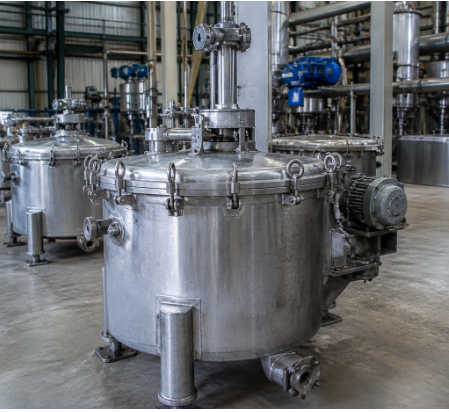
In the world of industrial process engineering, capital expenditure decisions carry enormous weight. Whether you are managing a pharmaceutical manufacturing facility, a fine chemicals plant, or a specialty materials operation, the equipment you choose directly impacts yield, product purity, and operational efficiency. Among the most critical pieces of separation equipment in these industries is the nutsche filter — a pressure or vacuum-driven vessel designed to separate solids from liquids with exceptional precision. As procurement teams face tighter budgets and longer lead times for new equipment, the secondary market for process equipment has never been more strategically relevant.
Understanding the Nutsche Filter and Its Industrial Role
A nutsche filter is a closed, batch-operated filtration vessel that combines filtration, washing, and drying into a single contained unit. Originally developed for pharmaceutical and chemical applications where product contamination must be minimized, the nutsche filter has become a cornerstone of solid-liquid separation across multiple industries. Its design allows operators to filter under pressure or vacuum, wash the filter cake with solvents or water, and in many configurations, dry the product in place — all without exposing the material to the external environment.
This containment capability is particularly valuable when handling toxic, potent, or highly reactive compounds. The agitated nutsche filter dryer (ANFD), a more advanced variant, incorporates a rotating agitator to improve cake washing uniformity and drying efficiency. These units are found in API (active pharmaceutical ingredient) production, agrochemical synthesis, and specialty polymer manufacturing, among other sectors.
Key Operational Advantages
The nutsche filter’s closed-system design reduces solvent emissions and operator exposure, making it compliant with increasingly stringent environmental and occupational health regulations. Its ability to handle difficult-to-filter slurries — including those with fine particle sizes or high viscosity — gives it a versatility that open filtration systems simply cannot match. When properly maintained, a nutsche filter can deliver consistent performance across thousands of batch cycles, making it a long-term asset rather than a short-term consumable.
The Economic Case for Sourcing Used Process Equipment
New nutsche filters, particularly agitated models with advanced automation and containment features, represent a significant capital outlay. Lead times from manufacturers can stretch from several months to over a year, depending on specification complexity and current production schedules. For plants that need to scale quickly, respond to a new contract, or replace failed equipment without halting production, this timeline is simply not viable.
The secondary market for process equipment offers a compelling alternative. Sourcing a used nutsche filter from a reputable dealer can reduce acquisition costs by 40 to 70 percent compared to new equipment, while delivering units that are often in excellent mechanical condition. Many units available on the secondary market come from plant closures, process redesigns, or capacity reductions — not from equipment failure — meaning they retain substantial operational life.
What to Evaluate Before Purchasing
Due diligence is essential when acquiring used process equipment. Buyers should request full documentation of the unit’s service history, including any repairs, seal replacements, or modifications. Material of construction is a critical factor — most pharmaceutical-grade nutsche filters are fabricated from 316L stainless steel, with Hastelloy or titanium options available for highly corrosive applications. Confirming that the vessel’s pressure rating, filter plate configuration, and agitator design match your process requirements will prevent costly retrofitting after delivery.
It is also worth engaging a qualified process engineer to inspect the unit prior to purchase, or at minimum reviewing detailed photographs and dimensional drawings. Reputable dealers will facilitate this inspection and provide transparency around the equipment’s condition and provenance.
Integration with Broader Plant Systems
A nutsche filter does not operate in isolation. It is part of a broader process train that includes reactors, pumps, heat exchangers, and utility systems. Ensuring that your filtration equipment integrates smoothly with upstream and downstream units is essential for maintaining throughput and product quality. Pumps, in particular, play a critical role in transferring slurry to the filter and removing filtrate efficiently. According to pharmaceutical manufacturing experts discussing pump selection and performance, choosing the right pump technology for slurry transfer can significantly impact filtration efficiency and equipment longevity.
Similarly, utility systems such as steam, compressed air, and vacuum must be correctly sized to support the filter’s operational demands. Overlooking these integration requirements is a common mistake that can negate the cost savings achieved through secondary market procurement.
Energy Efficiency and Maintenance Considerations
Process plants are increasingly focused on reducing energy consumption and improving sustainability metrics. Filtration and drying operations can be energy-intensive, particularly when extended drying cycles are required. Optimizing agitator speed, vacuum levels, and heating jacket temperatures can yield meaningful energy savings over time. Establishing a rigorous preventive maintenance schedule — covering seal integrity, agitator bearing condition, filter plate inspection, and instrumentation calibration — is equally important for maximizing equipment uptime and extending service life.
This principle extends to all energy-consuming systems within a process plant. Just as regular servicing of biomass boilers is essential for maintaining efficiency and compliance, scheduled maintenance of filtration equipment protects your investment and ensures consistent process performance. Neglecting maintenance on a used unit can quickly erode the cost advantages gained at the point of purchase.
International Process Plants: A Trusted Source for Secondary Market Equipment
When sourcing used process equipment, the credibility and expertise of the supplier matters as much as the condition of the equipment itself. International Process Plants has established a strong reputation in the global secondary market for process equipment, offering a broad inventory of filtration, reaction, heat transfer, and separation equipment across multiple industries. Their team brings deep technical knowledge to the evaluation and reconditioning of used equipment, providing buyers with confidence that units have been properly assessed before being offered for sale.
Their inventory spans a wide range of capacities and configurations, making it possible to find equipment that closely matches specific process requirements without the compromises often associated with secondary market sourcing. For procurement teams working under time and budget pressure, this combination of inventory depth and technical support is genuinely valuable.
Conclusion: Strategic Procurement in a Competitive Landscape
The decision to invest in used process equipment is no longer a fallback position for underfunded operations. It is increasingly a deliberate strategic choice made by sophisticated procurement and engineering teams who understand the value available in the secondary market. A well-specified, properly inspected used nutsche filter can deliver the same process performance as a new unit at a fraction of the cost and lead time — freeing capital for other priorities and accelerating project timelines.
Success in secondary market procurement depends on thorough due diligence, clear specification alignment, and partnership with a supplier who brings genuine technical expertise to the transaction. With those elements in place, the secondary market becomes not a compromise, but a competitive advantage.