Can Family Members File A Wrongful Death Claim After A Fatal Motorcycle Accident in La Mesa, CA?

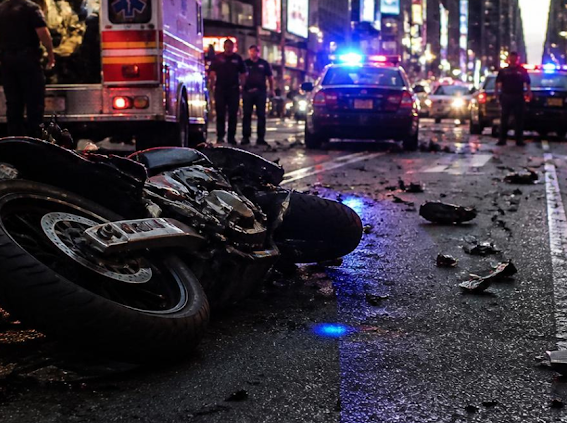
The sudden, catastrophic loss of a loved one in a motorcycle accident is one of the most devastating experiences a family can endure. Motorcyclists are exceptionally vulnerable on the road, lacking the structural protection of enclosed vehicles. When a passenger vehicle or commercial truck collides with a motorcycle on La Mesa’s busy thoroughfares—such as Interstate 8, State Route 125, or the heavily trafficked intersections near Grossmont Center—the outcome is all too frequently fatal.
In the wake of such a tragedy, grieving families are left to grapple not only with profound emotional trauma but also with sudden, overwhelming financial burdens. Medical bills from emergency responses, funeral and burial expenses, and the abrupt loss of the decedent’s income can jeopardize a family’s long-term stability.
California law recognizes the profound injustice when a life is cut short by another party’s negligence or misconduct. Under the state’s civil justice system, certain surviving family members have the legal right to pursue accountability and financial recovery. This comprehensive guide details the legal framework governing wrongful death claims following a fatal motorcycle accident in La Mesa, California, outlining who can file, what must be proven, the damages available, and the strict timelines that must be followed.
Understanding California Wrongful Death Law
A wrongful death claim in Southern California is a civil lawsuit brought against a person, corporation, or entity whose negligent, reckless, or intentional actions caused another person’s death. It is important to understand that a wrongful death claim is entirely separate from any criminal proceedings that law enforcement or the San Diego County District Attorney might pursue against an at-fault driver. While criminal cases seek to punish the wrongdoer with jail time or fines, a civil wrongful death action focuses exclusively on providing financial compensation to the surviving heirs for their immense losses.
California Code of Civil Procedure (CCP) § 377.60 is the statutory foundation for all wrongful death actions in the state. It dictates that a cause of action for the death of a person caused by the wrongful act or neglect of another may be asserted by specific designated survivors or by the personal representative of the decedent’s estate on behalf of those survivors.
In the context of a motorcycle accident, “neglect” or “wrongful act” usually translates to driver negligence. This includes behaviors such as distracted driving, speeding, driving under the influence, failing to yield the right-of-way, or failing to check blind spots before changing lanes—a particularly common cause of fatal motorcycle collisions.
Who Has Legal Standing to File a Wrongful Death Claim?
California does not allow just anyone to file a wrongful death lawsuit. To maintain a claim, a plaintiff must have legal “standing,” meaning they fall within the specific categories of relationships enumerated under CCP § 377.60. The statute establishes a clear hierarchy of eligibility, which is generally broken down into three primary categories.
1. Direct Heirs and Immediate Family Members
The primary right to file a wrongful death claim belongs to the decedent’s immediate family members. Regardless of financial dependency, the following individuals have automatic standing to bring a suit:
- The Surviving Spouse: The legally recognized husband or wife of the deceased motorcyclist at the time of death.
- The Registered Domestic Partner: A partner who was in a registered domestic partnership established in accordance with California Family Code provisions.
- Surviving Children: The biological or legally adopted children of the deceased.
- Issue of Deceased Children: The grandchildren of the deceased motorcyclist, if the motorcyclist’s own children are also deceased.
2. Heirs via Intestate Succession
If the deceased motorcyclist had no surviving spouse, domestic partner, or children, California law allows individuals who would be entitled to the decedent’s property through intestate succession to file a claim. This group typically includes:
- The Decedent’s Parents: Surviving mothers and fathers can file if there are no surviving children or spouses.
- The Decedent’s Siblings: Brothers and sisters may bring an action if there are no surviving parents, spouses, or children.
3. Financially Dependent Individuals
Certain individuals can bring a wrongful death claim if they can prove they were financially dependent on the deceased motorcyclist at the time of the fatal accident. These individuals include:
- The Putative Spouse: A surviving partner of a void or voidable marriage who believed in good faith that the marriage was legally valid.
- Stepchildren: Children of the putative or legal spouse whom the decedent supported.
- Parents or Legal Guardians: If they were dependent on the decedent for support and the parents are deceased, legal guardians may step in.
- Minors Residing in the Household: Any minor child who lived in the decedent’s household for at least 180 days prior to the accident and relied on the decedent for 50% or more of their financial support.
The “One Action Rule” in California
It is a critical nuance of California law that all eligible heirs must be joined in a single wrongful death lawsuit. Under the state’s “One Action Rule,” a defendant cannot be subjected to multiple, separate lawsuits from different family members over the same death. The heirs who initiate the lawsuit have a mandatory legal duty to name and include all other known heirs. Any heir who does not wish to actively participate as a plaintiff must be named as a nominal defendant so that their rights can be adjudicated and settled within the single proceeding.
Proving Liability in a La Mesa Motorcycle Accident
Filing a claim is only the first step; to succeed, the surviving family members must prove that the defendant’s negligence was a substantial factor in causing the fatal crash. Motorcycle accident cases in East County present unique evidentiary challenges that require careful, aggressive investigation.
Overcoming the “Biker Bias”
One of the most significant hurdles in any motorcycle accident claim is overcoming an institutionalized prejudice known as “biker bias.” Insurance adjusters, defense attorneys, and sometimes even jurors harbor unfair assumptions that motorcyclists are inherently reckless, speed excessively, or weave dangerously through traffic.
In reality, the vast majority of motorcycle accidents are caused by motorists in passenger vehicles who fail to see the motorcycle or refuse to share the road equitably. Overcoming this bias requires building an airtight case based strictly on objective physical evidence, traffic laws, and scientific data.
Establishing the Elements of Negligence
To hold a driver liable for a fatal motorcycle crash in La Mesa, your legal team must establish four fundamental elements of negligence:
| Element | Description in a Motorcycle Accident Context |
|---|---|
| 1. Duty of Care | The defendant driver owed a legal duty to operate their vehicle safely and share the road responsibly with the motorcyclist. |
| 2. Breach of Duty | The driver breached that duty by engaging in unsafe behavior (e.g., texting while driving, failing to look before turning left across a lane of traffic). |
| 3. Causation | The driver’s specific breach of duty directly caused the collision that resulted in the motorcyclist’s fatal injuries. |
| 4. Damages | The surviving family members suffered real, quantifiable financial and emotional losses as a direct consequence of the death. |
Common Factors in Fatal La Mesa Crashes
Investigating a crash on local La Mesa roadways involves looking closely at the specifics of the environment. Fatal accidents frequently occur under very distinct circumstances, such as:
- Left-Turn Intersections: Drivers turning left onto major thoroughfares like El Cajon Boulevard or Jackson Drive routinely fail to gauge the speed of an oncoming motorcycle, turning directly into its path.
- Freeway Lane Changes: Heavy traffic congestion on the Interstate 8 and SR-125 corridors leads to sudden, aggressive lane changes where drivers fail to check their blind spots for smaller, narrower profiles like motorcycles.
- Unsafe Following Distance: Drivers tailgating motorcyclists leave zero margin for error. If a motorcyclist must brake suddenly for a road hazard, a rear-end collision by a heavy passenger vehicle can easily prove fatal.
- Defective Roadways or Products: Occasionally, the fault lies not with another driver but with a government entity for poorly maintained public roads (dangerous potholes, obscured signage) or with a manufacturer for a defective motorcycle component (brake failure, tire blowouts).
Types of Damages Recoverable in a Wrongful Death Case
In California, the damages awarded in a wrongful death lawsuit are designed to compensate the survivors for the losses they have personally suffered due to the absence of their loved one. These damages are strictly split into economic and non-economic categories.
Economic Damages (Quantifiable Financial Losses)
Economic damages represent the tangible, direct financial impacts of the death. They are typically calculated using financial records, employment history, and expert testimony from economists. They include:
- Funeral and Burial Costs: All reasonable expenses associated with the memorial service, cremation, or burial.
- Lost Financial Support: The amount of income and financial support the deceased motorcyclist would have reasonably contributed to the family during their expected remaining lifespan, or the lifespan of the plaintiff, whichever is shorter.
- Loss of Household Services: The monetary value of the domestic services the deceased provided, such as childcare, home maintenance, cooking, and vehicle repairs.
- Loss of Anticipated Gifts or Benefits: Any financial gifts or inheritances the heirs reasonably expected to receive.
Non-Economic Damages (Intangible Human Losses)
Non-Economic damages compensate family members for the devastating emotional and relational impacts of losing a loved one. Unlike some states, California does not impose a rigid cap on non-economic damages in standard motor vehicle wrongful death cases. These damages include compensation for the loss of:
- Companionship, Society, and Comfort: The loss of the daily presence, shared experiences, and emotional connection of the deceased.
- Love, Affection, and Protection: The loss of marital or parental bonds, emotional stability, and care.
- Moral Support, Guidance, and Training: The loss of a parent’s mentorship, advice, and life instruction for surviving children.
- Loss of Consortium: The loss of intimate relations between surviving spouses or domestic partners.
Crucial Distinction: Under California law, heirs cannot recover compensation for their own personal grief, sorrow, mental anguish, or emotional distress in a wrongful death claim. The law focuses entirely on the objective, pecuniary value of the loss of the person, rather than the internal psychological suffering of the survivors.
Wrongful Death Claims vs. Survival Actions
When evaluating a fatal motorcycle accident, a family may discover that a wrongful death claim does not cover every single loss associated with the event. To bridge these gaps, California law allows for a parallel legal remedy known as a Survival Action under California Code of Civil Procedure § 377.20.
While a wrongful death claim compensates the survivors for their losses, a survival action is brought on behalf of the decedent’s estate to recover losses the deceased person suffered before they passed away.
Key Differences and the 2026 Legal Framework
A survival action is only applicable if the deceased motorcyclist did not die instantaneously. If they survived for a period—even if only for a few hours or days in a local hospital like Sharp Grossmont—the estate can pursue a survival action.
- Recoverable Damages in a Survival Action: The estate can recover medical bills incurred between the accident and the time of death, lost wages from missed work before passing, and property damage to the motorcycle and riding gear. Additionally, punitive damages may be pursued if the defendant’s conduct was exceptionally malicious or reckless (such as extreme drunk driving).
- The 2026 Update on Pre-Death Pain and Suffering: It is vital to note the current legal landscape regarding pre-death pain and suffering. A prior legislative amendment (Senate Bill 447) temporarily allowed the recovery of non-economic damages for a decedent’s pre-death pain, suffering, or disfigurement in survival actions. However, that specific provision applied only to cases filed between January 1, 2022, and December 31, 2025. For any new survival actions initiated on or after January 1, 2026, the law has reverted to its historical stance: pre-death pain and suffering damages are once again excluded from new survival action filings.
Critical Deadlines: The Statute of Limitations
Surviving family members must act with urgency if they intend to seek justice through the court system. Failing to file the appropriate paperwork within the legally prescribed timelines will permanently bar the family from recovering any compensation.
The General Two-Year Rule
For most wrongful death lawsuits arising from a motorcycle accident in California, the statute of limitations is two years from the date of the person’s death. It is vital to recognize that this clock starts on the date of death, which may be different from the date the accident actually occurred if the individual succumbed to their injuries days or weeks later.
[Accident Occurs] —> [Date of Death] ===================> [2-Year Deadline Ends](Statute of Limitations Clock Starts)
The Strict Six-Month Government Exception
If the fatal motorcycle accident was caused in whole or in part by a dangerous roadway condition, negligent road design, or a collision involving a government-owned vehicle (such as a local city maintenance truck or emergency vehicle), the rules change drastically.
Before a lawsuit can be filed against a public entity—such as the City of La Mesa, San Diego County, or Caltrans—the family must file a formal administrative claim under the California Tort Claims Act. This administrative claim must be submitted to the correct government agency within six months of the date of death. If the government denies the claim, the family has a very limited window (typically six months from the date of the denial letter) to file a formal lawsuit in court.
Why Local Legal Representation Matters
Navigating the complexities of California wrongful death statutes, coordinating multiple heirs, combating corporate insurance tactics, and meeting rigid filing deadlines is an insurmountable burden for a family in deep mourning. Securing local legal representation in the San Diego/East County area is crucial to safeguarding your family’s rights.
An experienced wrongful death attorney will manage every single aspect of the case, allowing your family the time and space needed to heal. A robust legal process involves:
- Immediate Evidence Preservation: Securing La Mesa Police Department traffic collision reports, downloading traffic or business surveillance camera footage before it is overwritten, and preserving the physical state of the motorcycle.
- Accident Reconstruction: Partnering with specialized engineering experts to scientifically recreate the crash scene, proving exactly how the defendant driver breached their duty of care.
- Comprehensive Financial Valuation: Utilizing forensic economists to calculate the true life expectancy, future earning potential, and career trajectory of the deceased to maximize economic recovery.
- Insurance Negotiation: Shielding the family from lowball settlement tactics used by insurance adjusters looking to settle the case quickly and cheaply.
Most reputable personal injury and wrongful death attorneys operate on a contingency fee basis. This means there are no upfront out-of-pocket costs for the grieving family. The law firm advances all costs associated with investigating and litigating the case, and attorney fees are only collected if they successfully secure a financial settlement or jury verdict on the family’s behalf.
The Path Forward for Grieving Families
No amount of financial compensation can ever replace a beloved family member or diminish the profound pain of their absence. However, a successful wrongful death claim provides essential financial security, ensures that minor children are cared for, and holds the negligent parties completely accountable for the devastation they have caused.
If you have lost a spouse, parent, child, or domestic partner in a fatal motorcycle crash in La Mesa, you do not have to carry the legal and financial burden alone. Taking swift action to consult with a knowledgeable legal advocate will ensure that evidence is preserved, your family’s rights are protected, and the memory of your loved one is honored through a pursuit of true accountability.