The United Arab Emirates presents a paradox that visitors and even long-term residents often struggle to reconcile. This is a country of extraordinary wealth and development. The cities are modern, the infrastructure is world-class, the standard of living by most measures is among the highest on earth. Yet by the measure that matters most for long-term sustainability, the UAE is one of the most vulnerable countries in the world.
The UAE is classified as a severely water-stressed nation by virtually every international metric used to assess water security. Understanding why this is the case and what it means for how the country manages water at every level from national policy down to individual buildings provides important context for anyone living or doing business here.
The fundamental problem is the absence of natural fresh water. The Arabian Peninsula receives very little rainfall. The UAE’s average annual precipitation is below 100mm in most areas and even less in parts of Abu Dhabi that border the Rub al Khali, the Empty Quarter, which is the largest continuous sand desert in the world. By comparison, London receives over 600mm of rain per year, and even relatively dry cities like Madrid receive over 400mm. Selecting the right water tank material becomes critical, and a grp tank is another option.
With negligible rainfall, there are no significant rivers or lakes. The wadis, which are the seasonal watercourses that run through the mountain areas of Ras Al Khaimah, Fujairah, and Hatta, flow only after rain events and carry water for hours or days before draining into the ground or evaporating. They are not reliable water sources for a permanent population of millions.
The aquifers that exist beneath the UAE were recharged during the last pluvial period, which was a wetter climate era that ended roughly 5,000 to 10,000 years ago. These aquifers are effectively fossil water. They recharge so slowly under current climate conditions that for practical purposes they are a finite, non-renewable resource. Extraction has been occurring at significant rates since the development boom of the 1970s and 1980s, and groundwater levels in many parts of the UAE have declined substantially. In some coastal areas, overextraction has caused seawater intrusion into freshwater aquifers, contaminating them permanently.
The solution that has made modern UAE possible is desalination. The country has built some of the largest and most sophisticated desalination infrastructure in the world. Desalination plants along the Gulf coast and in some locations along the east coast produce billions of cubic meters of fresh water annually, supplying the overwhelming majority of the country’s potable water needs. The technology is impressive and has become more efficient over the decades, but it remains enormously energy-intensive and expensive compared to treating surface water or extracting groundwater.
The UAE currently spends more energy on water production per capita than almost any other country in the world. Because most of this energy comes from natural gas, the country’s water supply is directly linked to its fossil fuel resources and to the carbon emissions associated with burning them. The environmental cost of drinking a glass of water in the UAE, measured in energy consumed and carbon emitted to produce it, is orders of magnitude higher than in countries with natural surface water or abundant rainfall.
This reality has driven government policy in two directions simultaneously. The first is to dramatically expand desalination capacity using increasingly efficient technology, including large-scale solar-powered desalination, to reduce the energy cost and carbon footprint of water production. The second is to aggressively pursue water conservation and efficiency improvements to reduce consumption per capita and therefore the total volume of water that needs to be produced.
The UAE’s National Water Security Strategy 2036 sets out ambitious targets for both production efficiency and consumption reduction. Per capita consumption is explicitly targeted for significant reduction from its current levels, which are among the highest in the world. Achieving this requires changes in public behaviour, pricing structures that reflect the true cost of water production, and technical improvements in how water is used in buildings, agriculture, and industry.
Agriculture presents a particular challenge. The UAE imports the vast majority of its food, which is in part a water conservation strategy. Growing food locally in a desert country with expensive desalinated water makes very little economic sense for most crops. However, a food production sector does exist, particularly for vegetables and dates, and it uses significant quantities of water. Treated wastewater, which the UAE has invested heavily in capturing and recycling, is increasingly the resource that supplies agricultural irrigation rather than potable water.
The wastewater recycling program is one of the less-discussed but most significant aspects of UAE water management. The country now treats a large proportion of its wastewater to standards suitable for agricultural irrigation and landscaping. The treated effluent, called recycled water or purple pipe water after the colour-coded piping systems used to distinguish it from potable supply, is used for the irrigation of parks, road medians, golf courses, and farms. This reduces the demand placed on desalination for these non-potable uses.
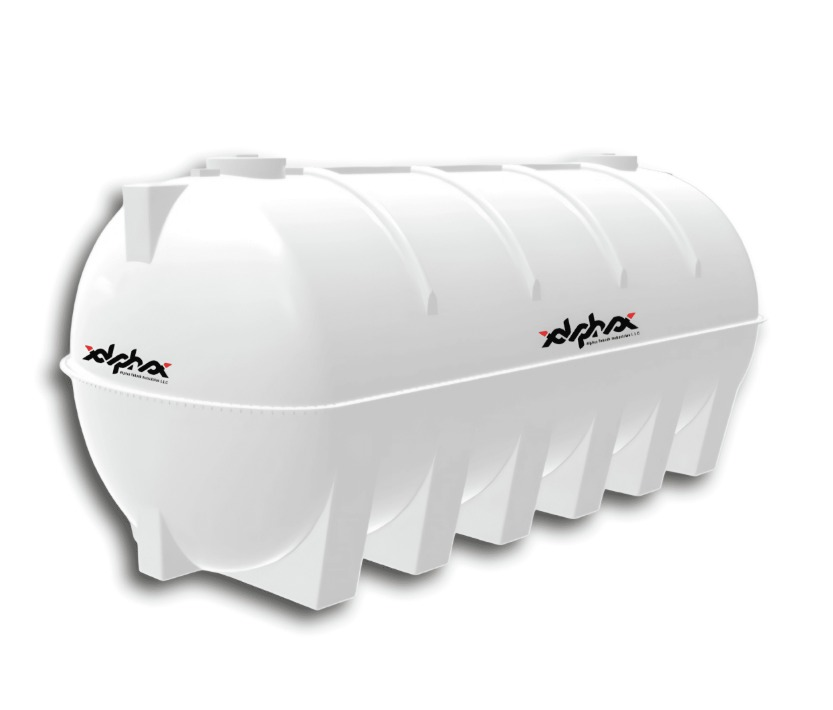
What does all of this mean for the individual water tank owner or manager in the UAE? It means that every liter of water stored, used efficiently, and not wasted has a cost that goes beyond the water tariff on the bill. Proper storage systems that prevent overflow losses, insulated tanks that protect water quality and reduce waste from poor quality forcing residents to use bottled water instead, and maintenance practices that keep stored water safe and usable all contribute in small ways to a national water management challenge that is genuinely significant.
The UAE is addressing its water stress through technology, policy, and investment at a scale that few countries could manage. But water stress is a structural condition that reflects the geography and climate of this part of the world, and no amount of technology or investment can eliminate it entirely. Learning to live with this reality intelligently, including by taking water storage seriously at the building level, is part of what it means to thrive in the UAE for the long term.