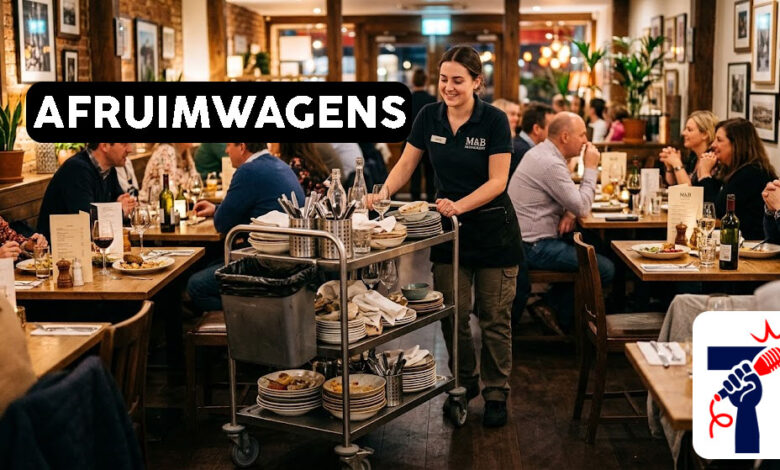
Afruimwagens are specialized clearing trolleys that help staff in restaurants, hotels, and catering businesses move dirty dishes, trays, and utensils from dining areas to the kitchen. The word comes from Dutch, where “afruimen” means clearing away and “wagens” means carts. These simple but smart tools play a big role in keeping busy workplaces clean, safe, and well organized. Whether you run a small cafe or a large hotel, an afruimwagen can save your team a lot of time and energy every single day.
What Are Afruimwagens and How Do They Work?
An afruimwagen is a rolling cart with multiple shelves or compartments. Staff use it to collect plates, glasses, cutlery, and food waste from tables. Instead of carrying heavy stacks by hand and making many trips, workers load everything onto the trolley and wheel it to the dishwashing area in one go. This makes the clearing process much faster and easier.
Most afruimwagens have smooth rubber wheels that roll quietly over floors without leaving marks. Many models also include separate bins for sorting waste, slots for cutlery, and space for stacking plates neatly. This sorting at the table means less work in the kitchen because items arrive already organized and ready for cleaning.
Why Are Afruimwagens Important in Hospitality?
The hospitality industry runs on speed and customer satisfaction. When tables stay dirty for too long, guests feel uncomfortable and the restaurant loses potential customers. Afruimwagens solve this problem by allowing staff to clear entire sections of a dining area quickly. A task that might take 20 minutes by hand can take just 5 minutes with a good clearing trolley.
Safety is another big reason why these trolleys matter. Carrying tall stacks of plates by hand increases the risk of dropping and breaking them. This can injure staff and leave a bad impression on guests. With an afruimwagen, items sit safely on stable shelves. Workers push instead of lift, which protects their backs and reduces the chance of accidents during busy service hours.
Types of Afruimwagens Available
There are several types of afruimwagens designed for different needs. The most common is the multi-tier clearing trolley, which has two to four shelves for stacking plates, bowls, and trays. These work well in restaurants, hotels, and banquet halls. Another popular type is the glass rack trolley, which has special compartments to hold fragile glassware safely during transport.
For larger operations like hospitals, schools, and event venues, industrial afruimwagens offer reinforced frames and higher load capacities. Some modern models even come with electric motors that help push heavy loads over long distances. Foldable afruimwagens are also available for businesses that need to save storage space or use them only at temporary events.
What Materials Are Used to Make Afruimwagens?
Stainless steel is the most popular material for professional afruimwagens. It is strong, easy to clean, resistant to rust, and meets the hygiene standards required in commercial kitchens. Stainless steel trolleys can handle heavy daily use and last for many years with proper care. Most high-end restaurants and hotels choose this material for its reliability and professional appearance.
Plastic or polypropylene afruimwagens are another option. They are lighter, quieter, and more affordable than steel models. These work well in smaller cafes, school cafeterias, or casual dining settings where the workload is not as heavy. Some manufacturers combine both materials, using a steel frame with plastic shelves, to offer a balance between durability and lightweight handling.
How to Choose the Right Afruimwagen for Your Business
Picking the right afruimwagen starts with understanding your daily needs. Think about how many dishes your staff clears per service, how much space you have in your dining area and kitchen, and what type of floors you have. A compact two-shelf trolley might be enough for a small bistro, while a large hotel banquet hall will need a bigger model with more capacity.
Pay attention to the wheels, as they make a big difference in daily use. Look for casters with brakes so the trolley stays in place when you load it. Rubber wheels are best for smooth and quiet movement. Also check the weight limit of the trolley and make sure it matches the volume of items your team handles during peak hours. Budget options start around 80 to 150 euros, mid-range models cost 150 to 300 euros, and premium commercial trolleys can go above 300 euros.
Tips for Using and Maintaining Afruimwagens
To get the most out of your afruimwagen, train your staff on how to load it properly. Always place heavier items like plates on the lower shelves and lighter items like glasses on top. This keeps the trolley stable and prevents tipping. Never overload the cart beyond its weight limit, even during the busiest service hours.
Cleaning your afruimwagen regularly is just as important as cleaning your kitchen equipment. Wipe it down with warm soapy water or a food-safe sanitizer after each use. Check the wheels regularly for hair, string, or food debris that can affect smooth rolling. Replace worn-out casters when needed, as this is much cheaper than buying a whole new trolley. With good maintenance, a quality afruimwagen can serve your business for 5 to 10 years.
Where Are Afruimwagens Used Beyond Restaurants?
While restaurants are the most common users, afruimwagens serve many other industries too. Hotels use them for room service, housekeeping, and buffet clearing. Hospital staff rely on them to collect meal trays from patient rooms while maintaining strict hygiene standards. Schools and universities use clearing trolleys in their cafeterias to manage large numbers of students during lunch breaks.
Event venues and catering companies also depend heavily on afruimwagens. A banquet with 200 guests can produce hundreds of plates, glasses, and pieces of cutlery per course. Without clearing trolleys, staff would need 15 to 20 trips to handle all of it. With the right afruimwagens, that number drops to just 4 to 6 trips, saving a huge amount of time and effort.
Conclusion
Afruimwagens are simple yet powerful tools that keep restaurants, hotels, and other busy workplaces running smoothly. They save time, reduce physical strain on staff, improve hygiene, and help create a better experience for guests. Choosing the right model for your needs and maintaining it well will give your business years of reliable service.
Frequently Asked Questions
1. What does the word afruimwagen mean?
Afruimwagen is a Dutch word that means “clearing cart” or “clearing trolley.” It refers to a specialized cart used to collect and transport dirty dishes, trays, and utensils from dining areas to the kitchen.
2. Are afruimwagens only used in restaurants?
No, afruimwagens are used in many settings. Hotels, hospitals, schools, event venues, and catering companies all use them to move items quickly and keep their spaces clean and organized.
3. What is the best material for an afruimwagen?
Stainless steel is the best choice for heavy daily use because it is durable, easy to clean, and resistant to rust. For lighter use in smaller settings, high-quality plastic models are a good and affordable option.
4. How much does an afruimwagen cost?
Prices vary based on size and material. Budget models start around 80 to 150 euros, mid-range options cost 150 to 300 euros, and premium commercial models can cost 300 euros or more.
5. How do I maintain my afruimwagen?
Clean it with warm soapy water or a sanitizer after each use. Check the wheels regularly for debris and replace worn-out parts when needed. Store it properly and avoid overloading it to extend its lifespan.
See more amazing Information visit Fact News