Computer Vision Technology Is Opening New Product Possibilities Across Every Industry Vertical | See What’s Next!

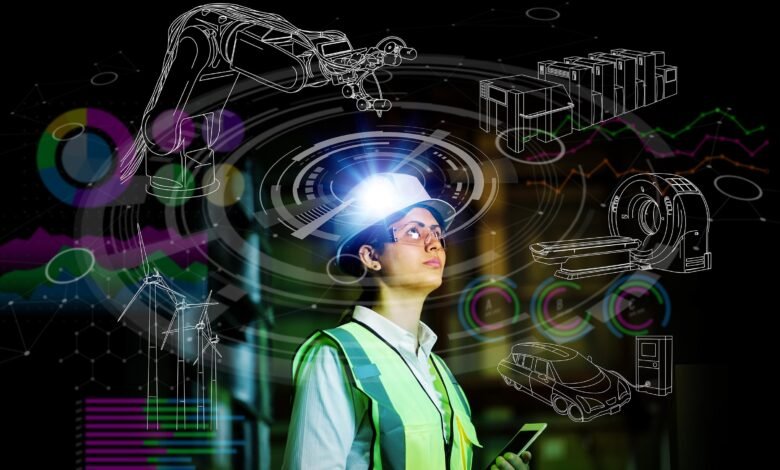
Computer vision is rapidly emerging as one of the most transformative technologies shaping the future of digital products. By enabling machines to interpret and analyze visual data such as images and videos, computer vision is unlocking new opportunities across industries, including healthcare, retail, manufacturing, transportation, and security.
What once required human observation can now be automated with high precision through advanced machine learning models and deep neural networks. As these technologies become more accessible and scalable, startups and established enterprises alike are discovering entirely new product possibilities powered by visual intelligence.
The growing capabilities of computer vision are pushing organizations to rethink how products interact with the physical world. From automated quality inspection in factories to real-time facial recognition in security systems and intelligent shopping experiences in retail, visual data is becoming a valuable asset for innovation.
This rapid evolution is also increasing demand for specialized talent, with many companies seeking to hire computer vision engineers to design and deploy sophisticated image-processing systems.
Transforming Product Experiences Through Visual Intelligence
Computer vision enables digital systems to understand and interpret visual inputs much like humans do. Using technologies such as object detection, image classification, facial recognition, and motion tracking, businesses can create products that interact with their environments more intelligently.
Retail companies, for example, are using computer vision to power cashierless checkout systems, inventory monitoring, and personalized in-store experiences. Healthcare organizations are deploying AI-driven imaging systems to help doctors detect diseases earlier and more accurately.
Meanwhile, in the automotive industry, computer vision plays a critical role in autonomous driving technologies, helping vehicles detect obstacles, recognize traffic signals, and navigate complex environments.
These applications demonstrate how visual intelligence is evolving from a niche research capability into a mainstream product feature.
Expanding Opportunities for Startups
Startups are particularly well-positioned to capitalize on computer vision innovations. Advances in cloud computing, open-source frameworks, and large-scale datasets have significantly lowered the barriers to building sophisticated vision-based applications.
Entrepreneurs are developing solutions for areas such as automated warehouse management, smart surveillance systems, agricultural monitoring, and augmented reality experiences. These products rely heavily on accurate image analysis and real-time processing of visual data.
As demand for these applications grows, startups are increasingly looking to hire computer vision engineers with expertise in machine learning frameworks, neural networks, and advanced image processing algorithms.
These specialists play a vital role in building the models that allow systems to detect patterns, identify objects, and interpret complex visual scenes.
Driving Efficiency Across Industries
Computer vision is also helping organizations improve operational efficiency and decision-making. In manufacturing, vision systems can identify defects in production lines far faster than manual inspections. In logistics and warehousing, cameras combined with AI models can monitor inventory, track packages, and optimize supply chain operations.
Agriculture is another industry benefiting from these technologies. Computer vision tools are being used to analyze crop health, detect pests, and monitor irrigation needs through drone and satellite imagery.
To support these advanced capabilities, companies must build teams capable of developing and deploying reliable vision models. Many organizations are hiring computer vision engineers who understand both deep learning techniques and scalable deployment infrastructure.
What’s Next for Computer Vision
The future of computer vision is expected to expand even further with the integration of generative AI, edge computing, and real-time analytics. These innovations will allow devices to process visual data faster and more accurately, even in environments with limited connectivity.
Emerging use cases such as smart cities, autonomous robotics, and immersive augmented reality experiences will rely heavily on robust visual intelligence systems. As these technologies evolve, computer vision will increasingly become a core component of next-generation digital products.
Organizations that invest in visual AI capabilities today will be better positioned to build innovative products that bridge the digital and physical worlds.
As competition intensifies across industries, the ability to harness visual data effectively will determine which companies lead the next wave of technological innovation.
About Uplers
Uplers is an AI-hiring platform that enables global businesses to access top tech and digital professionals from India through advanced screening and AI-vetting. With a network of over 3 million professionals, companies can quickly hire developers, designers, marketers, and product specialists aligned with their requirements.
Businesses looking to build advanced visual intelligence systems often turn to Uplers to hire computer vision engineers skilled in deep learning, image processing, and AI model deployment. Through rigorous AI vetting and structured technical evaluations, Uplers helps organizations identify highly capable professionals who can help build cutting-edge computer vision products.
By combining AI vetting with efficient hiring processes, Uplers enables companies to move from requirements to onboarding within 48 hours while building high-performing engineering capabilities.