
Al Cu Radiators Explained: A No-Nonsense Guide for HVAC Buyers and Mechanical Engineers

When specifying heat exchange equipment for commercial or industrial applications, the choice of core material often gets less attention than it deserves. Procurement teams tend to focus on price per unit or lead time, while engineers may default to familiar material combinations without revisiting whether those choices still make sense for the operating environment at hand. This is a gap that shows up in real operational problems — shortened service life, accelerated corrosion, unexpected pressure loss, and maintenance cycles that were never anticipated during the design phase.
Aluminum-copper radiators, commonly referred to as al cu radiators, sit at an intersection of material science and practical thermal engineering that is worth understanding clearly. These units are neither a niche product nor a universal default. They have specific strengths that make them well-suited to certain applications and less appropriate for others. Anyone involved in specifying, purchasing, or maintaining HVAC equipment or industrial cooling systems benefits from understanding what these radiators actually are, how they behave under real conditions, and what trade-offs come with selecting them.
What Al Cu Radiators Are and Why the Material Combination Matters
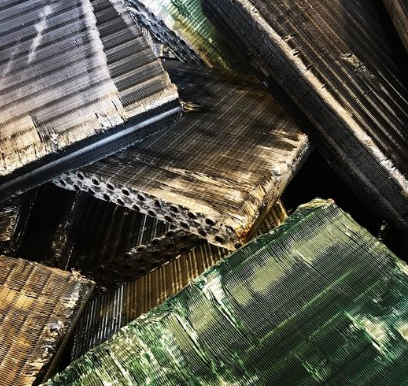
Al cu radiators are heat exchangers that pair aluminum fins with copper tubes, combining the distinct thermal and structural properties of both metals into a single core assembly. The aluminum component handles surface area and heat dissipation efficiency, while the copper tubes carry the working fluid and manage structural integrity under pressure and temperature variation. This is not an arbitrary combination — it reflects an engineering logic that has been applied across generations of HVAC and industrial thermal equipment.
For buyers and engineers evaluating options, a useful starting point is reviewing an Al Cu Radiators overview that covers the available configurations and construction standards before narrowing specifications. Understanding what variants exist in the market helps avoid specifying equipment that is technically correct on paper but unavailable or poorly supported in practice.
The reason material selection matters is rooted in how heat actually moves through a system. Copper is one of the most thermally conductive metals used in industrial applications, which makes it effective for tube construction where the fluid-to-metal interface is critical. Aluminum, while somewhat less conductive than copper, offers a high surface-area-to-weight ratio that works well for fin arrays exposed to airflow. The pairing captures the strengths of both without requiring the full weight and cost of an all-copper unit.
The Structural Logic Behind the Pairing
Using aluminum fins with copper tubes is not simply about combining two thermally capable metals. It reflects a deliberate approach to managing the mechanical demands of thermal cycling. Copper tubes expand and contract at a predictable rate, and their ductility allows them to absorb repeated thermal stress without cracking at joints or seams. Aluminum fins, which are bonded mechanically or thermally to the outer surface of those tubes, are lightweight and resist deformation under normal airflow-induced pressure differentials.
This matters in practice because heat exchangers in real installations are rarely operating at a single stable temperature. Systems cycle, loads shift, and ambient conditions change. A core assembly that handles thermal cycling poorly will develop micro-fractures, delamination between fins and tubes, or joint failures that compromise performance long before the end of the expected service life. The al cu combination, when manufactured to appropriate tolerances, performs reliably across these cycles in a way that all-aluminum designs may not.
Galvanic Corrosion as a Real Consideration
The primary technical concern with pairing aluminum and copper is galvanic corrosion. When two dissimilar metals are in contact in the presence of an electrolyte — including moisture from condensation or humid air — an electrochemical reaction occurs that causes the less noble metal to corrode preferentially. In al cu radiators, aluminum is the anodic material and is therefore more vulnerable to this process.
This is not a disqualifying issue, but it is one that requires attention at the specification stage. Properly manufactured units use coatings, bonding treatments, and material-grade selections that mitigate galvanic activity at the fin-to-tube interface. The operating environment also matters significantly. A unit installed in a coastal or high-humidity location with poor drainage design faces different corrosion risk than the same unit operating in a controlled mechanical room. Understanding this dynamic helps buyers ask the right questions and engineers specify protective measures where they are actually warranted.
Where Al Cu Radiators Are Used and Why
Al cu radiators appear across a wide range of applications, from light commercial HVAC systems to heavy industrial process cooling. Their presence in so many different contexts reflects the practical balance they offer between thermal performance, weight, and cost. They are common in applications where all-copper units would be prohibitively expensive or heavy, and where all-aluminum units may not provide the tube durability required for the fluid pressures or temperatures involved.
• Commercial air conditioning systems where fin efficiency and weight constraints are both factors in equipment selection and installation logistics
• Industrial process cooling loops that operate at moderate pressures and require consistent heat rejection over extended service periods
• Automotive and off-highway equipment cooling systems where the copper tube structure handles vibration and pressure variation while aluminum fins manage heat dissipation to moving air
• Refrigeration equipment where the combination of refrigerant-side copper tube integrity and air-side aluminum fin surface area aligns with standard system architectures
• Data center and electrical room cooling units where consistent thermal performance under variable load conditions is a primary operational requirement
The breadth of these applications reflects the flexibility of the material pairing rather than any single dominant advantage. In each context, the selection is made because the al cu configuration fits the specific combination of thermal load, fluid type, ambient conditions, and maintenance access that the installation demands.
When All-Copper or All-Aluminum Units May Be More Appropriate
Understanding where al cu radiators fit also requires clarity about where they do not. All-copper radiators, as described in standards maintained by organizations such as ASHRAE, are typically preferred where corrosive fluids or aggressive chemical environments are present, since copper’s resistance profile is more uniform across a range of conditions. All-aluminum units, by contrast, are more common in weight-sensitive applications where the risk of galvanic corrosion from mixed-metal contact can be eliminated by design.
In applications involving aggressive water chemistry, poorly maintained glycol solutions, or environments with chemical exposure, the galvanic vulnerability of aluminum fins in an al cu unit may accelerate degradation beyond acceptable service intervals. This is not a common scenario for most commercial HVAC applications, but it is a real consideration in industrial process environments where fluid composition changes over time or is not consistently monitored.
Evaluating Al Cu Radiators for a Procurement Decision
For procurement professionals and engineers making purchasing decisions, the evaluation of al cu radiators should focus on a few practical dimensions that directly affect operational reliability and total cost of ownership. Price per unit is a factor, but it is rarely the most significant one once installation, maintenance, and replacement cycles are taken into account.
Core Construction Quality and Its Impact on Service Life
The quality of the mechanical bond between aluminum fins and copper tubes is the single most important determinant of long-term performance. A well-bonded fin-to-tube assembly maintains thermal conductivity and structural integrity across years of thermal cycling. A poorly bonded assembly begins to lose efficiency relatively quickly as air gaps form between fins and tubes, reducing the effective contact area and increasing thermal resistance.
Buyers should ask manufacturers about bonding methods, tolerances, and quality control processes. Units produced to consistent dimensional standards with verified bond integrity will outperform cheaper alternatives even if their nominal specifications appear similar. This distinction is not always visible in a product listing but becomes apparent in how the unit performs after the first year of operation.
Compatibility with System Fluid and Operating Conditions
Al cu radiators perform reliably when the system fluid, operating pressure, and temperature range are matched to the unit’s construction. Problems arise when units are installed in applications that push against the limits of what the material combination can handle — particularly in terms of fluid chemistry and cycling frequency.
Before finalizing a specification, engineers should confirm that the working fluid is compatible with both aluminum and copper, that the operating pressure falls within the rated range of the copper tubes, and that the installation environment does not introduce corrosive elements that the fin coating or bonding treatment was not designed to handle. These are not complex evaluations, but they are frequently overlooked when procurement decisions are made primarily on price or availability.
Maintenance Access and Long-Term Serviceability
Al cu radiators are generally serviceable with standard HVAC maintenance practices, including fin straightening, coil cleaning, and periodic inspection of tube integrity. However, units installed in locations with poor access, or in systems that run continuously without scheduled maintenance windows, accumulate performance degradation faster than those subject to regular inspection.
Designing maintenance access into the installation plan from the beginning — and selecting units with fin spacing appropriate to the expected airborne particulate load — reduces the frequency and cost of corrective maintenance significantly. This is a basic operational consideration that applies to all heat exchangers but is particularly relevant when aluminum fins are involved, since they are more susceptible to physical damage from improper cleaning methods than copper fin alternatives.
Conclusion: Making an Informed Decision with Al Cu Radiators
Al cu radiators are a well-established and broadly applicable heat exchanger configuration, not a specialty product or a compromise. Their combination of copper tube durability and aluminum fin efficiency makes them a practical choice across commercial HVAC and industrial cooling applications where performance, weight, and cost must all be balanced.
The decisions that determine whether these units perform well over their full service life are made before installation — in specification, material compatibility review, and construction quality evaluation. Buyers who treat radiator selection as a commodity procurement process tend to encounter maintenance costs and replacement cycles that were avoidable. Engineers who understand the material pairing’s strengths and limitations can specify units confidently and design installations that allow those units to perform as intended.
There is no single correct answer to whether al cu radiators are the right choice for a given application. But there is a clear process for reaching that answer: understand the thermal and mechanical demands of the system, evaluate the operating environment for corrosion risk, confirm material compatibility with the working fluid, and assess construction quality from suppliers who can document their manufacturing standards. Approached that way, the decision becomes straightforward and the results predictable.


