Victorian House Painting in London – Expert Guide for Victorian Houses Homeowners

London’s streetscape is a tapestry woven with architectural history, and its Victorian houses are among the most cherished threads. Owning one of these grand properties, with their soaring bay windows, intricate cornices, and stately brickwork, is a privilege. It’s also a significant responsibility, especially when it comes to preservation and decoration.
Perhaps no task is more transformative, or more daunting, than Victorian house painting. A fresh coat of paint does more than just update a look; it protects the very fabric of the building, enhances its historical character, and makes a personal statement. But where do you begin? Which colours are authentic? What are the modern-day considerations for a project of this scale?
This expert guide is for you, the proud owner of a Victorian house in London. We’ll delve into the nuances of colour, the critical importance of preparation, and how to achieve a finish that honours your home’s heritage while reflecting your personal style.

Understanding the Victorian Aesthetic: More Than Just Grey
To approach Victorian house painting with confidence, we must first understand the Victorians’ own philosophy of colour and design. The era (1837-1901) was one of dramatic change, industrial innovation, and a newfound love for ornamentation. This was reflected in their homes.
Contrary to the modern misconception of a perpetually grey and sober London, the Victorians loved colour. The industrial revolution made a wide range of new, stable pigments available for the first time. They used colour to highlight the complex architectural features of their homes—a practice we should embrace today.
Key principles of the Victorian aesthetic include:
- Emphasis on Architecture: Colour was used to accentuate, not hide, features like window surrounds, cornices, mouldings, and porch details.
- Connection to Nature: The palette was dominated by rich, earthy tones inspired by the natural world. Think deep greens, earthy reds, ochres, and stone colours.
- Layering and Hierarchy: Different elements of the facade were given different colours to create a sense of depth and complexity.
The Exterior: Your Home’s First Impression and First Line of Defence
The exterior of your London home faces a daily battle against the elements—rain, wind, and urban pollution. Proper exterior Victorian house painting is therefore not just a cosmetic exercise; it is an essential act of maintenance.
Curb Appeal and Value: A beautifully painted Victorian house is a joy to behold and significantly enhances its market value. The right colour scheme can make architectural details pop, creating a stunning first impression.
Protection and Preservation: This is the most critical function of exterior paint.
- Woodwork: Sash windows, doors, fascias, and soffits are particularly vulnerable to rot and decay. A high-quality, flexible paint system seals the wood from moisture, preventing costly repairs down the line.
- Render and Stucco: Painted render or stucco needs a breathable paint film. Masonry paint is designed to allow water vapour to escape from within the wall, preventing blistering, peeling, and damp issues.
- Ironwork: Victorian houses often feature cast-iron railings and gates. These require specific metal primers and paints to prevent rust and corrosion.
Choosing Your Palette: The Art and Science of Victorian Colour
This is the most exciting, and often the most challenging, part of any Victorian house painting in London project. Do you aim for strict historical accuracy or a more contemporary interpretation? The good news is, you have options.
The Historically Inspired Palette
For a truly authentic look, consider the colours the Victorians themselves would have used. Heritage paint ranges from brands like Farrow & Ball, Little Greene, and Dulux Heritage offer meticulously researched colours.
- Main Body: If your brickwork is exposed and in good condition, celebrate it! If the house is rendered, classic choices include deep creams, stone colours, and pale greys.
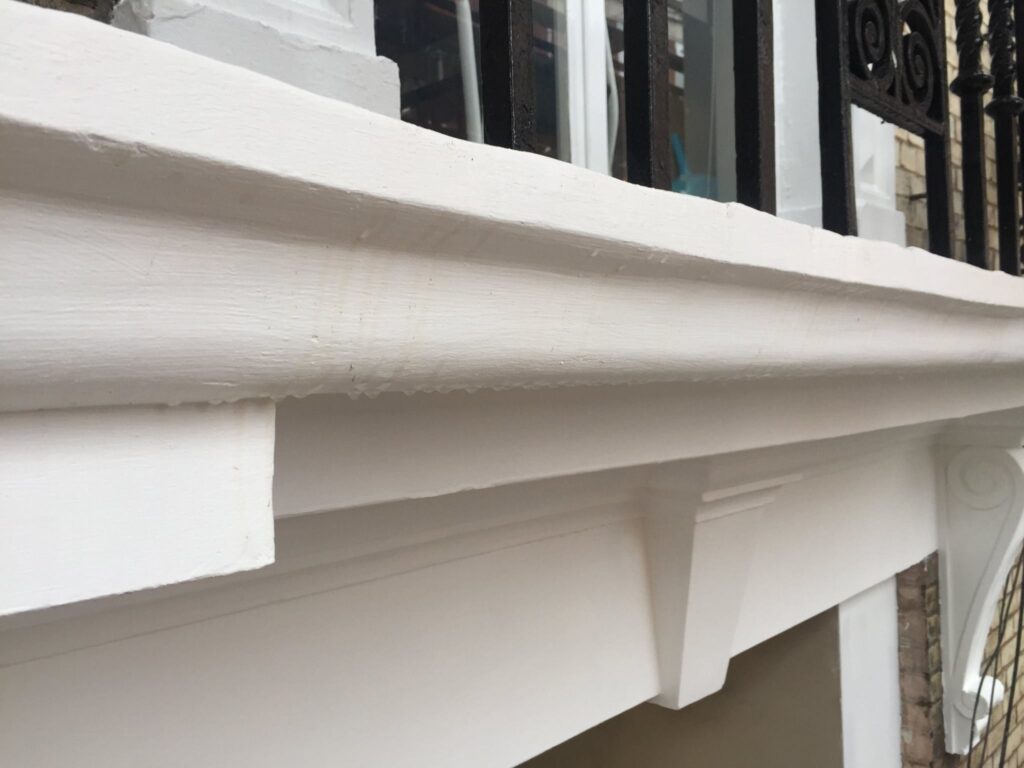
- Major Trim (Windows, Cornices): A contrasting, often lighter, colour was common. Think off-whites, stone colours, or a lighter shade of the main body colour. This was a deliberate choice to mimic dressed stone.
- Minor Trim (Decorative Details): This is where the Victorians had fun. Deep, rich colours were used to highlight smaller, intricate details. Popular choices included:
- Brunswick Green: A deep, almost black-green, perfect for window sills and detailing.
- Indian Red or Terracotta: A rich, earthy red-brown that pairs beautifully with brick and stone.
- Deep Blues and Plums: Used more sparingly for a touch of opulence.
- Front Door: The front door was the jewel of the facade. It was often painted in a strong, glossy colour like Black, a deep Red, or a regal Green to make a statement.
The “Four-Colour Rule”
A simple rule of thumb for creating a sophisticated Victorian scheme is to use three or four complementary colours:
- The Dominant Colour: The brickwork or the main render colour.
- The Major Trim: A strong secondary colour for main features like window frames.
- The Minor Trim: A third accent colour for finer details.
- The Front Door: A bold, welcoming focal point.
London-Specific Considerations: Conservation Areas
Before you buy a single pot of paint, check if your property is in a Conservation Area or is a Listed Building. Many London boroughs have specific guidelines (sometimes called an ‘Article 4 Direction’) that may restrict your colour choices to an approved palette to maintain the area’s historical character. A quick check on your local council’s website is an essential first step.
The Interior: Creating Atmosphere and Flow
The principles of Victorian house painting extend indoors. Victorian interiors were designed to evoke different moods in different rooms.
- Public Rooms (Hallway, Living Room, Dining Room): These were often decorated in richer, darker, more dramatic colours to impress guests. Deep burgundies, forest greens, and regal blues, often paired with elaborate wallpaper, were common.
- Private Rooms (Bedrooms): These tended to be lighter and more restful, using pastels, creams, and softer shades.
- Woodwork: Victorians did not shy away from painting their interior woodwork. Skirting boards, dado rails, picture rails, and door frames were often painted in a darker shade than the walls or a contrasting colour to create definition. An eggshell or satin finish is perfect for this, providing durability and a subtle sheen.
The Process: Why Meticulous Preparation is Non-Negotiable
The secret to a long-lasting, flawless finish in Victorian house painting is not in the final coat of paint, but in the painstaking preparation that precedes it. This is where the difference between an amateur job and a professional one becomes starkly clear.
A professional process for a Victorian property will include:
- Access: Safe and proper scaffolding is usually required to reach the high gables and intricate details of a multi-storey Victorian home.
- Stripping and Removal: All loose, flaking, and bubbling paint must be completely removed using a combination of scraping, sanding, and sometimes heat guns or chemical strippers.
- Repairs: This is the time to address the building’s health. Any rotten wood in window frames or fascias must be repaired or replaced. Cracks in render must be filled with the appropriate flexible filler.
- Sanding: All surfaces, especially woodwork, must be sanded to a smooth, sound base. This provides the ‘key’ for the new paint to adhere to properly.
- Washing Down: The entire facade must be washed to remove dust, dirt, and any biological growth like algae or mould.
- Priming and Undercoating: This is a crucial step often skipped by amateurs. Different surfaces require different primers. Bare wood needs a wood primer, metal needs a metal primer, and stained or repaired areas may need a stain-blocking primer. An undercoat then provides the perfect base and colour foundation for the topcoats.
- Topcoats: Finally, at least two topcoats of high-quality, appropriate paint (e.g., masonry paint for render, durable exterior eggshell for wood) are applied with precision.
As you can see, this is a highly skilled, labour-intensive, and time-consuming process.
Your Local Experts in Victorian House Painting in London: TM Decorating
The complexity and importance of painting a Victorian home cannot be overstated. It’s a project that requires a deep understanding of period properties, a mastery of traditional techniques, and an unwavering commitment to quality. For homeowners in London, entrusting this task to a general painter can be a risky proposition.
This is where specialists like TM Decorating make all the difference.
Based in London, TM Decorating are not just painters; they are craftsmen who specialise in the meticulous work required for period properties, with a particular passion and expertise for Victorian house painting in London. They understand that these buildings are more than just brick and mortar—they are a cherished part of the city’s heritage.
Why choose a specialist like TM Decorating for your Victorian home?
- Period Property Expertise: They possess the specific knowledge needed to work with original materials, from lime render to aged timber sash windows.
- Meticulous Preparation: They know that a lasting finish starts with flawless preparation and take no shortcuts, from detailed sanding to expert repairs.
- Quality Materials: They use only high-quality, durable, and appropriate paints and materials that are proven to perform on period properties, ensuring both beauty and long-term protection.
- Attention to Detail: From achieving razor-sharp lines on intricate mouldings to ensuring a perfectly smooth finish on a front door, their attention to detail is second to none.
- Local London Knowledge: They are familiar with the challenges of working in London, including navigating local council regulations and Conservation Area requirements.
Undertaking a Victorian house painting project is a significant investment in your home. By partnering with the experts at TM Decorating, you are ensuring that investment is protected and that the final result will be a stunning, durable, and historically sympathetic finish that you will be proud of for years to come.
We invite all Victorian house owners in London to discover the difference that true expertise makes. To discuss your project and get a professional consultation, contact the team at TM Decorating via their website: https://tmdecorating.co.uk
Conclusion: Honouring the Past, Painting for the Future
Victorian house painting is a unique blend of art, history, and building science. It’s an opportunity to strip away the years and reveal the stunning architectural beauty that lies beneath. By understanding the historical context, choosing colours with care, and insisting on a rigorous preparation and application process, you can transform your home.
Whether you choose a historically accurate scheme or a bold modern interpretation, the goal is the same: to protect and enhance your beautiful Victorian home, ensuring it remains a treasured part of London’s architectural legacy for generations to come.