
How to Choose Wool Socks for Women: The Only Guide You Need Before Buying in 2025

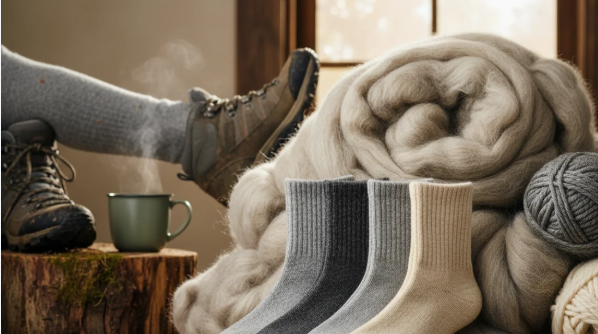
Buying socks rarely feels like a significant decision, but for women who spend long hours on their feet — whether working outdoors, hiking, traveling, or simply managing demanding daily routines — the wrong sock choice has real consequences. Discomfort accumulates. Blisters develop. Temperature regulation fails. Cold feet during a long shift or a wet hike are not just inconveniences; they affect focus, endurance, and physical wellbeing over time.
Wool socks, and specifically wool socks designed for women, have become a more considered purchase in recent years — not because of marketing trends, but because the options have multiplied and the distinctions between them actually matter. A sock made from Merino wool performs differently than one blended with synthetic materials. A sock designed for hiking performs differently than one designed for everyday wear. Understanding these differences before purchasing saves money, reduces returns, and results in a product that actually holds up under the conditions you need it for.
This guide is written to help women — and those purchasing on their behalf — make an informed decision based on how and where the socks will actually be used.
What Makes Wool a Practical Choice for Women’s Everyday and Outdoor Wear
Wool is a natural fiber with a well-documented performance profile. When you look at wool socks for women specifically, the practical case for wool over cotton or synthetic alternatives comes down to a few consistent behaviors: wool regulates temperature across a wide range of conditions, it manages moisture without holding it against the skin, and it resists odor more effectively than most synthetic alternatives over repeated use cycles. These are not marketing claims — they reflect how wool fiber functions at a structural level, which is why it has remained a reliable material choice across industries from military use to outdoor recreation for well over a century.
The moisture management aspect is particularly relevant for women who wear closed-toe footwear for extended periods. Unlike cotton, which absorbs moisture and holds it, wool can absorb a significant percentage of its own weight in moisture while still feeling dry against the skin. This matters because sustained moisture contact is one of the primary causes of blisters, skin irritation, and general foot discomfort during prolonged activity.
There is also a temperature range consideration. Wool insulates when it is cold and allows airflow when conditions are warmer, which means a well-constructed wool sock can function across seasons without requiring a separate product for each use case. For women managing a wide range of conditions — outdoor work, travel, varying climates — this versatility reduces the need to maintain multiple product lines in rotation.
Understanding the Difference Between Wool Types
Not all wool is the same, and the type of wool used in a sock directly affects how it feels and how long it lasts. Merino wool is the most commonly referenced variety in the consumer sock market because its fiber diameter is finer than standard wool, which eliminates the scratchy quality that makes some people avoid wool altogether. Merino is generally softer against the skin, making it a practical choice for everyday wear and for women with sensitive skin.
Coarser wool blends are more likely to appear in heavier-duty socks designed for hiking or cold-weather outdoor work. These are typically more durable under abrasion but are less comfortable against bare skin over long periods. Knowing the intended use before selecting a wool type prevents the common problem of buying a technically good product that is poorly matched to how it will actually be worn.
Wool Blends and What the Mix Actually Means
Most wool socks are not made from pure wool. They are blended with nylon, polyester, or spandex to improve durability, stretch retention, and shape recovery. A small percentage of synthetic fiber in the blend strengthens the sock’s structure without significantly compromising the moisture and temperature management properties of wool. This is a practical compromise that makes socks last longer in high-wear zones like the heel and toe without sacrificing comfort.
Where problems arise is when the wool percentage drops to a point where the synthetic material dominates the sock’s behavior. At that point, the moisture management and temperature regulation properties diminish, and the product functions more like a synthetic sock with minor wool characteristics. Reading the material composition before purchasing gives a clearer picture of actual performance than product descriptions alone.
How Fit and Construction Affect Long-Term Comfort
The physical construction of a wool sock — how it is knit, where cushioning is placed, and how it fits the foot — determines its actual comfort and durability far more than the brand name or price point. Women’s feet differ in structure from men’s feet, not just in size but in proportion, with a generally narrower heel and wider forefoot relative to overall length. Socks designed specifically for women’s foot geometry tend to fit more consistently across the full foot rather than bunching or gapping in ways that lead to friction and discomfort.
Cushioning Placement and Its Functional Role
Cushioning in a sock serves a specific function: it reduces impact at high-pressure points and adds a layer of protection between the foot and the shoe. Where that cushioning is placed matters depending on the activity. A sock with full-foot cushioning is heavier and warmer, which suits cold-weather outdoor use but may be excessive for office or everyday wear in temperate conditions. A sock with targeted cushioning only at the heel and ball of the foot works well for walking or light activity without the added bulk.
Purchasing a heavily cushioned hiking sock for daily office use, or a lightweight everyday sock for a full-day hike, results in either discomfort or premature wear. Matching cushioning to activity is a straightforward step that significantly extends how useful a sock actually is.
Sock Height and Why It Matters Beyond Aesthetics
Sock height — no-show, ankle, crew, or knee-high — is often treated as a style preference, but it has a functional impact depending on footwear and activity. Women wearing trail running shoes or hiking boots benefit from crew-height socks that protect the ankle from the boot collar and reduce the risk of debris entering the shoe. Women wearing low-cut casual shoes may find crew socks uncomfortable or incompatible with their footwear entirely.
Knee-high wool socks serve a different purpose, providing extended warmth and compression across the lower leg, which is useful in cold climates or for women who stand for long periods and benefit from graduated support. Understanding that sock height affects function — not just appearance — helps narrow down options more efficiently before purchasing.
Durability and Care: What Determines How Long a Wool Sock Actually Lasts
Wool socks are often perceived as delicate because wool as a raw fiber can be sensitive to heat and agitation. In sock form, however, the durability of a well-constructed wool sock is generally strong, particularly in blended products where reinforcement fibers are added at wear points. According to the Woolmark Company, wool fiber has a natural crimp and resilience that allows it to return to its original shape after repeated compression, which is part of why wool socks maintain their structure and cushioning over extended use in ways that cotton-based socks often do not.
The primary factor that shortens the lifespan of a wool sock is improper washing. High heat in the wash or dryer causes wool fibers to felt — essentially, the fibers lock together irreversibly, causing the sock to shrink and stiffen. Most wool socks tolerate machine washing on a cold, gentle cycle without issue, but heat is consistently the most common cause of premature product failure. Reading care instructions before the first wash prevents the most avoidable form of damage.
Rotation and Wear Frequency
Wearing the same pair of wool socks every day without rotation accelerates fiber breakdown at the heel and toe. Maintaining two or three pairs in rotation allows each pair to recover between uses, which is particularly relevant for cushioned socks where compression recovery time matters. This is a small operational detail, but it extends product life meaningfully over a full season or year of regular use.
Matching Wool Sock Selection to Specific Use Cases
The most consistent mistake in sock purchasing is selecting a product based on general appeal rather than specific use. A sock that works well for one context will underperform in another, and the differences are usually apparent within the first few uses. Thinking through how and where the socks will be used — activity type, duration, footwear, and climate — before purchasing avoids this problem entirely.
• For everyday office or casual wear in moderate climates, a lightweight Merino wool sock with minimal cushioning offers comfort and temperature regulation without unnecessary bulk inside low-profile shoes.
• For hiking or extended outdoor activity, a mid-weight blended wool sock with reinforced heel and toe construction and crew height provides the protection and cushioning that sustained physical activity demands.
• For cold-weather or winter conditions, a heavier wool sock — potentially knee-high — worn with boots offers insulation without the rigid discomfort of purely synthetic cold-weather options.
• For travel across varied climates, a mid-weight Merino blend strikes a balance between versatility and packability, performing adequately across a wider range of conditions without requiring multiple sock types in a bag.
Closing Thoughts
Choosing wool socks is not complicated, but it does require more thought than picking the first product that appears in a search result. The variables — wool type, blend composition, cushioning level, sock height, fit, and care requirements — each affect how the sock performs and how long it lasts. Getting these right the first time saves money, reduces the frustration of products that fail early, and results in a more consistent daily experience.
The best starting point is clarity about use case. A woman who needs socks primarily for cold-weather hiking has different requirements than one looking for everyday office wear or travel versatility. Once the use case is defined, the remaining decisions follow logically. Wool type narrows based on comfort sensitivity and durability requirements. Cushioning level narrows based on activity intensity. Height narrows based on footwear. What remains is simply finding a product that meets those criteria at a price point that reflects quality without unnecessary cost.
Wool socks for women have improved significantly in construction and variety over the past decade. The range now available makes it genuinely possible to find a product well-matched to almost any use case. The challenge is no longer availability — it is knowing what to look for before the purchase rather than after.


