7 Ways Automated Inspection Is Replacing Manual QC in U.S. Manufacturing Plants

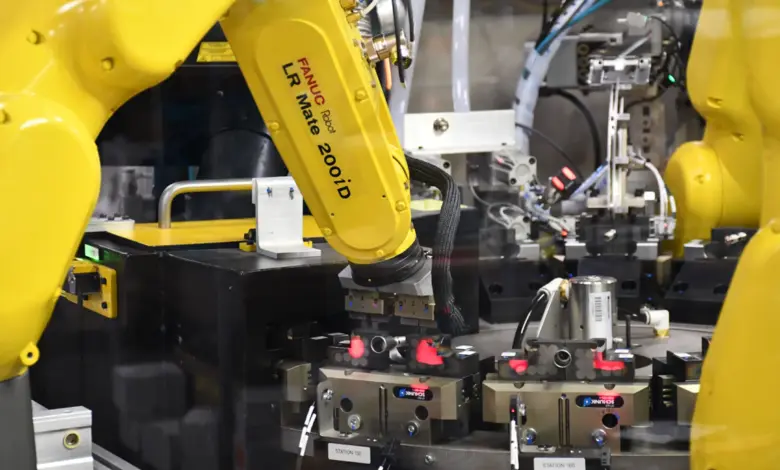
Quality control has always been a critical function in manufacturing, but the way it gets done is changing in ways that are difficult to ignore. For decades, manual inspection was the standard — trained workers examining parts, checking measurements, and flagging defects based on experience and judgment. That model worked, but it came with real limitations: fatigue, inconsistency, bottlenecks, and the inherent variability that comes with human perception under production pressure.
What’s driving the shift now isn’t simply the availability of new technology. It’s the accumulation of operational problems that manual QC was never fully equipped to solve. Reject rates that fluctuate by shift. Defects that reach downstream assembly or, worse, the customer. Inspection steps that create throughput delays when production volumes increase. These are the pressure points that have pushed plant managers and quality engineers to look more seriously at systems that don’t tire, don’t vary, and don’t require recalibration after a lunch break.
Across industries — from automotive and aerospace to food processing and electronics — manufacturers in the United States are restructuring their quality processes around machine-based inspection. The transition is not total in most facilities, but the direction is clear. Understanding what’s actually being replaced, and why, requires looking at how each major function of quality control is being rethought.
1. Consistent Defect Detection Without Fatigue-Related Variance
One of the most straightforward reasons automated inspection is replacing manual QC is the simple problem of human fatigue. An inspector working a full shift will not perform identically in the first hour and the last. Attention drifts. Subtle defects that might be caught early in a shift are missed later. This isn’t a criticism of workers — it’s a physiological reality that no training program fully resolves.
Machine vision systems and sensor-based inspection tools don’t have this limitation. They apply the same detection parameters at the start of a run and the end of one, regardless of how long the line has been running. For manufacturers where defect rates vary by shift or by time of day, this alone represents a significant quality improvement. The consistency of the output isn’t tied to staff scheduling or individual concentration.
Facilities that have implemented automated inspection in high-volume lines typically report that their defect catch rates stabilize across shifts, which also makes quality data more reliable for process improvement analysis.
The Impact on Downstream Quality
When defects pass through manual inspection undetected, they tend to surface at a later stage — sometimes in assembly, sometimes in the field. Each point downstream where a defect appears multiplies the cost of that failure. A component rejected at the source costs a fraction of what it costs to address after it has been assembled into a larger unit or shipped to a customer. Machine-based detection, applied at the source, interrupts that cost escalation before it begins.
2. High-Speed Inspection Integrated Into Production Lines
Manual inspection requires either slowing the production line or pulling samples for offline review. Neither approach is ideal. Slowing the line reduces throughput. Sampling means that defects between inspected parts can go undetected entirely. For manufacturers trying to maintain both speed and quality, these trade-offs have always been uncomfortable compromises.
Inline automated systems change that equation by performing inspection at production speed. Parts or assemblies are evaluated as they move through the line, without interruption. The inspection doesn’t create a bottleneck because it’s built into the process itself, not appended to it.
Full Coverage Versus Sampling
Sampling-based inspection was, for a long time, considered acceptable because 100% manual inspection was impractical at scale. But sampling has an inherent statistical weakness: it provides confidence intervals, not certainty. Automated systems capable of inspecting every unit that comes off a line replace that uncertainty with complete coverage. This is particularly consequential in industries where even a small number of defective units in the field carries significant liability or safety implications.
3. Objective, Repeatable Measurement Standards
Human inspectors, even well-trained ones, bring interpretation to the inspection process. Two inspectors examining the same part may reach different conclusions about whether a surface finish, weld quality, or dimensional tolerance meets specification. This subjectivity creates inconsistency in the accept/reject record and can generate internal disputes about what the quality standard actually means in practice.
Automated systems apply fixed, programmed criteria. The measurement standard doesn’t shift based on who is running the station or what the production pressure looks like that day. If a part falls outside the defined parameters, it is rejected. If it falls within them, it passes. That objectivity removes a category of variability that has always been difficult to quantify but easy to observe in reject rate fluctuations.
Standardization Across Multiple Facilities
For manufacturers operating more than one plant, consistent quality standards across locations have historically been hard to enforce. Each facility may have slightly different inspection cultures, different levels of inspector experience, and different interpretations of the same written standard. Deploying the same automated inspection logic across sites brings those facilities into alignment in a way that audits and training alone rarely achieve.
4. Data Capture and Traceability Built Into the Inspection Process
Manual inspection generates records, but those records are typically created after the fact — written down, entered into a spreadsheet, or logged at the end of a shift. The connection between a specific part and its inspection result is often approximate at best. When a quality issue surfaces weeks or months later, tracing it back through manual records is slow and frequently incomplete.
Automated inspection systems capture data in real time, linked directly to the part, batch, or production run being inspected. That data is immediately available, accurately time-stamped, and associated with specific process conditions. For industries governed by quality standards such as those maintained by the International Organization for Standardization, this kind of structured traceability supports both internal audits and external certification requirements.
Using Inspection Data for Process Improvement
The data generated by automated inspection is not just a quality record — it’s a process signal. Patterns in defect types, rates, and locations can indicate upstream equipment drift, material inconsistency, or tooling wear before those issues cause broader production problems. Manual inspection produces data too, but rarely with the resolution or consistency needed to support this kind of predictive analysis.
5. Inspection in Environments Where Manual Review Is Impractical
Some production environments are genuinely difficult or unsafe for sustained manual inspection. High-temperature processes, enclosed systems, environments with hazardous materials, and high-speed operations all create conditions where placing workers in continuous inspection roles introduces risk. In these settings, manual QC has always been a workaround, not a real solution.
Sensors, cameras, and machine vision systems can operate in conditions that workers cannot. They can be positioned inside equipment, mounted in tight spaces, or deployed in environments where temperature, pressure, or exposure would be unacceptable for human presence. This isn’t about replacing workers to cut costs — it’s about performing inspection where manual review was never genuinely viable in the first place.
Expanding the Scope of What Gets Inspected
When inspection is limited by where people can safely and practically stand, it inevitably misses certain points in the process. Automated systems extend the reach of quality control to stages and locations that were previously either unmonitored or only intermittently checked. More coverage generally means earlier detection, which reduces the volume of defective material that advances through the production process.
6. Reduced Dependency on Skilled Inspector Availability
Qualified inspection personnel are not always easy to find or retain. Skilled inspectors with deep product knowledge represent a form of operational dependency — when they leave, retire, or are unavailable, the quality function is affected. In regions where manufacturing labor is tight, this dependency has become a real operational risk for plant managers trying to maintain consistent output.
Shifting core inspection functions to automated systems reduces exposure to that risk. The inspection logic is embedded in the system, not in an individual’s experience. Human expertise is still needed to configure, maintain, and interpret the system, but the day-to-day execution of inspection doesn’t depend on having a specific person at a specific station.
Redeploying Inspection Staff Toward Higher-Value Work
This transition also opens space for experienced quality personnel to move toward roles that genuinely benefit from human judgment — failure analysis, supplier quality management, process engineering, and customer response. These are areas where experience and contextual reasoning add value that automation doesn’t provide. The shift isn’t elimination of QC roles so much as a restructuring of where human attention is most usefully directed.
7. Scalability Without Proportional Increases in QC Headcount
When production volumes increase, manual QC models require proportional increases in inspection staff to maintain coverage. That relationship between volume and headcount creates a structural constraint on growth — more output means more inspectors, more training, more scheduling complexity, and more variability introduced into the quality process.
Automated inspection systems scale differently. Adding a production shift or increasing line speed doesn’t necessarily require a parallel increase in inspection personnel. The system operates across shifts without adjustment, and adding inspection capacity is more a matter of system configuration than staffing. For manufacturers in growth phases, this changes the economics of quality control in ways that compound over time.
Accommodating Product Variation Without Rebuilding the QC Process
Modern automated inspection systems can be reconfigured to handle different product specifications through programming changes rather than retraining. When product lines change or new variants are introduced, the inspection parameters can be updated without rebuilding the physical inspection setup or retraining a new group of workers. This adaptability makes automated QC a more sustainable long-term investment in environments where product mix evolves regularly.
Where This Leaves U.S. Manufacturing Quality Programs
The movement from manual to automated quality control in U.S. manufacturing plants is not a sudden disruption. It’s an incremental but sustained restructuring driven by real operational problems that manual inspection was never fully designed to solve. Fatigue, subjectivity, sampling limitations, traceability gaps, environmental constraints, workforce dependency, and scalability pressures have all contributed to a growing recognition that the traditional model has structural limits.
None of this means that human judgment disappears from quality programs. It means that the judgment is applied differently — at the system level, in analysis, in exception handling, and in the places where experience and context genuinely matter. The inspection execution itself, in a growing number of facilities, is being handled by systems that are consistent, continuous, and not subject to the variables that have always complicated manual QC.
For plant managers, quality engineers, and operations leaders evaluating where their facilities stand on this shift, the more useful question is not whether automated systems are better in theory. It’s which specific gaps in the current quality process are most costly, and whether the case for addressing them through automation is strong enough to justify the transition. In most cases, when that analysis is done honestly, the answer has been pointing in one direction for some time.