Graph Neural Networks (GNN): Analysing Non-Euclidean Data Structures for Social Network Analysis and Drug Discovery

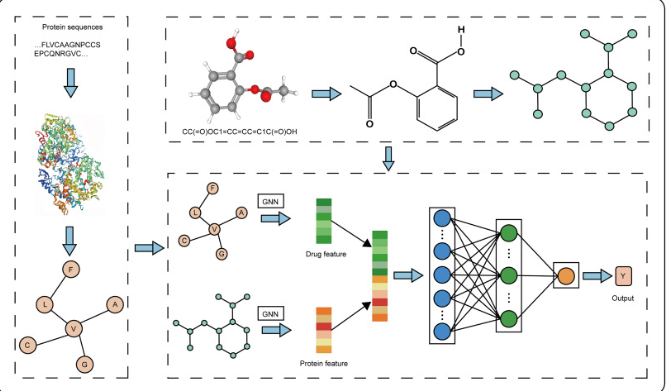
The majority of machine learning models are designed for ‘flat’ data—such as tables, images, or sequences in which the relationships are either missing or have been simplified. This is not how many real-world problems work. On social platforms, for example, people are linked together through friendships, follows, messages, and common interests. In the field of biomedical research, molecules and proteins exhibit complex patterns of interaction that cannot be easily fitted into a grid. Such data are known as non-Euclidean data, since their structure is more appropriately represented as a graph than as a regular array. Graph Neural Networks (GNNs) are specifically designed for this kind of situation, allowing learning to be carried out directly from both the nodes (the entities) and the edges (the relationships). For individuals who are studying modern AI techniques as part of an artificial intelligence course in Delhi, a understanding of GNNs has become increasingly important since graphs are used in both industrial and research settings.
Why Graphs Matter in Machine Learning
A graph consists of nodes which are connected by edges. These nodes may stand for users, web pages, atoms, proteins, or transactions. The edges show the relationships such as “friend of”, “linked to”, “bonded with” or “interacts with”. Different from the case in images where each pixel has a fixed neighbourhood, in graphs the connectivity is irregular since some nodes have a large number of connections whereas others have only a small number and the structure may change over time.
That is the reason why classical neural networks have difficulty. A convolution kernel relies on a fixed spatial arrangement, whereas graphs do not have a general grid. GNNs overcome this by learning representations through neighbourhood aggregation—each node updates its embedding by fusing its own features with those from the nodes it is connected to. The outcome is a model which is able to learn patterns such as community behaviour in networks or chemical properties in molecules.
How Graph Neural Networks Work
At a high level, most GNNs follow a “message passing” framework:
- The initial node features consist of an embedding derived from the node’s attributes (for example, a user profile vector or the type of atom).
- For each node the model gathers the signals from the neighbouring nodes (and in some cases also includes the edges).
- In the update step, the node’s embedding is obtained by applying a neural function that combines its present state with the aggregated messages.
- The final embeddings can be put to use in tasks such as node classification, link prediction, or graph-level prediction.
Various variants of GNNs differ in the way neighbour contributions are aggregated. For example, Graph Convolutional Networks (GCNs) normalise the contributions of neighbours, GraphSAGE samples the neighbourhoods in order to achieve scalability, and Graph Attention Networks (GATs) determine which neighbours are more important by using attention weights. If you are taking a course on model architectures in artificial intelligence in Delhi, GNNs represent a natural extension of ideas such as convolution and attention—adapted for use with relational data.
Social Network Analysis with GNNs
Since social networks are based on relationships, they are well suited to graph learning. Two typical tasks are:
Node classification
The aim in this case is to assign a label to each user node—for instance, by predicting their interest categories, the probability of them churning, or by spotting suspicious accounts. GNNs are able to perform well since they combine the users’ attributes with information from the users’ neighbours. The model can make use of this contextual information if a number of the connected accounts show similar behaviour patterns.
Link prediction and recommendations
It is common for platforms to offer suggestions such as ‘people you may know’ or to recommend groups and content. Such situations can be dealt with by using link prediction, which involves estimating the probability that an edge should exist between two nodes. GNN embeddings are useful since they take into account both the local and higher-order structure (for example, friends-of-friends, shared communities, and the intensity of interaction).
Community and influence insights
Even if there are no explicit prediction tasks, the embeddings from GNNs are able to cluster users into communities and identify influential nodes. In marketing analytics or in trust-and-safety processes, these representations can be used to highlight closely connected groups, detect coordinated behaviour, and aid explainable investigationA molecule can be depicted in the form of a graph with the atoms serving as nodes and the chemical bonds as edges. GNNs are able to learn molecular embeddings which can be used for making predictions regarding solubility, toxicity risk, binding affinity estimates, or pharmacokinetic properties. Compared with hand-crafted chemical descriptors alone, GNNs can learn task-specific patterns directly from the molecular structure.lity, toxicity risk, binding affinity proxies, or pharmacokinetic properties. Unlike hand-crafted chemical descriptors alone, GNNs can learn task-specific patterns diBiological systems are also made up of networks since proteins interact, pathways are connected and diseases are linked to gene expression patterns. It is possible for graph neural networks to model interaction graphs in order to predict missing links (such as potential drug–target pairs) or to prioritise targets for experimental validation.(potential drug–target pairs) or prioritiIn addition to prediction, graph neural networks can be used in generative or search frameworks to suggest new molecules with the desired properties, after which the molecules can be improved upon iteratively. Although careful validation is necessary, such approaches are useful for reducing the number of candidate molecules before lab testing—particularly when combined with domain constraints.daWhen professionals in Delhi who are covering artificial intelligence applications in the fields of healthcare and life sciences look at case studies involving graph neural networks, they will usually come across them since such case studies show how AI can adapt to structured scientific data rather than merely dealing with text or images.ate how AI adapts to structured scientific data rather than only text or images.
Practical Challenges and Good Practices
GNNs are powerful, but they require thoughtful implementation:
- Scalability can be a challenge with large graphs. You may need to use neighbour sampling, mini-batching, or distributed training.
- Over-smoothing occurs when deep stacks of GNNs cause the node embeddings to become too similar; residual connections and careful selection of depth help with this issue.
- When it comes to data leakage and evaluation, the split strategies used for link prediction must make sure that the model does not indirectly get to see future edges.
- Attention mechanisms, along with subgraph explanations and feature importance methods, help to increase trust in the outputs.
Conclusion
Graph Neural Networks provide a structured way to learn from relationships, enabling stronger modelling for social network analysis and drug discovery. By capturing both node attributes and connectivity patterns, GNNs support tasks such as recommendations, fraud detection, molecular property prediction, and interaction discovery. As graphs are common across modern digital and scientific domains, GNNs are now an essential part of applied machine learning literacy—especially for anyone building practical skills through an artificial intelligence course in Delhi.