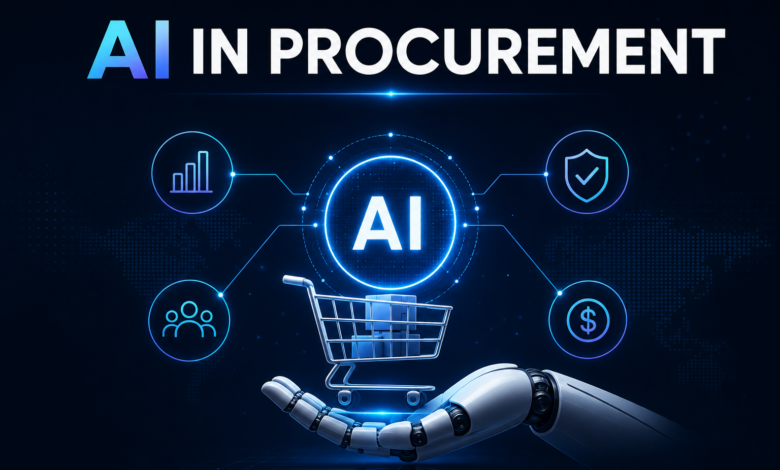
Procurement and supply chain leaders are managing increasing complexity across suppliers, demand, inventory, manufacturing and logistics. Cost pressures, geopolitical disruption and changing customer expectations require organizations to make faster decisions while balancing efficiency and resilience. AI in Procurement and AI in Supply Chain are helping organizations respond by improving visibility, automating routine work and generating insights across the end-to-end value chain.
The greatest opportunity emerges when procurement and supply chain intelligence are connected. Supplier decisions influence production and inventory, while changes in demand affect sourcing requirements and purchasing priorities. AI can help organizations analyze these relationships, anticipate potential disruptions and coordinate decisions across traditionally separate processes.
This article explores how AI in Procurement and AI in Supply Chain work together, their key applications, business benefits, implementation priorities and future potential.
What is AI in Procurement?
AI in Procurement refers to the application of artificial intelligence technologies across sourcing, spend analysis, contracting, supplier management and purchasing processes.
Machine learning can analyze supplier and transaction data, generative AI can summarize contracts and create sourcing content, and predictive analytics can identify potential supplier or market risks. Intelligent automation can also streamline repetitive activities such as requisitions, approvals and supplier onboarding.
Together, these capabilities help procurement teams reduce administrative work while making more informed sourcing and supplier decisions.
What is AI in Supply Chain?
AI in Supply Chain applies artificial intelligence across planning, manufacturing, inventory management, logistics and fulfillment. It uses internal and external data to identify patterns, forecast outcomes and recommend actions that improve supply chain performance.
For example, AI can help organizations forecast demand, optimize inventory, identify production constraints and anticipate transportation disruptions.
While traditional analytics primarily explains historical performance, AI in Supply Chain can provide more predictive insights that help leaders understand what may happen and determine how to respond.
Why procurement and supply chain intelligence should be connected
Procurement and supply chain decisions are closely interdependent. A supplier delay can affect production schedules, inventory availability and customer orders. A change in demand can alter material requirements and sourcing priorities.
Yet these functions frequently operate with different systems, data and planning processes. This fragmentation can slow decisions and make it difficult to understand end-to-end business implications.
Connecting AI in Procurement with AI in Supply Chain enables organizations to evaluate these relationships more effectively. Procurement teams can gain greater visibility into changing supply requirements, while supply chain teams can better understand supplier capabilities, risks and commercial constraints.
Core technologies enabling intelligent operations
Several AI technologies support both procurement and supply chain transformation.
Machine learning
Machine learning analyzes historical and real-time data to identify patterns across spending, suppliers, demand, inventory and operational performance.
Predictive analytics
Predictive models can help organizations anticipate supplier disruptions, demand changes, inventory requirements and logistics risks.
Generative AI
Generative AI can summarize contracts, supplier information, planning reports and operational data while providing conversational access to enterprise knowledge.
Intelligent automation
Automation can execute repetitive workflows, route exceptions and connect activities across procurement and supply chain systems.
AI agents
AI agents represent an emerging capability that can potentially coordinate multistep activities across sourcing, planning and logistics while escalating higher-risk decisions for human review.
Together, these technologies expand the potential of AI from individual tasks toward connected decision-making.
Key use cases of AI in Procurement
Organizations can apply AI across multiple procurement activities.
Spend analysis
AI can classify transactions, identify purchasing patterns and improve visibility into spend across categories, suppliers and business units.
Strategic sourcing
AI can analyze supplier capabilities, historical performance and commercial information to support supplier evaluation and sourcing decisions.
Contract management
Generative AI can summarize contracts, identify key clauses and highlight obligations, renewal dates and other information requiring procurement attention.
Supplier risk management
AI can combine internal supplier performance information with external signals to identify potential financial, operational or geopolitical risks.
Procurement operations
Intelligent automation can streamline requisitions, approvals and routine purchasing activities while directing exceptions to procurement professionals.
These applications enable AI in Procurement to support both operational efficiency and strategic sourcing.
Key use cases of AI in Supply Chain
AI can also improve decisions across planning and execution.
Demand forecasting
AI can analyze historical demand, seasonality and market signals to identify changing patterns and support more responsive forecasting.
Inventory optimization
AI can evaluate demand variability, service requirements and lead times to help organizations balance product availability with inventory investment.
Supply planning
Predictive analytics can help planners evaluate materials, capacity and supply constraints against expected demand.
Manufacturing
AI can support production planning, quality management and predictive maintenance using manufacturing and equipment data.
Logistics
AI can optimize transportation routes, shipment planning and network decisions while helping organizations respond to potential delays.
These capabilities allow AI in Supply Chain to improve performance across plan, make and deliver activities.
Business benefits of connecting procurement and supply chain AI
Integrating intelligence across both functions can create value beyond individual process improvements.
Greater end-to-end visibility
Connected information gives leaders a clearer understanding of relationships between supplier performance, demand, inventory and fulfillment.
Better cost management
Procurement insights can help optimize purchasing costs, while supply chain analytics can identify opportunities across inventory, manufacturing and logistics.
Stronger resilience
AI can identify emerging supplier and operational risks earlier, giving organizations more time to evaluate alternative actions.
Improved working capital
Better demand, sourcing and inventory decisions can help organizations reduce unnecessary inventory while maintaining required service levels.
Faster decision-making
Integrated insights reduce the need for teams to manually reconcile information across multiple functions before responding to changing conditions.
How AI improves supplier and supply chain risk management
Risk is one of the areas where connecting AI in Procurement and AI in Supply Chain can create significant value.
Procurement teams may identify declining supplier performance or emerging geopolitical risks. Supply chain systems can then evaluate which materials, plants, inventory positions and customer commitments could be affected.
AI can help organizations assess the potential downstream impact and identify alternative suppliers, inventory positions or production scenarios.
This shifts risk management from periodic assessment toward more continuous monitoring and proactive decision support.
Best practices for implementing AI across procurement and supply chain
Successful implementation requires organizations to think beyond individual technologies and address the end-to-end operating environment.
- Start with clearly defined business problems and desired performance outcomes.
- Improve supplier, spend, demand, inventory and logistics data quality.
- Connect data across procurement, planning, manufacturing and logistics systems.
- Prioritize use cases according to value, feasibility and time to value.
- Integrate AI into existing workflows rather than creating disconnected tools.
- Establish governance for security, model performance, decision rights and human oversight.
- Measure outcomes through procurement costs, supplier performance, forecast quality, inventory, service levels and productivity.
A connected approach helps organizations avoid optimizing one function at the expense of another.
Common implementation challenges
Data fragmentation is a significant challenge because procurement and supply chain information often resides across ERP, planning, supplier management and logistics platforms.
Different functions may also use inconsistent definitions and performance measures, making end-to-end analysis more difficult.
Organizations need to address trust as well. Procurement professionals and supply chain planners should understand how AI recommendations are generated and when human judgment remains necessary.
Technology integration, governance and workforce readiness therefore need to be addressed alongside AI implementation.
The future of AI in Procurement and supply chain
The next phase of AI in Procurement and AI in Supply Chain will increasingly involve intelligent orchestration across traditionally separate workflows.
AI agents could monitor demand changes, identify resulting material requirements, evaluate supplier options and initiate approved sourcing or planning actions. Multiple agents may eventually collaborate across procurement, manufacturing, logistics and finance.
Generative AI will also make complex supply chain information easier to access, allowing leaders to explore risks, scenarios and performance through natural-language interactions.
As these capabilities mature, organizations will need new governance structures and operating models that define how people and intelligent systems collaborate.
Conclusion
AI in Procurement and AI in Supply Chain are creating opportunities to improve sourcing, planning, inventory, supplier management and operational resilience. Their greatest potential lies in connecting intelligence across the end-to-end value chain rather than optimizing individual activities in isolation.
Organizations that integrate procurement and supply chain data, prioritize high-value use cases and establish effective governance will be better positioned to make faster decisions, manage risk and improve enterprise performance. The result is a more connected, predictive and resilient supply chain capable of adapting to changing business conditions.