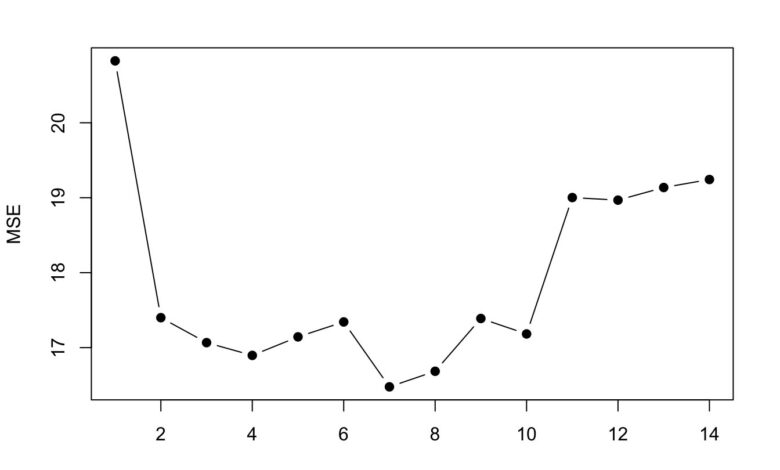
Choosing the right predictors is one of the most practical decisions in analytics. Too few predictors can underfit and miss important signals. Too many can overfit, inflate variance, and make the model hard to explain or maintain. Best subsets selection is a classic feature-selection approach that directly addresses this trade-off by evaluating many candidate models and selecting the subset that performs best under a chosen criterion. For learners exploring feature selection in data analytics courses in Hyderabad, understanding best subsets selection builds strong intuition for model quality, interpretability, and generalisation.
What Best Subsets Selection Really Does
Best subsets selection considers models formed by taking different combinations of predictors and then compares them. If you have p predictors, there are 2p2^p2p possible subsets. That includes the empty model (intercept only) and the full model (all predictors). In practice, the method often works like this:
- Fit the best one-predictor model (try each predictor alone).
- Fit the best two-predictor model (try each pair).
- Continue up to the best k-predictor model, for k = 1…p.
- Choose a final model using a validation strategy or a model-selection metric.
This is different from forward selection or backward elimination. Stepwise approaches make greedy decisions at each step. Best subsets selection attempts to find the best model at each size, which can produce higher-quality candidates—especially when important predictors only become useful in combination.
Why “Testing All Combinations” Is Hard (And How It’s Managed)
The key limitation is computational cost. Exhaustively testing every subset becomes expensive quickly. For example, with 30 predictors, 2302^{30}230 is over a billion subsets. That’s not realistic for most teams.
To make best subsets selection usable, practitioners rely on strategies such as:
- Limiting the maximum model size: e.g., only search subsets up to 10 predictors.
- Using efficient search methods: algorithms like branch-and-bound can prune large parts of the search space when it’s clear they cannot beat current best models.
- Screening predictors first: remove obviously irrelevant variables with simple filters (missingness, near-zero variance, redundant duplicates) before running subset selection.
- Switching to alternatives when p is large: regularisation methods like Lasso or Elastic Net often scale better, then you can refine the shortlist with subset selection.
In real projects—and even within data analytics courses in Hyderabad—the lesson is not “always brute-force everything,” but “apply rigorous selection without wasting compute or leaking information.”
How to Decide Which Subset Is “Best”
Best subsets selection still needs a scoring rule. Common options include:
Use a selection criterion
- Adjusted R² (for linear regression): rewards goodness-of-fit but penalises extra predictors.
- AIC / BIC: penalise model complexity; BIC penalises more strongly and often picks smaller models.
- Mallows’ Cp: compares bias and variance trade-offs in regression.
These metrics are useful for comparing models fit on the same dataset, but they do not replace external validation.
Use cross-validation or a holdout set
The most reliable approach is to compare candidate subsets using cross-validation (CV) or a separate validation set. A practical workflow is:
- Split data into train/validation (or use K-fold CV).
- Generate best models for each subset size on the training folds.
- Evaluate prediction error on validation folds.
- Choose the subset size and model that minimises validation error (or is within one standard error of the minimum for a simpler model).
This helps prevent overfitting—one of the most common issues in feature selection.
Practical Workflow for Best Subsets Selection
A clear, repeatable process matters more than the specific tool.
1) Start with a clean predictor set
Remove leakage variables (anything that would not be available at prediction time). Standardise or transform predictors if your modelling method benefits from it. Handle missing values consistently.
2) Decide your objective and evaluation metric
Choose a metric aligned with the business goal:
- RMSE/MAE for numeric forecasting
- AUC/Log-loss for classification
- Precision/Recall if false positives or false negatives are costly
3) Run subset selection with constraints
Cap maximum subset size or limit the number of predictors considered. If multicollinearity is high, consider grouping correlated predictors and allowing only one per group.
4) Validate and sanity-check
Check stability: do you get similar predictors across CV folds or bootstrap samples? If the chosen subset varies wildly, the data may be noisy, or predictors may be too correlated.
5) Interpret and operationalise
Make sure the final subset is explainable and maintainable. If a predictor is hard to source, unreliable, or expensive to compute, it might not be worth the marginal accuracy gain.
These steps are frequently used in churn modelling, demand forecasting, marketing response prediction, and risk scoring—scenarios where clarity and robustness matter as much as raw accuracy.
Common Pitfalls to Avoid
- Data leakage during selection: selecting predictors using the full dataset and then reporting CV performance is misleading. Feature selection should be inside the CV loop.
- Overfitting by “metric chasing”: picking the subset that barely wins on a metric can produce an unstable model. Prefer simpler models when performance is close.
- Ignoring domain constraints: a “best” statistical subset may be unusable operationally.
- Assuming correlation equals usefulness: a predictor can look strong alone but become redundant when combined with others.
Conclusion
Best subsets selection is a disciplined way to find strong, interpretable models by comparing many predictor combinations instead of relying on greedy steps. It teaches an important modelling mindset: evaluate trade-offs explicitly, validate properly, and prefer stable, maintainable subsets over fragile wins. For practitioners building skills through data analytics courses in Hyderabad, mastering this approach strengthens both technical judgement and real-world model design—especially when accuracy, explainability, and deployment constraints must all be balanced.