Ensemble Learning Strategies: Implementing XGBoost, CatBoost, and LightGBM to Win at Tabular Data Competitions and Business Forecasting

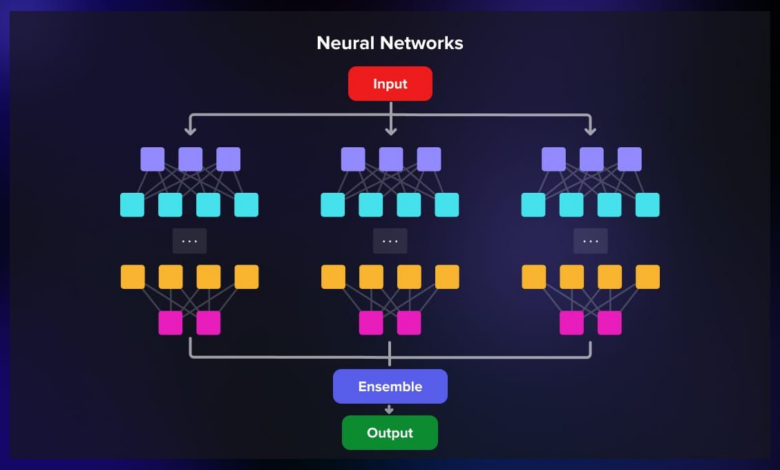
Tabular data remains the most common format in both real-world analytics and competitive machine learning. Whether you are predicting loan defaults, forecasting demand, detecting churn, or trying to climb a leaderboard, ensemble learning is usually the most reliable approach. Gradient boosting models in particular dominate tabular problems because they capture non-linear patterns, handle mixed feature types, and deliver strong results with practical training times. For learners exploring a data scientist course in Ahmedabad, understanding how XGBoost, CatBoost, and LightGBM differ is not just academic. These tools often become the backbone of production forecasting pipelines and winning competition solutions.
Why Gradient Boosting Works So Well on Tabular Data
Gradient boosting builds an ensemble of decision trees sequentially. Each new tree corrects the mistakes of the previous ones by focusing on residual errors. This approach works well because:
- It learns complex interactions without heavy feature engineering.
- It performs strongly even with imperfect assumptions about data distribution.
- It can manage missing values and non-linear decision boundaries.
- It supports regularisation, which reduces overfitting when tuned properly.
In forecasting and competitions, the main advantage is consistency. When you need high accuracy across different datasets, boosting models often provide the best baseline and the best final model after tuning.
XGBoost: The Strong, General-Purpose Workhorse
XGBoost is known for stability, performance, and strong regularisation options. It is a great choice when you want a dependable model that responds well to systematic tuning. Key strategies include:
- Regularisation control: Use lambda (L2) and alpha (L1) to reduce complexity and prevent overfitting.
- Tree complexity tuning: Adjust max_depth, min_child_weight, and gamma to keep trees from becoming overly specific.
- Learning rate discipline: Keep eta low and compensate with more trees using n_estimators. This improves generalisation.
- Early stopping: Always keep a validation set and stop when performance stops improving.
In business forecasting, XGBoost is particularly useful when you have structured features like calendar variables, pricing, promotions, lag features, and customer attributes. Teams learning through a data scientist course in Ahmedabad often find XGBoost a good starting point because the tuning behaviour is predictable and the documentation is extensive.
LightGBM: Speed and Scalability for Large Data
LightGBM is designed for efficiency. It uses histogram-based splits and a leaf-wise growth strategy, which can provide better accuracy but also increase overfitting risk if not controlled. It becomes extremely valuable when datasets are large, feature counts are high, or retraining needs to be frequent. Practical strategies include:
- Control leaf-wise growth: Use num_leaves, min_data_in_leaf, and max_depth together. This avoids overly complex trees.
- Use feature sampling: feature_fraction and bagging_fraction improve generalisation and reduce training time.
- Handle categorical features carefully: LightGBM supports native categorical handling, but correct encoding and datatype settings matter.
- Optimise for forecasting: For time-series, ensure split strategy respects time order and create meaningful lag and rolling-window features.
In competitions, LightGBM is popular because it trains fast and lets you iterate quickly. In enterprise forecasting, it is useful when model refresh cycles are frequent, such as daily demand forecasting or dynamic pricing models. If you are building skills via a data scientist course in Ahmedabad, LightGBM is also a strong tool to learn because it teaches the balance between speed and overfitting control.
CatBoost: Best-in-Class for Categorical Variables
CatBoost shines when categorical features are important, such as city, category, channel, product family, or user segment. Instead of relying heavily on one-hot encoding, CatBoost uses ordered target statistics in a leakage-aware way. This often improves accuracy with less manual preprocessing. Key strategies include:
- Leverage native categorical handling: Provide categorical columns directly and let the algorithm manage encoding.
- Reduce leakage risk: CatBoost’s ordered boosting helps avoid target leakage that can inflate validation scores.
- Use strong baselines quickly: CatBoost often performs well with fewer tuning steps, especially on mixed-type datasets.
- Robustness for business data: It deals well with noisy real-world category distributions and rare category levels.
In forecasting use-cases like customer churn, lead conversion, and sales prediction, categorical features typically carry strong signal. CatBoost can reduce feature engineering effort and improve stability across time periods. Many professionals who take a data scientist course in Ahmedabad benefit from CatBoost because it mirrors real business data conditions where categories dominate.
A Practical Workflow to Win: From Baseline to Ensemble
A reliable approach used in both competitions and business is:
- Start with a clean baseline: Pick one model (often LightGBM or XGBoost), set a strong cross-validation strategy, and track metrics carefully.
- Tune systematically: Focus first on learning rate, tree complexity, and regularisation. Avoid random parameter guessing.
- Use robust validation: For forecasting, use time-based validation splits. For competitions, match the evaluation style as closely as possible.
- Blend models: Combine predictions from XGBoost, CatBoost, and LightGBM using simple averaging or weighted blending. This often improves leaderboard and production performance because the models make different errors.
Conclusion
XGBoost, LightGBM, and CatBoost each bring a unique advantage to tabular data modelling. XGBoost offers dependable tuning and regularisation, LightGBM delivers speed and scalability, and CatBoost excels with categorical-heavy business datasets. When applied with strong validation and thoughtful feature design, these models can consistently deliver competition-grade accuracy and business-ready forecasts. For practitioners upskilling through a data scientist course in Ahmedabad, mastering these ensemble strategies provides a practical edge because the same techniques that win competitions often translate directly into measurable forecasting improvements in real organisations.