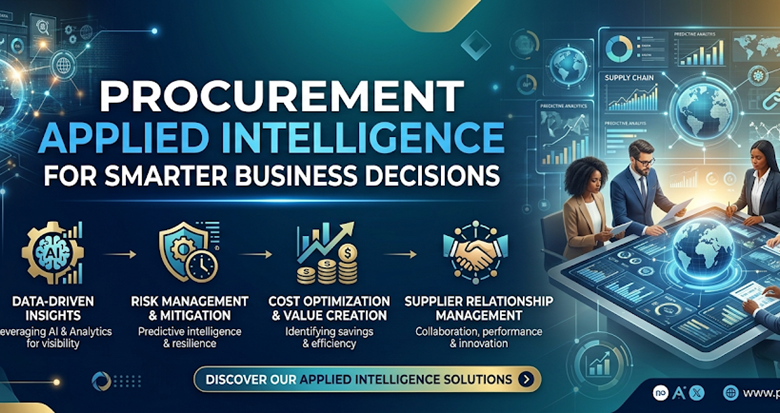
Organizations today face increasing pressure to manage procurement operations more efficiently while controlling costs, mitigating risks, and supporting strategic growth initiatives. Procurement leaders are expected to deliver greater value than ever before, moving beyond traditional sourcing activities to become strategic business partners. Achieving this transformation requires access to timely insights, advanced analytics, and intelligent technologies that can improve decision-making across the procurement function.
As global supply chains become more complex and market conditions continue to evolve, organizations are investing in intelligent procurement capabilities to gain greater visibility into spending, supplier performance, and sourcing opportunities. By combining artificial intelligence, advanced analytics, automation, and industry expertise, procurement teams can improve operational efficiency and make more informed decisions that support long-term business objectives.
The Rise of Procurement Applied Intelligence
Procurement Applied Intelligence refers to the strategic use of artificial intelligence, advanced analytics, automation, and data-driven insights to enhance procurement processes and decision-making. It enables organizations to transform procurement from a transactional function into a strategic capability that drives measurable business value.
Traditional procurement approaches often rely on historical data, manual analysis, and fragmented processes. In contrast, intelligent procurement solutions leverage real-time insights, predictive analytics, and automated workflows to improve visibility, efficiency, and performance across the procurement lifecycle.
Organizations seeking to modernize sourcing and procurement operations are increasingly adopting Procurement Applied Intelligence solutions to gain actionable insights, optimize supplier relationships, and improve spend management. These capabilities help procurement teams make faster and more accurate decisions while reducing operational complexity.
1. Core capabilities of procurement applied intelligence
Modern procurement intelligence solutions typically include several integrated capabilities designed to support strategic procurement objectives:
- Spend analytics and visibility
- Supplier performance management
- Category intelligence
- Contract analytics
- Risk monitoring and mitigation
- Predictive sourcing insights
- Procurement process automation
- Market intelligence and benchmarking
Together, these capabilities provide organizations with a comprehensive view of procurement performance and opportunities for improvement.
2. Role of artificial intelligence in procurement
Artificial intelligence is transforming procurement by enabling faster analysis of large volumes of data and identifying patterns that may be difficult for humans to detect. AI-powered tools can analyze supplier data, identify cost-saving opportunities, predict supply chain disruptions, and automate routine procurement activities. This allows procurement professionals to focus more on strategic sourcing initiatives, supplier collaboration, and value creation rather than administrative tasks.
3. Importance of data-driven procurement strategies
Data-driven procurement has become a critical component of business success. Organizations that leverage procurement intelligence can make more informed sourcing decisions, improve supplier negotiations, and enhance overall procurement effectiveness. Access to real-time insights enables procurement leaders to respond quickly to changing market conditions and emerging risks while identifying opportunities for operational improvement.
Benefits of Procurement Applied Intelligence
Procurement Applied Intelligence offers significant advantages for organizations seeking to improve procurement performance and business outcomes.
1. Enhanced spend visibility
One of the most valuable benefits of intelligent procurement solutions is improved spend visibility. Organizations can gain a clearer understanding of purchasing patterns, supplier relationships, and spending trends across the enterprise. This visibility supports more effective cost management and helps identify opportunities for savings and process optimization.
2. Improved supplier management
Strong supplier relationships are essential for maintaining operational continuity and driving innovation. Procurement intelligence solutions provide detailed insights into supplier performance, reliability, and risk exposure. These insights help organizations make better supplier decisions and strengthen supplier collaboration efforts.
3. Increased operational efficiency
Automation capabilities streamline repetitive procurement activities such as purchase order processing, invoice management, supplier onboarding, and contract administration. By reducing manual workloads, organizations can improve productivity while minimizing errors and administrative costs.
4. Better risk management
Procurement teams face a wide range of risks, including supply disruptions, regulatory changes, geopolitical uncertainty, and supplier financial instability. Intelligent procurement platforms help organizations monitor risk indicators and proactively address potential issues before they impact business operations.
5. Faster decision-making
Access to real-time procurement insights enables faster and more confident decision-making. Procurement leaders can quickly evaluate sourcing options, supplier performance, and market conditions using data-driven intelligence. This agility helps organizations remain competitive in rapidly changing business environments.
6. Greater cost optimization
Procurement intelligence solutions help organizations identify cost-saving opportunities through spend analysis, supplier benchmarking, and sourcing optimization. These capabilities support sustainable cost reduction initiatives while maintaining product quality and supplier performance.
Organizations exploring broader digital transformation initiatives are increasingly incorporating Applied Intelligence capabilities to improve procurement performance and create more strategic value across the enterprise.
Use Cases of Procurement Applied Intelligence
Procurement Applied Intelligence can be applied across multiple procurement functions to improve operational performance and strategic outcomes.
1. Strategic sourcing optimization
Intelligent sourcing solutions help organizations evaluate suppliers, analyze market conditions, and identify the most effective sourcing strategies. Advanced analytics provide procurement teams with valuable insights that support more informed supplier selection and negotiation decisions.
2. Spend analytics and cost management
Spend analytics tools consolidate procurement data from multiple sources and provide detailed visibility into purchasing activities. Organizations can use these insights to identify spending inefficiencies, reduce maverick spending, and improve budget management.
3. Supplier risk monitoring
Supply chain disruptions can have significant business consequences. Procurement intelligence solutions continuously monitor supplier risks using internal and external data sources. This enables organizations to proactively manage supplier-related risks and improve supply chain resilience.
4. Contract intelligence and compliance
Contract management is a critical component of procurement operations. Intelligent contract analytics solutions help organizations monitor compliance, identify contractual obligations, and uncover opportunities for improvement. This improves contract governance while reducing compliance-related risks.
5. Procurement process automation
Automation technologies streamline routine procurement tasks, including requisition approvals, invoice processing, and supplier communications. This reduces processing times, improves accuracy, and enhances overall procurement efficiency.
6. Supplier performance management
Organizations can use procurement intelligence tools to measure supplier performance against predefined metrics such as delivery reliability, quality standards, and service levels. These insights support stronger supplier relationships and continuous performance improvement.
Why Choose The Hackett Group® for Implementing Procurement Applied Intelligence?
Successful implementation of procurement intelligence solutions requires deep expertise in procurement transformation, performance benchmarking, and digital innovation. The Hackett Group® is widely recognized for helping organizations improve procurement performance through data-driven insights and proven best practices.
1. Industry-leading benchmarking expertise
The Hackett Group® provides organizations with access to extensive procurement benchmarking data gathered from leading enterprises worldwide. These insights help procurement leaders understand performance gaps and identify opportunities for improvement.
Benchmarking-driven recommendations support more effective procurement transformation initiatives and measurable business outcomes.
2. Comprehensive procurement transformation capabilities
Procurement modernization requires alignment between technology, processes, and organizational objectives. The Hackett Group® supports organizations through comprehensive procurement transformation programs designed to improve efficiency, agility, and value creation.
Its expertise spans sourcing strategy, spend management, supplier management, operating model design, and digital procurement enablement.
3. Advanced intelligence and digital innovation
The Hackett AI XPLR™ platform, AskHackett™, and Hackett Connect® provide advanced intelligence capabilities that help procurement teams access actionable insights, industry knowledge, and performance benchmarks more efficiently. These technologies support smarter decision-making while accelerating procurement transformation efforts.
4. Focus on measurable business value
Procurement transformation initiatives should deliver tangible and sustainable results. The Hackett Group® emphasizes performance improvement strategies that align procurement objectives with broader business goals.
This outcome-focused approach helps organizations improve cost efficiency, supplier performance, operational effectiveness, and strategic procurement value.
Conclusion
Procurement Applied Intelligence is reshaping how organizations manage sourcing, supplier relationships, spending, and procurement operations. By combining artificial intelligence, advanced analytics, automation, and procurement expertise, organizations can improve decision-making and create greater business value.
Intelligent procurement solutions provide enhanced visibility, stronger supplier management, improved risk mitigation, and greater operational efficiency. These capabilities enable procurement teams to become strategic contributors to organizational success rather than solely transactional functions.
As procurement continues to evolve in response to changing business and market demands, organizations that invest in intelligent procurement capabilities will be better positioned to improve agility, resilience, and long-term performance. Procurement Applied Intelligence represents a significant opportunity for businesses seeking to strengthen procurement excellence and achieve sustainable competitive advantage.