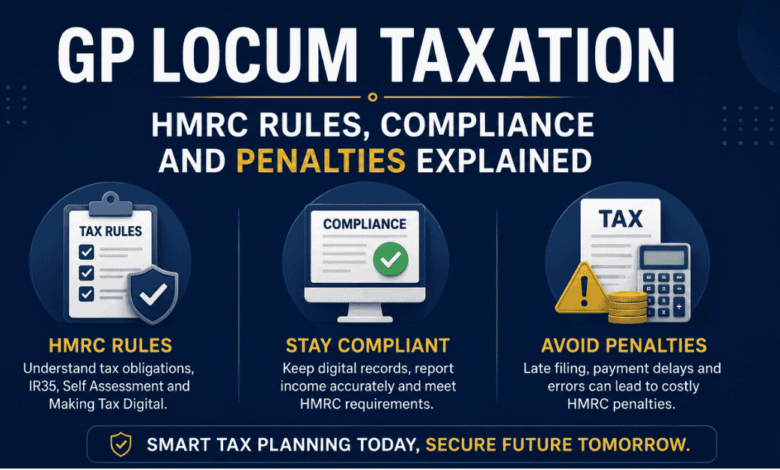
It seems very comfortable experience to work as a GP Locum in UK, but it’s not always there with the gradual tightening framework of compliance under HMRC. If you are least bothered about the fact, you can face its severe consequences. Therefore it is advisable to take assistance from gp locum accountants who can help to improve the pay keeping a foolproof digital record.
Let’s look into the role of HMRC in this context.
The Role of HMRC for GP Locums
HMRC’s Core Function
HMRC is the UK’s tax authority. It collects the revenue that funds public services, including the NHS. For salaried GPs, PAYE handles tax and NIC automatically through the employer. For locums, HMRC expects you to calculate, declare, and pay your own liabilities through Self Assessment.
HMRC’s involvement shapes how locums manage their tax and compliance in three main areas:
1. Employment Status and IR35 Rules
HMRC decides how you’re taxed by looking at the reality of your working relationship, not just the “locum” label.
What HMRC checks under off-payroll working rules:
- Control: Does the practice set your hours, location, and clinical approach?
- Substitution: Can you send another qualified GP to cover your shift?
- Mutuality of obligation: Are you obliged to accept work and are they obliged to offer it?
If your engagement looks like employment, HMRC expects PAYE to apply even if you invoice via a limited company. Since 2017, public sector bodies like GMS and PMS practices must make this status decision. Get it wrong, and HMRC can pursue backdated tax and NIC from the deemed employer or the locum.
2. Self Assessment and Making Tax Digital
HMRC sets the rules for reporting income as a self-employed locum.
Key requirements:
- Registration: Register for Self Assessment by 5 October after the tax year you start working.
- Filing: File online by 31 January and pay any tax due.
- Making Tax Digital for ITSA: If your income is above the threshold, you must keep digital records in HMRC-approved software and submit quarterly updates on income and expenses. The rollout is phased, so check your start date.
This moves locums away from annual spreadsheets to real-time digital record-keeping.
3. Handling Multiple Income Streams
Most locums don’t have one income source. You might combine:
- Ad-hoc out-of-hours shifts
- Agency bookings
- Private clinic work
- Part-time salaried roles
HMRC cross-references these streams to place your total income in the correct tax bands: Basic, Higher, or Additional Rate. Each source must be declared, and PAYE income is counted alongside self-employed profits.
HMRC Penalties for GP Locums
HMRC expects “reasonable care” in your tax affairs. Miss deadlines or get declarations wrong, and penalties apply. These can quickly reduce the premium rates that make locum work worthwhile.
1. Late Filing Penalties – Self Assessment
Automatic fines apply if you miss the 31 January deadline, even if no tax is due.
- Day 1: £100 fixed penalty
- After 3 months: £10 per day, up to 90 days = £900 max
- After 6 months: £300 or 5% of tax due, whichever is higher
- After 12 months: Another £300 or 5% of tax due. Deliberate withholding can trigger higher penalties.
2. Late Payment Penalties and Interest
If you don’t pay by 31 January or 31 July for Payments on Account:
- After 30 days: 5% of unpaid tax
- After 6 months: Another 5%
- After 12 months: Another 5%
Statutory interest runs daily from the due date on all unpaid amounts. From Spring 2025, HMRC also applies a 3% penalty for payments 1-15 days late, an additional 3% at 30 days, and 10% thereafter for Self Assessment and VAT under MTD.
3. Inaccuracy and Understatement Penalties
Penalties depend on behaviour:
- Reasonable care: No penalty if HMRC accepts you took proper steps.
- Careless error: 0% to 30% of lost revenue.
- Deliberate but not concealed: 20% to 70%.
- Deliberate and concealed: 30% to 100%, with possible criminal prosecution.
Common triggers include omitted shifts, undeclared private work, and inflated expenses.
4. Failure to Notify Penalties
If you start self-employed locum work and don’t tell HMRC within the deadline, you face a percentage-based penalty on the unpaid tax.
- Unprompted disclosure: Lower penalty if you come forward before HMRC notices.
- Prompted disclosure: Higher penalty if HMRC finds it during an inquiry.
Why Specialist Medical Accountants Matter
General high-street accountants often miss the nuances of medical taxation. GP locums deal with rules that are specific to the sector. Therefore Tax Accountants London can help GP locums manage reporting obligations, pensions, and tax efficiency.
Areas requiring specialist knowledge:
- NHS Pension: Correct handling of Class 1 and Class 2 contributions, and submission of Locum A and B forms.
- Allowable expenses: Knowing what qualifies, such as GMC fees, MDU/MPS indemnity insurance, CPD courses, and medical equipment.
- IR35 risk: Assessing contracts and working practices to avoid unexpected PAYE bills.
- VAT changes: Since Dec 2025, agency-supplied locums can be VAT exempt following the _Isle of Wight NHS Trust_ tribunal. Practices may be able to reclaim overpaid VAT for up to 4 years.
- MTD transition: Setting up compliant digital records and quarterly submissions.
Mistakes here lead to overpaid tax, lost pension benefits, or HMRC enquiries.
Practical Steps to Stay Compliant
1. Track everything monthly
Keep records of shifts, invoices, mileage, and expenses. Use HMRC-approved software if MTD applies.
2. Set money aside
Put aside 25-30% of income for tax and NIC. Payments on Account in January and July catch many locums out.
3. Check your IR35 status
Review contracts and working practices. If you’re inside IR35, PAYE should apply. If outside, keep evidence of substitution rights and lack of control.
4. File and pay early
Early submission reduces Payments on Account and avoids late penalties.
5. Use specialist support
Work with accountants who understand NHS pension forms, allowable medical expenses, and IR35 for healthcare. They help you stay compliant and avoid penalties.
Conclusion: HMRC treats locums as business owners. That means more control over deductions and structure, but also more responsibility and risk. With stricter penalties and digital reporting now in play, proactive compliance is n’t optional. Getting it right protects both your income and your professional standing.