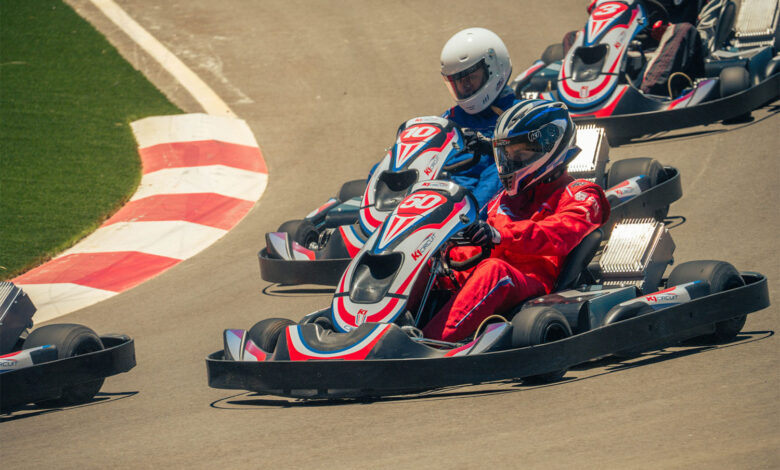
Pixelcom and companies like it represent a new generation of technology providers reshaping how motorsport facilities operate and karting circuits are among the biggest beneficiaries. What was once a sport managed with stopwatches, hand signals, and paper charts is now being transformed by digital tools designed specifically for the demands of racing environments. From the engineering of the vehicles themselves to the systems that manage competitions, every detail counts and the technology behind the scenes is proving just as important as what happens on track.
Today, circuit owners and event organizers have access to specialized solutions that make it possible to run cleaner, safer, and more professional operations — whether they manage a recreational karting facility, a training center, or a competitive racing circuit.
From Analog to Digital: A Necessary Evolution
For many years, karting circuits operated with relatively basic infrastructure. Timing was done manually or with simple electronic systems, safety communication relied on marshals waving flags, and session management was largely left to human judgment in real time.
This approach worked but it left significant room for error. A missed flag signal, an imprecise lap time, or a delayed response to an incident on track could have serious consequences, both in terms of safety and the quality of the competitive experience.
The evolution toward digital systems has changed this reality substantially. Companies specializing in sports technology have developed tools that bring the operational standards of professional motorsport to circuits of every size and category. One example is Pixelcom, a technology provider focused on sports and motorsport environments, whose systems are designed to integrate timing, safety communication, and race management into a cohesive and reliable infrastructure.
This kind of integrated approach is increasingly seen as the benchmark for well-run karting facilities — not just for large international venues, but for any circuit that takes its operations seriously.
Precision Timing: The Foundation of Every Competitive Session
One of the most visible areas of technological improvement in karting is lap timing. Modern transponder-based systems have replaced older manual methods, providing millisecond-accurate data that is instantly available to race directors, teams, and drivers.
The benefits go beyond simple accuracy. Advanced timing systems allow circuits to:
- Track individual lap times for every kart on track simultaneously
- Generate live leaderboards visible to spectators and participants
- Record and export historical session data for analysis and record-keeping
- Detect incidents or anomalies in lap time patterns that might indicate a mechanical issue or an off-track event
For training sessions, this level of precision gives drivers and coaches the data they need to analyze performance and identify areas for improvement. For competitions, it ensures that results are fair, transparent, and verifiable.
Safety Communication on Track: Where Technology Saves Lives
Perhaps the most critical area where technology is making a difference is on-track safety communication. In traditional karting operations, marshals use physical flags to signal drivers about hazards, cautions, or stoppages. While this system has been the standard for decades, it has well-documented limitations — flags can be missed, misread, or obscured by track geometry, weather conditions, or the speed of the karts themselves.
A more reliable solution has emerged in the form of dedicated electronic safety light systems. Safety lights for karting are trackside panels — typically LED-based — that display standardized color-coded signals to drivers as they pass by each post. These systems are controlled centrally by race direction and can be activated instantly across the entire circuit or in specific sectors.
The advantages are significant:
Immediate response. When an incident occurs on track, the race director can activate a caution signal circuit-wide in seconds, without waiting for a marshal to physically display a flag. Every driver receives the same signal simultaneously, regardless of where they are on the circuit.
Consistency and clarity. LED panels are visible in direct sunlight, rain, and low-light conditions. The signals are standardized and unambiguous, reducing the risk of misinterpretation that can occur with physical flags.
Sector-specific control. More advanced systems allow race directors to display different signals in different parts of the circuit. For example, a yellow caution can be shown only in the sector where an incident has occurred, while the rest of the track continues under green.
Integration with race management software. Safety light systems that connect to a central race management platform allow for synchronized responses a stopped session triggers automatic changes across timing displays, safety lights, and pit lane signals at the same time.
For circuit owners and event organizers, implementing this kind of system is not just a quality upgrade — it is a meaningful commitment to the safety of every person on track.
Race Management Platforms: Coordination Across Every Aspect of Operations
Beyond timing and safety, modern karting circuits benefit from comprehensive race management platforms that bring all operational elements together in a single interface.
These systems typically cover:
- Session scheduling and kart assignment — automating the allocation of karts to drivers, managing rotation for rental sessions, and ensuring balanced usage across the fleet
- Driver registration and licensing — storing participant data, managing waivers and memberships, and tracking race history
- Live race control — giving the race director a complete overview of track status, kart telemetry (where available), and safety systems
- Results and broadcasting — generating official results, live leaderboards, and data feeds for display screens or spectator apps
- Maintenance tracking — monitoring kart usage hours and service schedules to prevent mechanical failures
For a circuit that runs multiple sessions per day as most commercial karting facilities do the efficiency gains from centralizing these functions are substantial. Less administrative overhead means staff can focus on delivering a better experience to drivers and visitors.
The Experience for Drivers, Teams, and Spectators
Technology in karting circuits does not only benefit operations teams. The improvements ripple outward to everyone involved in a race day.
Drivers gain access to real-time lap data, sector comparisons, and post-session analysis that was previously only available to professional teams. Karting becomes not just a recreational activity but a genuine training tool.
Teams and coaches can monitor performance remotely through live data feeds, make informed adjustments between sessions, and build detailed records of driver progress over time.
Spectators benefit from live timing displays, public leaderboards, and at circuits that invest in broadcasting infrastructure live video feeds with overlaid data. This transforms karting from a closed event into an engaging spectacle.
Event organizers have access to comprehensive reporting tools that make post-event analysis straightforward, simplify the management of championship standings, and reduce the paperwork involved in organizing competitions.
Investing in Technology as a Circuit Strategy
For circuit owners and facility managers, the decision to invest in specialized technology is ultimately a strategic one. The upfront cost of implementing integrated timing, safety lighting, and race management systems is offset by measurable gains: reduced operational costs, fewer incidents, a better product for customers, and the ability to attract higher-level competitions.
Circuits that can offer professional-grade infrastructure accurate timing, reliable safety systems, clean results — are better positioned to host regional championships, corporate events, and training programs for drivers at every level.
There is also a reputational dimension. In an increasingly competitive leisure market, a karting circuit that operates with the same standards as a professional motorsport venue sends a clear signal: this is a place that takes performance and safety seriously.
Conclusion
Technology is not changing what karting is it is making karting better at being what it has always been: a competitive, exciting, and accessible form of motorsport. By investing in precision timing, electronic safety communication systems, and integrated race management platforms, circuit operators can offer a safer environment, a more professional experience, and a more sustainable business.
The tools exist. The question for any circuit looking to grow is simply how quickly they want to take advantage of them.