Turn Lesson Plans Into Songs: How Rhythmic Audio Content Is Transforming the Modern Classroom

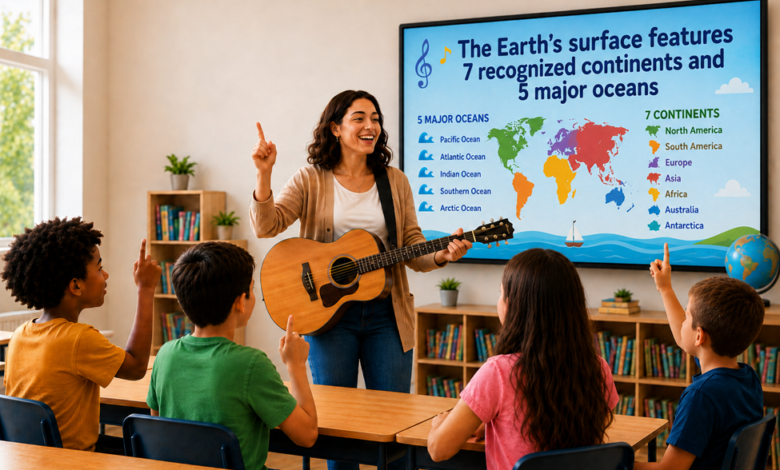
Every teacher knows the feeling: you’ve explained a concept three different ways, drawn it on the board, handed out a worksheet — and the blank stares are still there. Now imagine that same concept wrapped in a hook, a beat, and a chorus. Suddenly, hands go up. Students hum the formula on their way to lunch. That’s the power of transforming lesson content into rhythmic audio — and thanks to tools like InsMelo’s free AI music generator, it’s never been easier to bring this approach into any classroom.
Why Rhythm Rewires the Brain for Learning
Long before writing systems existed, humans passed down complex knowledge through song and chant. There’s neuroscience behind why this works: rhythm activates multiple regions of the brain simultaneously, including areas tied to memory consolidation, emotional processing, and motor coordination. When abstract concepts are embedded in melody and meter, they stop being information to memorize and become patterns the brain genuinely wants to repeat.
This is why students who struggle to recall the order of operations on a quiet test can often recite it perfectly when someone starts the familiar tune they learned in class. Music isn’t a shortcut — it’s a different neural pathway, and one that tends to be far more durable.
From Formula to Lyric: The Conversion Process
The idea of converting a lesson plan into a song can feel daunting, especially for teachers without a musical background. But the process is more structured than it sounds.
Step 1: Identify the core concept. Strip your lesson down to its single most important idea — the thing every student must walk away understanding. For a chemistry class, it might be the periodic table’s structure. For a history lesson, the causes of World War I. For math, the quadratic formula.
Step 2: Find the natural rhythm already in the content. Many academic formulas and sequences already have inherent rhythm. “I before E except after C” became a rhyme because the rule itself has a rhythmic shape. Look for patterns, sequences, cause-and-effect chains, or lists — these are all naturally lyric-friendly structures.
Step 3: Draft simple, repetitive lyrics. The best educational songs aren’t complex. Repetition is the point. Write a line that states the concept plainly, then repeat it with slight variation. The chorus should be the key fact you want burned into memory.
Step 4: Use lyrics to song AI tools to bring it to life. This is where technology removes the biggest barrier for non-musicians. With a lyrics to song AI platform, teachers can paste their drafted lyrics — however rough — and generate a fully produced audio track in seconds. No instruments, no studio, no prior music knowledge required. The AI handles melody, arrangement, and vocal style, turning a few lines of text into something students will genuinely want to listen to.
How InsMelo Makes This Workflow Seamless
InsMelo was built with exactly this kind of creative, purpose-driven use case in mind. As a free AI music generator, InsMelo allows educators, tutors, and curriculum designers to generate original music from text without any cost barrier or technical learning curve.
Teachers can type their lesson-derived lyrics directly into the platform, select a genre or mood (upbeat pop works well for younger students; lo-fi or hip-hop tends to resonate with secondary learners), and generate a track that’s ready to play in class. The process takes minutes, not hours.
Beyond just lyrics, InsMelo supports the broader creative flow — from generating instrumental backgrounds that help students focus during independent work, to producing rhythmic mnemonics for exam review sessions.
Practical Classroom Applications
The use cases stretch across every subject and grade level:
- Science: Set the steps of the scientific method to a four-bar loop students can recall during lab work.
- Mathematics: Turn algebraic identities or geometric theorems into a call-and-response verse.
- History & Social Studies: Anchor timelines and key figures in a narrative song with a memorable hook.
- Language Learning: Reinforce vocabulary and grammar rules with rhyme schemes that mirror the target language’s natural cadence.
- Early Childhood: Use simple, bright melodies to teach letter sounds, number sequences, and daily routines.
Making Abstract Concrete Through Sound
The most powerful thing rhythmic audio does isn’t just aid memorization — it lowers the emotional stakes of learning. A concept that feels intimidating on a page becomes approachable when it arrives wrapped in music. Students engage with it before they even realize they’re studying.
With tools like InsMelo putting a professional-grade free AI music generator in every teacher’s pocket, there’s no longer a gap between having the idea and bringing it to life. The classroom of the future sounds a little different — and that might be exactly what learning has always needed.