At A Glance
- While a bathroom door lock is great for privacy, a series of common issues can crop up
- Locks for bathroom doors can seem to wear out quicker, thanks to a bathroom’s conditions
- The high levels of humidity, as well as the frequent use, impact door lock longevity
- Solving these issues is often nothing more than freeing stuck bolts, tightening leeches, etc.
- Replacing any faulty or broken parts helps to keep the rest of the lock mechanism working
- Trade professionals should make bathroom door lock checks a priority during servicing
Whether you’re a keen DIYer or a trade professional, you’ll have run into issues with a bathroom door lock. Bathroom door locks are very useful, right? They help provide privacy when we need it most. After all, who wants to be walked in on when they are in the middle of their call to nature!?
However, according to experts at Locks and Hardware, bathroom doors wear out more commonly than most. The conditions of a bathroom mean that locks tend to be less resistant to wear and tear. Even if you buy high-quality, temperature-resistant locks for bathroom doors, they can still run into a host of issues. Let’s take a look at what the most common issues are and how you can fix them on your own.
Why Do Bathroom Door Locks Seem To Wear Out Faster?
We know, it seems a little strange that your bathroom door lock seems to be so easy to wear out. In our chat with Locks & Handles, though, they did point out why. And hey, it makes a lot of sense!
Think about the conditions of a bathroom for a minute. These rooms are wet – very wet. The presence of so much water and humidity means that the room has much more moisture in the air than all other rooms. Only a kitchen or washing/drying room would likely incur as much humidity as the toilet.
And think also about the material of your locks. Most of the time, they are made from materials that do not play nice with water, right? Well, all that humidity causes the lock to shift. It can make toilet doors swell or contract in size temporarily. If that happens often enough, it can throw the lock out of sync.
There is also the fact that toilet door locks are used more than bedroom door locks. We only lock a bedroom door if we’re getting undressed or are in the middle of something personal, right?
Well, with a bathroom door, we lock it pretty much every time we go into the bathroom. And the toilet is the most commonly used room in the house as well. So, that lock is engaged and disengaged numerous times per day. You probably lock and unlock your toilet door as many times in a week as you do your bedroom door in a month!
Fixing Common Bathroom Door Lock Problems
So, simple wear and tear, as well as the environmental factors, all contribute to your toilet door lock changes. Luckily, most of these issues are quickly resolved, even by beginner DIYers. Look out for:
Loose Door Latches
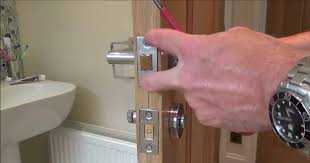
One of the most common issues with a door lock engaged regularly is that the door latch becomes loose. The latch is the little nub that sticks out on the side of the door. Look along the side of your door: do you see the bolt-like substance that sticks into the door, usually via the strikeplate on the door frame?
All you need to do is get a screwdriver. Then, you need to go around each of the screws on the latch. Tighten them clockwise ever so slightly. Only go one or two rotations and then test the latch. All you need is for the latch to no longer feel so loose when it is engaged. Once you do that, you’re sorted!
Stuck Bolts
Another common issue could be that your bathroom door bolt gets stuck. Door bolts can start jamming due to the alignment shifting. What you need to do here is quite simply, thankfully.
Get a spirit level and measure between where the door bolt fits into the frame and where the bolt sits. Is this level? If not, you need to remove the bolt or the housing where the bolt snibs into. Re-align, tighten the screws, and try again. Sometimes, you might even just need to loosen or tighten the screws a little, just as you did with the latch above.
Replace Faulty Parts
This is a little tougher to diagnose, but usually much the same as the above. Simply open up your toilet door and then engage the lock mechanism. Does anything look worn out, broken, or bent?
If so, it might be time to replace these part(s). Take the time to review the door lock latch, the bolts, and the way your door handles move. Most of the time, faulty parts become apparent just by watching the lock mechanism slide into gear when you turn it. If anything is broken or not working as it should, you should buy a replacement bathroom door lock.
Most of the time, it’s easier to replace one part than the full lock mechanism. If multiple parts have failed, though, you might be better off replacing the full thing! Use your best judgment: every situation is a little different.
Make Reviewing Bathroom Door Locks A Regular Habit
If you are a homeowner, you should really make checking your toilet door locks a routine habit. If you are a property maintenance professional or a tradesperson who deals with services, do not forget to check the bathroom door for your clients.
Regular checks on the bathroom door lock condition – including the door lock latch – are very useful. If you check the locks regularly, you can catch the kind of issues we mentioned above early doors. That stops the problem from worsening, meaning repairs are swift and often free. If you wait for the issues to become more serious, though, you might be looking at a full bathroom door lock replacement!
So, be proactive. Help yourself, or your customers, by checking the bathroom door lock. A check-up once or twice per year is more than enough to fix the issue(s) we have mentioned above.