Fading Sunspots and Age Spots With a Plasma Pen: How Surface Ablation Works and When It Is Safe

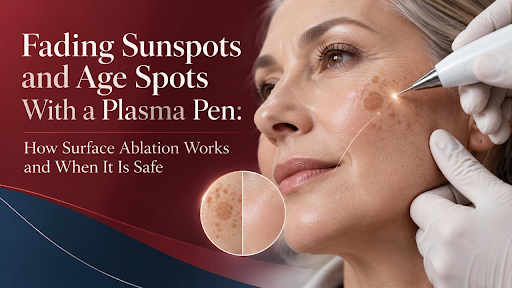
A plasma pen treats a dark spot by burning away the pigment sitting in the top layer of skin, not by bleaching it. Held a millimeter or two above the surface, the device turns an electrical charge into electrostatic energy that ionizes the air in that tiny gap, producing a fine plasma arc. On a sunspot, the pinpoint of heat carbonizes the melanin in the epidermis, so the treated dot darkens into a small crust rather than fading slowly. The same handheld tools sold as plasma pen wrinkle treatment devices are used for this pigment work, because the arc behaves the same way whether the target is a fine line or a brown spot.
That mechanism explains both the appeal and the limits. Because the energy is ablative and stays shallow, it suits flat, well-defined pigment that lives near the surface, such as sun-induced spots and many age spots. It is far less predictable on pigment that sits deeper or is driven by hormones, and it carries real risk on darker skin. Working out which category a spot falls into matters more than the choice of device.
How the arc removes a spot
The plasma pen does not cut. It vaporizes the outermost skin in a process clinicians call sublimation, creating a controlled microinjury at each point of contact. On pigmented skin the immediate sign is a cluster of tiny brown carbon crusts where the spots were treated. Those crusts are the destroyed surface pigment, not the finished result.
Over roughly a week the crusts dry and separate on their own, leaving skin that looks pink and feels tight. That pinkness usually settles over the following two to three weeks as the surface rebuilds. The same microinjury also switches on fibroblasts, the cells that drive wound repair, which lay down fresh collagen and pull the tissue slightly tighter. That collagen response is why the tools double as wrinkle and skin-tightening devices, but for a spot the visible aim is simpler: lift off the crusted pigment and let clear skin replace it.
Which spots respond, and which do not
Solar lentigines, the flat tan-to-brown marks left by years of sun exposure, and many age spots are the strongest candidates, because their pigment sits in the epidermis where a shallow ablative tool can reach it. The picture changes with deeper or reactive pigment.
- Melasma: often hormone and heat sensitive and frequently deeper in the skin. Adding heat can worsen it or trigger rebound darkening, so it is generally not a good match for a plasma pen.
- Raised, changing or irregular lesions: a spot that is lumpy, growing, or uneven in color or border is not a cosmetic target. It should be examined by a doctor first, because it may need medical rather than aesthetic assessment.
This last point is a safety line, not a formality. A plasma pen destroys tissue by burning it away, so treating an undiagnosed lesion can remove the very skin a clinician would need to look at. Confirming that a spot is harmless comes before deciding how to erase it.
Skin tone and the pigmentation paradox
The same tool used to remove pigment can also create it. Any heat injury to the skin can set off post-inflammatory hyperpigmentation (PIH), a fresh patch of darkening that appears as the skin heals. This risk rises sharply with deeper skin tones. Fitzpatrick types IV to VI carry more melanin, larger melanosomes and a higher proportion of eumelanin, so PIH in these skin types tends to be more prominent and longer lasting, and studies of ablative resurfacing report it frequently in darker skin.
There is a second hazard in the other direction: the heat can also leave a pale, under-pigmented mark that can be slow to recover or effectively permanent. For these reasons many practitioners keep plasma pen pigment work to lighter skin, or use markedly lower settings, wider spacing between points and a test patch before treating an area. For medium-to-deep skin, non-ablative options are often the safer route, because the spot you set out to remove can be replaced by a spot you did not want.
Aftercare that decides the outcome
With a surface treatment, healing is where results are won or lost. The crusts must be left completely alone, since picking them off invites scarring and pigment change. Keeping them lightly moist and letting them fall on their own, usually within about a week, gives the skin underneath the best chance to come back evenly.
Sun is the main threat to fresh skin. Newly healed skin re-pigments easily, so broad-spectrum protection is essential: a physical sunscreen based on zinc or titanium, reapplied through the day and paired with a hat, for at least about twelve weeks. Skipping sun protection is the most common way a treated area darkens again, sometimes more than the original spot. Deep or stubborn spots may also need a second session, spaced only after the skin has fully healed.
Plasma pen against other spot options
| Approach | Best suited to | Downtime | Darker-skin caution |
| Plasma pen (ablative) | Flat, superficial sun and age spots | Crusts about a week, pink for weeks | High: PIH and loss of pigment both possible |
| IPL or laser | Varied epidermal pigment, larger areas | Mild, varies by device | Device dependent; some lasers suit deep tones better |
| Cryotherapy | Isolated raised or thicker spots | Blister or crust, then healing | Notable risk of pale (hypopigmented) marks |
| Topical lightening agents | Diffuse or hormone-driven pigment | None | Generally gentler but slower to work |
Choosing a plasma pen for pigment really comes down to three things lining up: how deep the pigment sits, how prone the skin is to PIH, and whether the spot has already been confirmed as harmless. When they do line up, a single well-controlled treatment can clear a defined sunspot cleanly. When they do not, the same arc that erases one mark can leave another. The step that protects the result is a qualified provider who checks skin type and examines the lesion before the device is ever switched on.